Half the books shelved under horror are really family dramas with a ghost in the wallpaper. They're well written, but they are not scary. This list skips those.
Every book here has a track record of doing something specific to a reader's body. A racing pulse. A door checked twice. A light left on past 2 a.m. The bar isn't a moody cover or a blurb with the word "chilling" on it. It's dread that survives the last page.
A few of these lean supernatural. A few never touch the supernatural at all. What they share is craft: fear that builds instead of arriving in one jump scare. An ending that doesn't let the reader off easy.
We ordered them by publication date, oldest first. Watch the genre keep finding new ways to do the same old thing to people.
1. The Haunting of Hill House — Shirley Jackson (1959)
Eleanor Vance arrives at Hill House for a paranormal investigation. The house starts working on her mind almost immediately. Or she was already unraveling before she got there; Jackson never fully answers which. That ambiguity is the whole engine of the book.
Nothing overtly supernatural even needs to happen. A door that won't stay shut, a cold spot on a staircase. The sense that something in the house has picked Eleanor out specifically. Generations of ghost story writers point to this book as proof that atmosphere alone can outscare a monster with a name.
2. The Exorcist — William Peter Blatty (1971)
The film gets the reputation. The novel does something the movie's set pieces can't. It makes you sit for chapters with a mother watching her daughter's body do things a body shouldn't. All before anyone can act.
Blatty grounds the horror in medical and psychiatric detail. Every failed treatment closes off a door for the reader before it closes for the characters. He spends more pages on doubt and diagnosis than on spectacle. When the possession fully takes hold, it lands as horror the book has earned. Not shock manufactured for its own sake.
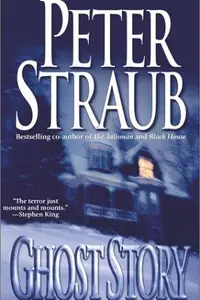
3. Ghost Story — Peter Straub (1979)
Four old men in a small town share a decades-old secret. Something has come back to collect on it. Straub builds the dread slowly, layering town history, folklore, and private guilt. The reader understands the threat long before the characters will admit it to themselves.
It's long, and patient, and that patience is the trick. By the time the horror fully arrives, the reader has spent three hundred pages fearing the wrong things. Right alongside the characters. More than one reader has reported nightmares that outlasted the book by years.
4. Off Season — Jack Ketchum (1981)
A group of friends rents a cabin on the coast of Maine. They cross paths with a family that never gave up the old ways of their Scottish ancestors. Those are the same ways behind the Sawney Bean legend. Several bookstores refused to stock the book when it first came out.
Ketchum writes the violence plainly, without style or distance. That plainness is what makes it hard to sit through in one go. This is the entry for readers who want horror that doesn't flinch. Consider it a genuine warning, too, for readers who'd rather it did. It's graphic. Tension alone doesn't cover it.
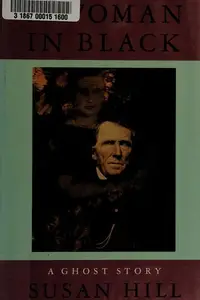
5. The Woman in Black — Susan Hill (1983)
A young solicitor travels to a remote coastal estate to settle a dead woman's affairs. He starts seeing a figure in black who appears right before a child dies. Hill wrote it as a deliberate throwback to the Victorian ghost story.
It works because she trusts the genre's oldest tools. Fog, isolation, a house nobody visits, a vengeful ghost whose grudge outlives everyone who wronged her. It's short enough to finish in one sitting. Whether that's a selling point or a warning depends on how the last chapter finds you.
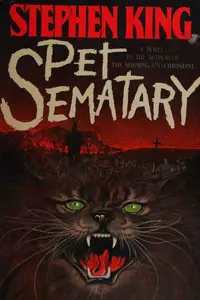
6. Pet Sematary — Stephen King (1983)
King has said this one scared even him. He shelved it for years before he agreed to publish it. A father buries the family cat in a burial ground that brings things back wrong. Then he loses a child. The book asks what a grieving parent with a working shovel would actually do next.
It isn't a haunted house story. It's a story about grief overriding every warning sign a person has. King understands exactly how far that logic can run before it snaps.
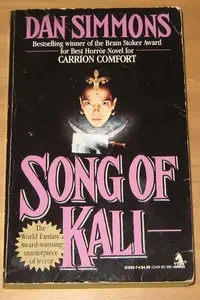
7. Song of Kali — Dan Simmons (1985)
An American writer travels to Calcutta to track down a supposedly dead poet. Something with roots in a Kali cult, far older than any magazine deadline, pulls him in. Simmons wrote it after a real trip to India. The dread builds less from any single scene than from a mounting sense that the narrator is in over his head. He's in a city that doesn't care what happens to him.
It won the World Fantasy Award for a reason. This is horror built on mounting, inescapable wrongness rather than a string of scares.
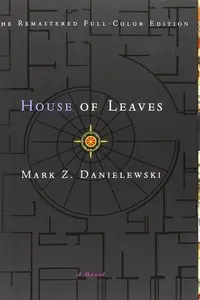
8. House of Leaves — Mark Z. Danielewski (2000)
A family moves into a house that is, by exact measurement, bigger on the inside than the outside. That's the whole premise, and it's enough. The typography shifts on the page, footnotes hide inside footnotes, and hallways appear where a hallway has no business being. All of it puts the reader through the same disorientation the characters feel.
Readers report one repeated symptom after finishing it: trouble sleeping. Some pick up a new habit, too, double-checking the size of their own rooms. Here, the format itself does the frightening. The plot is only half of it.
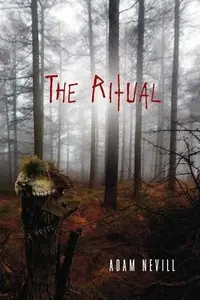
9. The Ritual — Adam Nevill (2011)
Four old friends take a hiking shortcut through a Scandinavian forest. Something has been living there long before they arrived. The first half is survival horror at its most claustrophobic. Exhausted men, a forest that won't let them find their way out, evidence of something that hunts.
The second half turns the story somewhere stranger and darker still. Nevill writes physical exhaustion and creeping panic as well as anyone working today. That's why horror readers rank it among the books that scared them, ahead of the ones they just recommend.
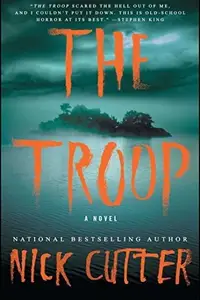
10. The Troop — Nick Cutter (2013)
Five Boy Scouts spend the story marooned on an island with their troop leader. A stranger washes up carrying something engineered to eat its host from the inside out. Stephen King blurbed it directly: "The Troop scared the hell out of me, and I couldn't put it down."
It earns that reaction through body horror grounded in real biology. It earns the rest through the children themselves, once fear and hunger strip away the rules they'd normally follow. It's graphic. It's meant to be.
Keep a record of what actually got to you
A book that genuinely scares you is worth remembering. If nothing else, you'll want proof the next time someone asks for a recommendation. Seekquel lets you shelve each of these, rate them, and note which ones actually kept the lights on. Your next horror pick can come from what worked before instead of what the cover promised.