Genre is too blunt a filter.
"Fantasy" gives you everything from cozy innkeeper stories to brutal war epics. "Romance" covers beach reads and gut-punch emotional fiction. Same shelf. Completely different experience.
Mood and trope are sharper tools. The picks below come from the Seekquel community. These readers log every book they finish and tag it by mood, trope, and how it actually felt. Here's how to use both filters.
Why Genre Fails & the "What Should I Read Next" Question
Genre describes what a book contains. Mood describes how it will feel to read it.
When you finish Gone Girl at 2 a.m. with your heart still racing, you're not looking for "another thriller." You want another book that pulls you forward at the same pace. That's a mood.
Tropes narrow it further. "Unreliable narrator" cuts the thriller shelf in half instantly. "Enemies to lovers" tells you the emotional arc before you read page one.
What to Read Next: A Quick Mood Check
Two questions. Answer honestly.
How much mental energy do you have right now?
Low: comfort, predictable structure, low stakes
Medium: you can track subplots; some complexity is welcome
High: dense prose, moral ambiguity, a challenging narrator
What do you want to feel when you close the book?
Warm and restored
Unsettled and thinking
Cried it out, wrung dry
Your answers point to a mood. The lists below group books by them.
Cozy Reads
You want warmth, a contained world, and characters who succeed.
Legends & Lattes by Travis Baldree (2022)
Viv is an orc warrior who has spent decades fighting for hire. She retires to a city that has never heard of coffee. There she opens the first coffee shop in existence.
That premise sounds like a punchline and it isn't. Baldree earns every page of it. The stakes are genuinely low: will the shop survive? Will the locals warm to this strange bitter drink? There's no chosen-one prophecy, no world-ending threat. The tension is whether the scones will sell.
What makes it work is the found family that assembles around the counter. A hob named Tandri. A rattkin musician. A city guard who keeps stopping in on her patrol. None of them planned to belong somewhere. That's the whole book: people finding a place without trying to.
Originally self-published, it became a phenomenon and helped define cozy fantasy as its own genre. A prequel, Bookshops & Bonedust, follows a younger Viv.
Good for: readers burned out on epic fantasy who still want magic in the world.
The House in the Cerulean Sea by TJ Klune (2020)
The House in the Cerulean Sea
Linus Baker works for the Department in Charge of Magical Youth. He classifies dangerous magical children and writes reports no one reads. He goes home alone to a cat who tolerates him. Nobody notices him, and he is entirely fine with that. Then his department sends him to a classified orphanage on a remote island. His job: assess six children deemed potentially world-ending.
One of them is the Antichrist. He is six years old and very polite.
The house's caretaker, Arthur Parnassus, is calm and principled in a way that immediately unsettles Linus. Klune's novel is equal parts love story and satire of institutional cowardice. Mostly it's about what it costs to stand up for something when your employer would prefer you didn't.
The emotion lands because it's specific. Klune doesn't reach for easy sentiment. Won the Alex Award.
Good for: readers who want warmth with real stakes, or queer romance that isn't a tragedy.
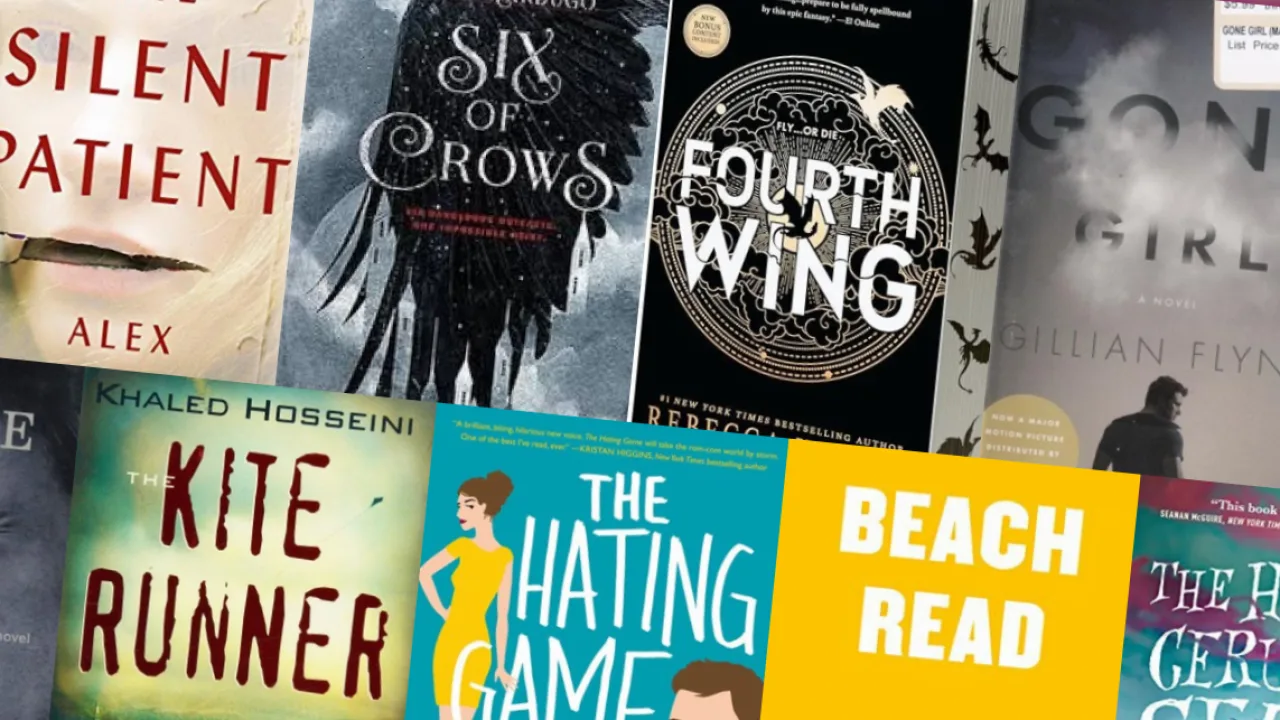
Beach by Emily Henry (2020)
January Andrews writes romance novels. Augustus Everett writes literary fiction. They end up neighbors for the summer in a Michigan beach town. January has just inherited her dead father's lake house. Inside she finds evidence he'd been keeping a secret family there for years.
The conceit between them is clean: each will write in the other's genre. But the conceit is a container for something harder. January can no longer believe the happy endings she used to write. Gus carries a grief he won't name. Henry uses the genre-swap frame to ask real questions about romance fiction. What is it for? Why is cynicism its own kind of armor?
It reads fast. The banter is good. Henry builds toward the emotional resolution with honesty rather than springing it on the reader.
Good for: readers who like contemporary romance that has actual interior life and isn't embarrassed about it.
People We Meet on Vacation by Emily Henry (2021)
People We Meet On Vacation
Poppy and Alex meet in college. She's chaotic and social; he's quiet and careful. They become close friends, start taking a trip together every summer, and do this for years. The novel alternates between those past vacations and the present, two years after the friendship fell apart.
Henry spaces the slow-burn realization with patience. You understand what the friendship is and why it works before the stakes change. Each vacation section has its own texture: different cities, different versions of the relationship. You see clearly how two people can matter to each other in ways that shift over time.
Most friends-to-lovers books skip the friendship. This one doesn't.
Good for: readers who want a romance with a real foundation and a structure that earns the payoff rather than rushing it.
Dark and Atmospheric Reads
You want tension. Something that makes the world feel stranger or more dangerous.
Mexican Gothic by Silvia Moreno-Garcia (2020)
It's 1950. Noemí Taboada is a glamorous Mexico City socialite, educated and sharp and used to getting what she wants. Her cousin Catalina has married into the Doyle family and moved to their remote silver-mining estate in the mountains. Catalina's letters have become disturbing. Her family sends Noemí to find out why.
High Place is the house, and it is a character. The air is damp. The wallpaper peels in specific, wrong ways. Hugo Doyle, the English patriarch, is old and physically wrong in a way Noemí can't place. Strange dreams follow her to sleep.
Moreno-Garcia works within Gothic horror conventions: the isolated estate, the creeping dread, the woman expected to stay quiet. She directs all of it toward a specific historical argument about colonialism. The silver mining that built the Doyle fortune connects directly to what is wrong with the house. Nothing in it is decorative.
Won the Locus Award for Best Horror Novel.
Good for: readers who want Gothic horror with political intelligence and a protagonist who refuses to be managed.
Piranesi by Susanna Clarke (2020)
The narrator lives in a house with no end. Its halls contain thousands of statues: a centaur, a woman carrying a beehive, a gorilla carrying a fallen man. The lower halls flood with tides twice a day. Birds nest in the upper halls and he keeps a careful count of them. He writes detailed journals.
There are only two living people in the house. He calls the other one The Other.
The central mystery has three parts: what the house is, how he got there, who he really is. Clarke's prose has the same controlled calm as her debut, Jonathan Strange & Mr Norrell. The effect is deeply strange without becoming horror. It resolves into something more like wonder.
At 280 pages, it's short for the amount of ground it covers. Won the Women's Prize for Fiction 2021.
Good for: readers who want something genuinely unlike anything else. This book doesn't resemble its neighbors on a shelf.
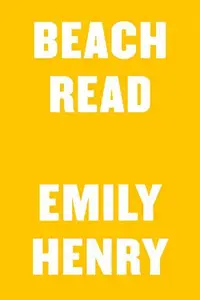
Gone Girl by Gillian Flynn (2012)
Nick Dunne's wife Amy disappears on the morning of their fifth wedding anniversary. Nick's narration covers the investigation in real time. Amy's diary entries, going back years, run alongside his.
Neither narrator is telling the truth. This takes a while to become obvious, and Flynn earns every page of the delay. She uses the dual perspective to expose how marriages actually work. The performance. The resentment. The distance between who you said you were and who you became. Flynn observes the media's handling of the missing-wife story with a precision that hasn't aged.
The twist is real and it reframes the first half of the book. Don't read the ending early.
Made into a David Fincher film in 2014. The book is better.
Good for: readers who want domestic thriller with a genuine point of view, not just a plot mechanism.
The Silent Patient by Alex Michaelides (2019)
Alicia Berenson is a painter with a good marriage and a comfortable life. One evening she shoots her husband Gabriel five times, sets down the gun, and never speaks again. Years later she's held in a secure psychiatric facility. Theo Faber is a criminal psychotherapist with his own complicated history. He becomes obsessed with her silence and maneuvers his way into the facility to treat her.
The novel alternates between Theo's present-tense account and diary entries Alicia wrote before the murder. Michaelides controls information precisely: you're given just enough to keep the next chapter feeling necessary. The twist at the end reframes rather than cheats.
Debut novel. Enormous bestseller. Michaelides handles the psychological thriller conventions with more care than the genre usually applies.
Good for: readers who want fast-moving psychological thriller that respects their intelligence.
Emotionally Intense Reads
You want to feel something large. These books earn the weight they ask you to carry.
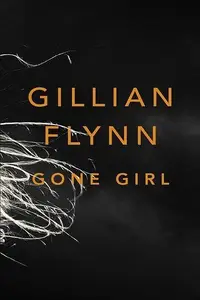
A Little Life by Hanya Yanagihara (2015)
Four men (Willem, JB, Malcolm, and Jude) meet at college in Massachusetts and move to New York. The novel follows them for decades as careers diverge, relationships form and break, and the city changes around them.
Jude St. Francis is the center. His past comes out over hundreds of pages: severe abuse, trafficking, physical damage that never heals. Yanagihara draws the friendship between all four men with precision. The bond between Willem and Jude most of all.
This is one of the most polarizing novels published this century. Some readers find the accumulation of suffering exploitative, the relentlessness without sufficient counterweight. Others call it the best novel they've read. Both responses are understandable. What isn't disputed: the prose is extraordinary. Nothing else in contemporary fiction handles long-term male friendship with this specificity.
720 pages. Booker Prize finalist 2015. Save it for a week when you have time and emotional bandwidth.
For readers who want full immersion. Not for readers who want protective distance from their fiction.
The Kite Runner by Khaled Hosseini (2003)
Amir grows up in Kabul in a wealthy Pashtun household. Hassan is the son of his father's Hazara servant and Amir's closest companion from childhood. When a neighborhood bully assaults Hassan and Amir watches from around a corner and does nothing, the friendship ends. Amir engineers Hassan's removal from the household to escape his own guilt.
The novel follows Amir across time: the Soviet invasion, emigration to California, his father's illness and death. Finally he returns to Taliban-controlled Afghanistan for a reckoning he's been putting off for twenty years.
Hosseini's emotional economy is efficient. He doesn't overwrite. The scenes of Kabul before the invasion feel like memory. That specificity makes what happens to the country hit harder. The redemption arc is not clean or tidy.
Hosseini's debut. One of the best-selling Afghan novels ever published in English.
Good for: readers who want literary fiction with direct emotional movement and historical grounding.
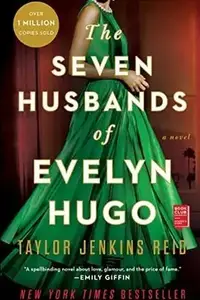
The Seven Husbands of Evelyn Hugo by Taylor Jenkins Reid (2017)
The Seven Husbands of Evelyn Hugo
In 2017, Evelyn Hugo contacts a small magazine with an unusual request. An unknown junior journalist, Monique Grant, will write her biography. No one knows why Monique. The novel presents that biography in Evelyn's voice, across seven decades and seven husbands.
The marriages are not the story. They are a structure Evelyn used to protect what actually mattered. The real love of her life is not one of her husbands.
Reid handles Evelyn's Cuban-American identity with care. Hollywood told her to erase it. She did. The novel accounts for what that cost her and what she gained. The pacing is deliberately addictive: each husband's section ends on a question that the next one answers. Monique's present-day storyline resolves in a way that earns its place.
Good for: readers who want a propulsive read that has more on its mind than the structure suggests.
Find Books by Trope
Once you have a mood, tropes let you dial in the exact story type.
A trope is a recurring story pattern readers recognize and seek out. Unlike genre, tropes describe relationship dynamics and plot mechanics, not the setting. That's why "enemies to lovers" works across fantasy, contemporary romance, thrillers, and literary fiction.
Enemies to Lovers
Two people start out opposing each other and end up together. The tension is the point.
The Hating Game by Sally Thorne (2016)
Lucy Hutton and Joshua Templeman share a job. They're co-executive assistants at a publishing house formed by the merger of two competing companies. Their desks face each other. They have developed a set of games: staring contests, one-upmanship, a running tally of wins. They are, officially, adversaries.
Thorne makes the slow turn feel inevitable without rushing it. Lucy is a funny and specific narrator. Josh withholds information the reader wants, which is exactly the right structural choice. The enemies-to-lovers mechanics are clean here. You understand why they started out hostile and you follow, step by step, how that changes.
The physical specificity is stronger than most of the genre. Josh's height, the desk arrangement, the claustrophobic shared space: all of it does real work. Made into a 2021 film. The book is better.
Good for: readers who want enemies-to-lovers without fantasy elements or explicit content.
From Blood and Ash by Jennifer L. Armentrout (2020)
In the Kingdom of Solis, Poppy is the Maiden. She's kept veiled and sequestered from society, awaiting an Ascension she doesn't fully understand. The Ascended who rule the kingdom present themselves as divine. Hawke becomes her new personal guard.
Armentrout establishes the forbidden dynamic early: these two are not supposed to interact, and they keep finding ways to. She builds the attraction through forced proximity and withheld information on both sides. Hawke knows things about Poppy's world that she doesn't. The world-building reveals compound across the book until they reframe the premise itself.
The romance includes explicit content (standard for the romantasy genre). The first book ends on a cliff-hanger that makes the series continuation feel necessary rather than arbitrary.
Six books in the series as of 2024. The first works as a standalone read.
Good for: readers who want fantasy romance with real world-building stakes underneath the attraction.
Found Family
Characters who choose each other and form something more honest than most blood families.
Legends & Lattes by Travis Baldree
The full entry is in the cozy section above. On the found-family axis: what Baldree does well is show belonging forming without anyone announcing it. Viv doesn't set out to build a community. She sets out to sell coffee. The people who matter to her arrive sideways. They keep showing up, and then one day they're there. It's one of the more honest portrayals of how friendship actually forms in adulthood.
Six of Crows by Leigh Bardugo (2015)
Kaz Brekker runs the Dregs, a gang in Ketterdam's Barrel district. He assembles a crew to break into the Ice Court, the most secure prison in the world. The payout would change all of their lives. The crew: a sharpshooter with a past. A Grisha spy with a price on her head. A convict with a power he can't control. A circus-trained thief. A ship's captain.
Every member of the crew was, at some point, discarded. Bardugo gives each a POV chapter and places the backstory reveals with precision. You don't get the full picture of any character until exactly the right moment. When it arrives, it reframes what you've already seen.
The heist mechanics are clever and hold together. The loyalty that builds between these six people is the actual subject of the book. Set in Bardugo's Grishaverse, it reads independently of the Shadow and Bone trilogy. Most readers consider it the stronger work.
Good for: readers who want ensemble fantasy where the crew dynamics carry as much weight as the plot.
Slow Burn Romance
These stories delay the payoff. You wait, and it's worth it.
Fourth Wing by Rebecca Yarros (2023)
Violet's general mother pushes her into Basgiath War College's rider quadrant. The rider quadrant is where cadets try to bond with war dragons and frequently die in the attempt. Violet has a connective tissue disorder: she is physically fragile in an environment that kills the strong. She is also one of the most prepared people there intellectually.
Xaden Riorson leads the rider wing. He's the son of rebels executed by Violet's mother's forces. He should have every reason to let Violet fail. The romance builds under that specific tension for a long time. Their mutual distrust has a real structural cause, which gives it more weight than a standard enemies-to-lovers setup.
Yarros's pacing is relentless. Chapters end on sentences that make setting the book down feel impossible. The world-bu