Most Read Satire Books
Most Read Satire Books
These are the Satire books most read by Seekquel members, ranked by real reading activity across 96 titles, not scraped popularity.
Based on Seekquel member reading activity. Updated weekly.
- 1
 Animal FarmGeorge Orwell · 1945Signet ClassicsCommunity rating: 4.23 out of 5
When the mistreated animals of Manor Farm rise up and drive out their drunken human owner, they establish a new order founded on a single, hopeful principle: all animals are equal. Led by the pigs, the most clever of the animals, the farm is renamed and the beasts set about running their world for their own benefit. But power reshapes those who hold it. As the ambitious boar Napoleon consolidates control, the founding ideals are quietly rewritten, dissent is punished, and the promises of the revolution curdle into a tyranny that looks unsettlingly like the one it replaced. The other animals, loyal and hardworking, struggle to remember how things were meant to be. George Orwell's short, savage fable uses a barnyard uprising to trace how revolutions are betrayed, how language is bent to serve power, and how easily the many can be ruled by the few. First published in 1945, it remains one of the most enduring political allegories ever written.
- 2
 Fahrenheit 451Ray Bradbury · 1963Community rating: 3.95 out of 5
In a future America, firemen do not put out fires—they start them. Books are illegal, and Guy Montag's job is to burn any that are found, along with the houses that hide them. He does his work without question until a series of encounters cracks the surface of his contented life: a curious teenage neighbor who asks whether he is really happy, a woman who chooses to die with her books rather than live without them, and a wife who has quietly given up on everything but the voices coming from the walls. Unsettled, Montag begins to steal the books he is supposed to destroy, hoping they hold whatever it is his world has lost. His awakening puts him on a collision course with his superior and with a society engineered to keep everyone entertained, medicated, and incapable of sustained thought. Ray Bradbury's classic dystopian novel is a fierce, lyrical warning about censorship, mass media, and the quiet ways a culture can decide that thinking is too much trouble. Decades after publication it remains one of the most widely read and debated novels about the value of books and the cost of their loss.
- 3
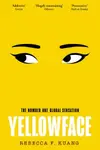 YellowfaceR. F. Kuang · 2023Community rating: 4.02 out of 5
June Hayward and Athena Liu were supposed to be twin rising stars of the literary world. Instead, Athena is a wildly successful, critically adored Chinese American novelist, and June is a struggling white writer no one remembers. When Athena dies in a freak accident, June impulsively steals her just-finished manuscript, a sweeping novel about the Chinese laborers of the First World War, and revises and publishes it as her own, under the racially ambiguous pen name Juniper Song. The book is a smash, and June finally has the fame she believes she deserves. But the lie is fragile. As readers, journalists, and the internet begin to probe the story's origins, accusations of plagiarism and cultural appropriation gather, and June is pulled into a spiral of justification, paranoia, and escalating deceit. Narrated entirely in June's slippery, self-serving first-person voice, this contemporary novel is a sharp, propulsive satire of the publishing industry, performative diversity, racism, and the outrage machine of social media. It is Kuang's first departure from fantasy, turning her eye on the very business that made her, and on who gets to tell which stories.
- unreliable narrator
- morally grey
- 4
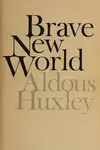 Brave New WorldAldous Huxley · 1932Brave New World #1Community rating: 4.02 out of 5
Brave New World is Aldous Huxley's 1932 dystopian novel and one of the defining works of twentieth-century science fiction. It imagines a distant-future World State that has traded away family, art, religion, and struggle for guaranteed stability: children are decanted from bottles and conditioned into rigid castes, discontent is dissolved by the pleasure-drug soma, and citizens are engineered from birth to love the servitude assigned to them. The story follows Bernard Marx, an Alpha who feels subtly out of step with his frictionless society, and Lenina Crowne, who embodies its ideals. A trip to a "Savage Reservation" brings them back to London with John, a young man raised on Shakespeare and outside the World State's control. His collision with a civilization that cannot understand grief, longing, or belief drives the novel toward its unsettling conclusion. By turns satirical and chilling, Huxley's book interrogates the price of manufactured happiness and the loss of individuality in a technological age. Alongside Orwell's Nineteen Eighty-Four, it remains one of the most argued-over visions of where comfort and control might lead.
- 5
 The Hitchhiker's Guide to the GalaxyDouglas Adams · 1979The Hitchhiker's Guide to the Galaxy #1Community rating: 4.2 out of 5
Arthur Dent is having a very bad day. First, his house is about to be demolished. Then, he discovers the Earth is also scheduled for demolition to make way for a hyperspace bypass. Luckily, his friend Ford Prefect is an alien researcher for the Hitchhiker's Guide to the Galaxy and whisks Arthur away just in time. Join them on a bizarre and hilarious journey through space.
- fish out of water
- 6Y
 YesteryearCaro Claire Burke · 2026Community rating: 4.12 out of 5
Natalie Heller Mills has built an empire on nostalgia. To her millions of followers, she is the perfect “tradwife”: baking sourdough, raising her children on a sun-dappled ranch, and modeling a wholesome life supposedly stripped of modern excess. What the camera never shows are the nannies, the producers, and the industrial appliances humming just out of frame. Then a public scandal detonates her carefully managed image — and Natalie wakes to find herself trapped in a brutal, unforgiving version of 1855. The ranch is now a freezing cabin without plumbing or heat; the children who answer to her are strangers; and the household is ruled by an archaic, menacing version of her own family. Forced to actually live the pioneer existence she once performed for views, she tries to work out whether she is the victim of an elaborate hoax, a twisted reality show, or something far stranger. Burke’s debut threads social satire through psychological suspense, using Natalie’s predicament to interrogate the performance of womanhood, the machinery behind influencer culture, and the seductive lie of “the good old days.” Sharp, claustrophobic, and darkly comic, the novel asks what is left of a person once the curated self collapses and the audience is gone.
- fish out of water
- unreliable narrator
- 7
 Good OmensNeil Gaiman, Terry Pratchett · 1990Community rating: 4.01 out of 5
An angel and a demon who have lived on Earth since the Beginning have grown rather fond of the place and do not want to see it ended. When the Antichrist is accidentally misplaced at birth and ends up with an ordinary English family in a small town, the two unlikely allies must team up to avert Armageddon while navigating prophecies, witchfinders, the Four Horsemen, and a small boy with an unusual dog. A warm, witty, and surprisingly moving celebration of humanity, written in equal collaboration between Terry Pratchett and Neil Gaiman.
- 8
 Nineteen Eighty-FourGeorge Orwell · 1949Community rating: 4.19 out of 5
Winston Smith works at the Ministry of Truth, rewriting old newspapers so the Party's version of history is never wrong. Big Brother watches from every poster, the telescreen watches from every wall, and even an unspoken doubt is a capital crime. Worn down by surveillance and manufactured scarcity, Winston starts a secret diary, falls into a forbidden affair with a young colleague named Julia, and lets himself believe the past was real and the truth survives somewhere beyond the Party's reach. Orwell's 1949 novel gave English "Big Brother", "doublethink", "thoughtcrime" and "Newspeak", and remains the definitive warning about how power holds itself in place by owning memory, language and love.
- forbidden love
- betrayal
- 9S
 Slaughterhouse-FiveKurt Vonnegut · 1969Community rating: 3.99 out of 5
Billy Pilgrim has come unstuck in time. An unremarkable optometrist from Ilium, New York, Billy ricochets without warning through the moments of his own life: his boyhood, his brutal experience as a bewildered young soldier in World War II, his capture by the Germans, and his survival of the Allied firebombing of Dresden that incinerated a city and tens of thousands of people. In between, he is kidnapped by aliens from the planet Tralfamadore and displayed in a zoo, where he learns their serene, fatalistic view of time in which every moment simply is, always has been, and always will be. Drawing on Kurt Vonnegut's own experience as a POW who lived through the Dresden bombing sheltering in a meat locker, Slaughterhouse-Five refracts unspeakable trauma through science fiction, black comedy, and a fractured, time-hopping structure. Its famous refrain — "so it goes" — punctuates every death with weary, defiant resignation. A landmark of postwar American literature, Vonnegut's anti-war masterpiece is by turns absurd, mournful, and quietly furious: a book about the impossibility of making sense of atrocity, and the human need to try anyway.
- 10
 Convenience Store WomanSayaka Murata · 2016Community rating: 4.06 out of 5
Keiko Furukura has never fit the mold society keeps holding up to her. At thirty-six, she has worked part-time at the same Tokyo convenience store for eighteen years, and it is the one place where she knows exactly who to be: the store's manual tells her how to speak, how to move, how to smile, and in following it she feels calm, useful, and whole. But the people around her — her family, her old classmates, her coworkers — cannot understand a grown woman with no career and no husband, and their concern curdles into pressure. To quiet them, Keiko strikes an uneasy arrangement with Shiraha, a bitter, freeloading man who offers her a shortcut to looking "normal," even as it threatens the fragile life she has built. Sayaka Murata's sharp, deadpan, internationally beloved novel is a wry and unsettling study of conformity, work, and what it costs to be yourself in a world that insists everyone must be the same.
- 11
 Fight ClubChuck Palahniuk · 1996Fight Club #1Community rating: 3.87 out of 5
An unnamed narrator drifts through corporate life plagued by insomnia and a numbing sense of emptiness, medicating his despair with support-group meetings for illnesses he doesn't have and a catalogue-perfect apartment full of things he doesn't need. Then he meets Tyler Durden — a charismatic, anarchic soap-maker who offers a different kind of release. Together they start a fight club: men meeting in basements to beat one another bloody, chasing the raw aliveness that consumer comfort has bled out of their lives. But the club grows beyond bare-knuckle catharsis into Project Mayhem, an underground movement bent on tearing down the world that made them. Chuck Palahniuk's debut novel is a savage, blackly funny assault on consumerism, masculinity, and the anaesthetised modern self. Told in terse, hypnotic prose with an unreliable narrator and one of fiction's most infamous twists, Fight Club became a cult classic and the basis for David Fincher's film.
- unreliable narrator
- anti hero
- morally grey
- 12
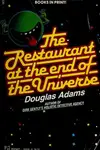 The Restaurant at the End of the UniverseDouglas Adams · 1980The Hitchhiker's Guide to the Galaxy #2Community rating: 4.41 out of 5
Still reeling from the destruction of Earth, Arthur Dent and his companions set out for Milliways — the Restaurant at the End of the Universe, where guests dine in luxury while watching all of creation end. Getting there means a stolen ship, a search for whoever truly rules the galaxy, and one absurd catastrophe after another. The second book in Douglas Adams's beloved comic science-fiction saga.
- fish out of water
- 13
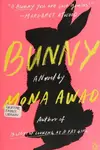 BunnyMona Awad · 2019Bunny #1Community rating: 3.69 out of 5
Bunny is Mona Awad's cult dark-academia novel — a surreal, savagely funny, horror-tinged satire of female friendship, creative ambition, and the ache to belong. Samantha Mackey is a scholarship outsider in the tiny, hyper-selective MFA fiction program at New England's Warren University. She loathes her cohort: a clique of twee, wealthy women who call one another "Bunny" and seem to move and speak as a single saccharine organism. Then an invitation arrives, and against every instinct Samantha finds herself pulled into their orbit — and into the strange, ritualistic "Workshop" they hold off campus. As Samantha sinks deeper into the Bunnies' cloying, sinister world, the line between imagination and reality dissolves. Awad twists the familiar "outsider joins the mean-girl clique" story into something grotesque and hallucinatory, equal parts campus comedy and body-horror fever dream. Unsettling, allusive, and deliberately disorienting, Bunny rewards readers who like their literary fiction genuinely strange.
- unreliable narrator
- found family
- dark academia
- 14
 HorrorstörGrady Hendrix · 2014Community rating: 3.57 out of 5
Something is wrong at Orsk, the sprawling Scandinavian furniture superstore on the edge of Cleveland. Every morning the staff arrive to find the showroom vandalized overnight: shelves toppled, glassware smashed, a foul smell in the air the cleaning crew can't place. The security cameras record nothing. With sales sinking and corporate breathing down their necks, three employees agree to work a secret nine-hour shift through the night to catch whoever is responsible. Amy is a cynical twenty-something clock-watcher who just wants a transfer and a bigger paycheck. Her relentlessly upbeat manager Basil sees the overnight patrol as a chance to prove himself, and kindly veteran clerk Ruth Anne comes along for the company. But the store they think they know so well becomes a labyrinth after dark, and the thing haunting its identical model rooms has been waiting a long time for visitors. Grady Hendrix's Horrorstör is designed to look like a mail-order furniture catalog, complete with product illustrations that curdle from cheerful to horrifying as the night goes on. Equal parts genuine haunted-house novel and razor-sharp satire of consumer culture and soul-deadening retail work, it's a fast, funny, and surprisingly frightening read about the horrors of the modern workplace.
- 15
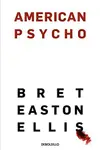 American PsychoBret Easton Ellis · 1991Community rating: 4.08 out of 5
Patrick Bateman is twenty-six, works on Wall Street, dines at the city's most exclusive restaurants, and is obsessed with status: the right business card, the right skincare regimen, the right reservation. He is also, in the novel's telling, a murderer. Narrated in Bateman's flat, brand-obsessed first person, American Psycho moves between exhaustive catalogues of designer labels and stereo equipment and increasingly graphic descriptions of torture and killing. Bret Easton Ellis's 1991 novel is a savage satire of 1980s consumer capitalism and the hollowness beneath its polished surface. Bateman's colleagues are interchangeable; no one truly sees him, and his confessions are met with indifference or misheard entirely. The book leaves it deliberately unclear how much of the violence is real and how much is the fantasy of a man dissolving into the culture that made him. Notorious for its brutality and long a lightning rod for controversy, it remains a defining work of transgressive fiction — a cold, funny, and genuinely disturbing portrait of emptiness dressed as success.
- unreliable narrator
- 16
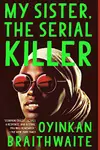 My Sister, the Serial KillerOyinkan Braithwaite · 2018Community rating: 3.48 out of 5
Korede, a diligent Lagos nurse, has a problem: her beautiful younger sister Ayoola keeps killing her boyfriends and calling Korede to clean up. The arrangement holds until Ayoola sets her sights on the kind doctor Korede secretly loves, forcing Korede to choose between her sister and the man she wants. Oyinkan Braithwaite's debut is a sharp, darkly comic thriller about loyalty, envy, and the pull of family, told in short, propulsive chapters.
- morally grey
- 17
 Adventures of Huckleberry FinnMark Twain · 1884Tom Sawyer #2Community rating: 3.45 out of 5
Huckleberry Finn, the ragged, freedom-loving boy first met in The Adventures of Tom Sawyer, fakes his own death to escape his abusive, drunken father and lights out for the Mississippi. On an island he meets Jim, a man enslaved by Miss Watson who has run away to avoid being sold. Together the two set off downriver on a raft, an unlikely pair bound by circumstance and, gradually, by loyalty. Mark Twain's 1884 masterpiece follows Huck and Jim's episodic journey through the antebellum South, where they encounter feuding families, riverboat swindlers — the self-styled "Duke" and "King" — mobs, and frauds of every kind. As Huck helps Jim toward freedom, he wrestles with a conscience shaped by a society that has taught him that helping an escaped slave is a sin, and slowly reaches his own moral judgment against it. Written largely in vernacular dialect and narrated in Huck's own unschooled voice, the novel is at once a rollicking adventure and a scathing satire of racism, hypocrisy, and the myths of "civilized" society. Long celebrated as a foundational American novel and just as long debated for its unflinching language, Adventures of Huckleberry Finn remains one of the most influential and argued-over books in the country's literature.
- coming of age
- 18
 The CompoundAisling Rawle · 2025Community rating: 3.55 out of 5
Aisling Rawle's dystopian debut. Lily wakes on a remote desert compound with nineteen strangers, contestants on a hit reality show where you earn everything — even food — by completing tasks and must never sleep alone. As the unseen producers raise the stakes toward real danger, the line between playing the game and surviving it dissolves. A sharp satire of reality TV and consumer desire. Winner of the 2025 Goodreads Choice Award for Science Fiction.
- survival
- forced proximity
- betrayal
- morally grey
- 19
 Northanger AbbeyJane Austen · 1817Modern Library ClassicsCommunity rating: 3.91 out of 5
Catherine Morland, a naive young woman raised on Gothic novels, gets her first taste of society in Bath, where she befriends the witty Henry Tilney and the scheming Thorpes. Invited to Northanger Abbey, she lets her imagination conjure dark secrets that reality quickly deflates. Jane Austen's affectionate satire of Gothic fiction and coming-of-age.
- 20
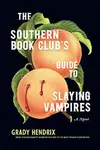 The Southern Book Club's Guide to Slaying VampiresGrady Hendrix · 2020Community rating: 3.84 out of 5
Patricia Campbell's life in a 1990s suburb of Charleston has narrowed to carpools, casseroles and a difficult mother-in-law — until a charming newcomer moves into the Old Village, children start disappearing across town, and her true-crime book club becomes the only people who will believe her. A funny, gruesome Southern horror novel about the women nobody listens to.
- found family
- betrayal
- 21
 The Importance of Being Earnest and Other PlaysOscar Wilde · 1898Community rating: 3.98 out of 5
Two Victorian gentlemen each invent a fictitious person to escape their obligations — and both end up courting under the same borrowed name, "Ernest." Oscar Wilde's farcical masterpiece of mistaken identity, mercenary marriage and immaculate epigram.
- secret identity
- 22
 The Colour of MagicTerry Pratchett · 1983Wizards #1Community rating: 4.06 out of 5
Meet Rincewind, a wizard who'd rather flee than fight, and Twoflower, an enthusiastic tourist. They find themselves on an unexpected journey across the Discworld, a flat planet carried by elephants and a giant turtle. This is the hilarious, chaotic start to their adventures in a world where magic is unpredictable and danger is never far behind.
- fish out of water
- quest
- reluctant hero
- 23
 A Clockwork OrangeAnthony Burgess · 1962Community rating: 4.05 out of 5
Fifteen-year-old Alex leads his gang of droogs through nightly sprees of theft and ultraviolence in a bleak near-future England, narrating it all in Nadsat, an invented teenage slang built from Russian, rhyming cant and street argot. Convicted of murder, he is offered early release through the Ludovico Technique, an experimental aversion therapy that leaves him physically incapable of choosing evil — and so, the novel asks, incapable of being a man at all. Anthony Burgess's 1962 novel is a landmark of dystopian fiction on free will, the individual and the power of the state.
- anti hero
- unreliable narrator
- villain protagonist
- coming of age
- 24
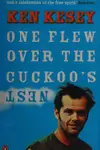 One Flew Over the Cuckoo's NestKen Kesey · 1962Community rating: 4.13 out of 5
When Randle McMurphy decides to fake insanity to get out of a prison work farm, he finds himself in a psychiatric hospital in Oregon. There, he immediately clashes with the stern Nurse Ratched and her oppressive rules. This sets off a chain reaction of rebellion among the patients as they begin to question their confinement and fight for their freedom.
- fish out of water
- reluctant hero
- 25
 Lost LambsMadeline Cash · 2026Community rating: 4.06 out of 5
Madeline Cash's debut novel follows the unravelling Flynn family — a collapsing open marriage, three daughters in freefall, and a billionaire shipping magnate whose secrets pull them all into a criminal conspiracy.
- family saga
- multiple povs
- 26
 MortTerry Pratchett · 1987Discworld - DEATH Series #1Community rating: 4.48 out of 5
Death takes a teenage apprentice, awkward farm boy Mort, and hands him the scythe. When Mort's pity leads him to save a princess who was fated to die, he tears a hole in reality — while Death, curious about mortality, tries out ordinary life. A funny, oddly moving Discworld fantasy.
- mentor figure
- coming of age
- 27
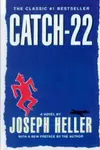 Catch-22Joseph Heller · 1961Catch-22 #1Community rating: 4.17 out of 5
Captain John Yossarian is a U.S. Army Air Forces bombardier stationed on the tiny Mediterranean island of Pianosa in the final year of World War II, and he has decided that everyone is trying to kill him. It doesn't matter that there's a war on; the enemy, as far as Yossarian is concerned, is anyone — friend or foe — who wants him to fly more missions. He would very much like to stop. The only way out is to be declared insane, but here he runs into the catch. Catch-22 specifies that a concern for one's own safety in the face of real and immediate danger is the process of a rational mind. To be excused from flying missions, a man must be crazy; but any man who asks to be excused is obviously sane, and so must keep flying. It is, Yossarian realizes, a perfect trap, and it is everywhere. Joseph Heller's savage, hilarious, and structurally daring novel spirals through a huge cast of grotesques — the war-profiteering mess officer Milo Minderbinder, the glory-hungry Colonel Cathcart who keeps raising the number of required missions, the bewildered chaplain — in a looping, non-chronological assault on the logic of war and bureaucracy. Beneath the farce runs real horror, and Catch-22 has become one of the defining anti-war novels of the twentieth century, its title now a byword for any absurd, no-win situation.
- 28
 The Devil Wears PradaLauren Weisberger · 2003The Devil Wears Prada #1Community rating: 3.84 out of 5
Andrea Sachs lands her dream job as junior assistant to Miranda Priestly, the notoriously demanding editor-in-chief of fashion magazine "Runway." Navigating the cutthroat world of high fashion and Miranda's impossible demands, Andrea must quickly learn the rules of the game or risk being crushed. It's a whirlwind of designer clothes, demanding tasks, and a steep learning curve in the world of publishing.
- 29
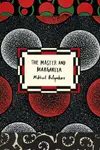 The Master and MargaritaMikhail Bulgakov · 1967Vintage Classic Russians SeriesCommunity rating: 3.87 out of 5
The Devil comes to atheist 1930s Moscow — as the urbane Professor Woland and his grotesque retinue, including a giant talking cat — and turns the city's literary elite inside out. Interwoven are the story of the Master, a persecuted writer, and Margarita, who bargains with dark powers to save him, and a retelling of Pontius Pilate and Yeshua in ancient Jerusalem. Bulgakov's secretly written masterpiece is a wild, funny, profound satire of tyranny and cowardice.
- dual timeline
- morally grey
- sacrifice
- redemption arc
- 30
 Life, the Universe and EverythingDouglas Adams · 1982The Hitchhiker's Guide to the Galaxy #3Community rating: 4.31 out of 5
Marooned on prehistoric Earth, Arthur Dent and Ford Prefect are hurled back into the cosmos just in time to face the ancient killers of the planet Krikkit, who mean to destroy all life in the universe. Reunited with Zaphod, Trillian, and Marvin, Arthur races to stop the Krikkit robots — through immortal grudges, impossible flying, and a great deal of cricket. The third book in Douglas Adams's comic science-fiction saga.
- fish out of water