Most Read Literary Fiction Books
Most Read Literary Fiction Books
These are the Literary Fiction books most read by Seekquel members, ranked by real reading activity across 916 titles, not scraped popularity.
Based on Seekquel member reading activity. Updated weekly.
- 1
 The Seven Husbands of Evelyn HugoTaylor Jenkins Reid · 2017Famous Women Quartet #1Community rating: 4.45 out of 5Community spice: 1.0 out of 51.0
Legendary Hollywood icon Evelyn Hugo is ready to spill the secrets of her glamorous and scandalous life. She chooses an unknown reporter to tell her story, detailing her rise to fame, her seven marriages, and the truths behind the headlines. It's a look at the immense ambition and personal costs behind achieving ultimate stardom.
- secret identity
- dual timeline
- 2
 The Silent PatientAlex Michaelides · 2019Community rating: 3.94 out of 5
Alicia Berenson, a famous painter, shoots her husband five times and then never speaks another word. Her refusal to explain her actions turns a domestic tragedy into a mystery that captures public imagination. Theo Faber, a psychotherapist, is determined to unravel what happened that night and get Alicia to speak, even if it means confronting his own darkness.
- unreliable narrator
- 3
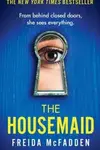 The HousemaidFreida McFadden · 2022The Housemaid #1Community rating: 3.88 out of 5Community spice: 2.0 out of 52.0
With a criminal record and nowhere to live, Millie Calloway is desperate for a fresh start when the wealthy Winchester family hires her as their live-in housemaid. The job comes with a beautiful Long Island house, a generous salary — and an attic bedroom that locks only from the outside. Millie’s employer, Nina Winchester, is erratic and increasingly cruel, leaving impossible demands and cleaning up messes that make no sense, while Nina’s charming husband, Andrew, treats Millie with a warmth that feels like a lifeline. As Millie tries to keep her head down and her past hidden, she realizes the household’s polished surface conceals something far more dangerous, and that the question of who holds the power here is not as settled as it looks. The first book in the series that became McFadden’s global breakout, it delivers the mid-book reversal that made her a fixture of word-of-mouth thriller recommendations.
- unreliable narrator
- morally grey
- 4
 Animal FarmGeorge Orwell · 1945Signet ClassicsCommunity rating: 4.23 out of 5
When the mistreated animals of Manor Farm rise up and drive out their drunken human owner, they establish a new order founded on a single, hopeful principle: all animals are equal. Led by the pigs, the most clever of the animals, the farm is renamed and the beasts set about running their world for their own benefit. But power reshapes those who hold it. As the ambitious boar Napoleon consolidates control, the founding ideals are quietly rewritten, dissent is punished, and the promises of the revolution curdle into a tyranny that looks unsettlingly like the one it replaced. The other animals, loyal and hardworking, struggle to remember how things were meant to be. George Orwell's short, savage fable uses a barnyard uprising to trace how revolutions are betrayed, how language is bent to serve power, and how easily the many can be ruled by the few. First published in 1945, it remains one of the most enduring political allegories ever written.
- 5
 1984George Orwell, Michael Dean · 2020Community rating: 4.35 out of 5
A simplified retelling of George Orwell's dystopian classic, adapted by Michael Dean for the Penguin Readers / Pearson English graded-reader series at Level 4 for learners of English. Winston Smith lives in Oceania, a state where the Party controls every fact, every image, and every thought, and where the face of Big Brother watches from every wall. Winston's job is to rewrite old newspapers so the past always agrees with the present, but in secret he hates the Party and longs for the truth. When he falls in love with Julia, the two try to hold on to something real in a world built on lies, and their quiet rebellion pulls them toward a confrontation with the Party's terrifying power. The graded text keeps the shape and force of Orwell's story while using controlled vocabulary and shorter sentences, making one of the twentieth century's most important novels accessible to intermediate readers.
- 6
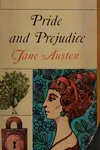 Pride and PrejudiceJane Austen · 1813The Penguin English LibraryCommunity rating: 4.3 out of 5Community spice: 1.0 out of 51.0
Elizabeth Bennet, a spirited young woman, navigates the rigid social expectations of Regency England. When she meets the wealthy and proud Mr. Darcy, their initial disdain for each other sets the stage for a complex dance of wit, misunderstanding, and unexpected attraction. This story explores themes of class, reputation, and the search for true love amidst societal pressures.
- enemies to lovers
- grumpy sunshine
- 7
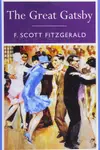 The Great GatsbyF. Scott Fitzgerald · 1925Scribner Library #1Community rating: 4.01 out of 5Community spice: 1.5 out of 51.5
Set on Long Island in the summer of 1922, The Great Gatsby is narrated by Nick Carraway, a young Midwesterner newly arrived in New York and renting a modest cottage next door to a vast mansion. His neighbor is Jay Gatsby, a self-made millionaire famous for the lavish parties he throws every weekend, though almost no one knows where his fortune came from or what he truly wants. Through Nick, we learn that Gatsby's glittering displays are all in service of a single obsession: Daisy Buchanan, the woman he loved before the war and who is now married to the wealthy, brutish Tom Buchanan. As Nick is drawn into the tangled lives of the East Egg and West Egg elite, the distance between old money and new, between illusion and reality, becomes impossible to bridge. F. Scott Fitzgerald's 1925 novel is a compact, lyrical portrait of the Jazz Age and a piercing critique of the American Dream. Its symbols — the green light across the bay, the fading eyes of Doctor T. J. Eckleburg, the valley of ashes — have become part of the language, and its story of longing, class, and self-invention remains one of the most enduring in American literature.
- 8
 The Midnight LibraryMatt Haig · 2020The Midnight World #1Community rating: 4.25 out of 5
Nora Seed's life has narrowed to nothing she wants. At midnight she finds herself in a library between life and death, where every book opens onto a life she might have lived — and where her old school librarian is waiting to help her find out which one she actually wants.
- second chance
- portal fantasy
- mentor figure
- 9
 Dark MatterBlake Crouch · 2016Community rating: 4.02 out of 5
Jason Dessen has a good life: a stable career teaching physics, a marriage he still cherishes, and a teenage son he adores — a life he chose over the dazzling scientific career he once seemed destined for. Walking home from a bar one night, he's abducted at gunpoint by a masked figure who drugs him and leaves him in an unfamiliar world. In this world, Jason is not a community-college professor but an celebrated physicist, globally renowned for a breakthrough in quantum technology. His wife isn't his wife. His son was never born. Everything he built his identity around exists here only as the road not taken — and Jason has to figure out how, and whether, he can find his way back to the family and the ordinary life he chose, before another version of himself claims it as his own. Blake Crouch's genre-bending thriller fuses hard science-fiction ideas about the multiverse and the paths not taken with a relentless, propulsive plot, asking how far a person will go to reclaim a life that was never guaranteed to be the only one.
- 10
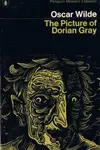 The Picture of Dorian GrayOscar Wilde · 1890Community rating: 4.4 out of 5
When the painter Basil Hallward completes a portrait of the beautiful young Dorian Gray, Dorian makes an idle, despairing wish: that the picture might age in his place, and that he could stay forever as young and lovely as the day it was painted. His wish is granted. As Dorian, encouraged by the cynical, epigram-spouting Lord Henry Wotton, gives himself over to a life of pleasure, cruelty, and corruption, his face remains untouched — while the portrait, hidden away, grows monstrous with every sin. Oscar Wilde's only novel is a dark fable of aestheticism, vanity, and moral consequence, as sharp in its wit as it is unsettling in its horror. Around Dorian's unchanging beauty, Wilde builds a Faustian parable about the cost of a life lived purely for sensation, and a portrait of Victorian society's obsession with surface and youth. First published in 1890 and expanded the following year, the book scandalised its first readers and remains one of the most enduring works of Gothic and philosophical fiction in English.
- 11
 The Invisible Life of Addie LaRueV.E. Schwab · 2020Community rating: 4.12 out of 5Community spice: 2.0 out of 52.0
In 1714, in the French village of Villon-sur-Sarthe, a young woman named Addie LaRue refuses the life of marriage and domesticity laid out for her and, in desperation, prays to the old gods after dark. A green-eyed stranger answers — granting her freedom and endless life, but at a cruel price: everyone she meets forgets her the moment she is out of sight. She can leave no mark on the world: no words she writes will stay, no face will hold her memory. For three hundred years Addie wanders through history — Revolutionary France, wartime Europe, modern New York — learning to live as a woman no one can remember, locked in a long duel of wills with the darkness that cursed her. Then, in 2014, she walks into a Manhattan bookshop and a young man named Henry says the impossible: he remembers her name. Moving between Addie's centuries-long past and her present in New York, the novel is a meditation on memory, art, freedom, and the human hunger to be remembered — and on what it costs to make a bargain you cannot take back.
- dual timeline
- 12
 Fahrenheit 451Ray Bradbury · 1963Community rating: 3.95 out of 5
In a future America, firemen do not put out fires—they start them. Books are illegal, and Guy Montag's job is to burn any that are found, along with the houses that hide them. He does his work without question until a series of encounters cracks the surface of his contented life: a curious teenage neighbor who asks whether he is really happy, a woman who chooses to die with her books rather than live without them, and a wife who has quietly given up on everything but the voices coming from the walls. Unsettled, Montag begins to steal the books he is supposed to destroy, hoping they hold whatever it is his world has lost. His awakening puts him on a collision course with his superior and with a society engineered to keep everyone entertained, medicated, and incapable of sustained thought. Ray Bradbury's classic dystopian novel is a fierce, lyrical warning about censorship, mass media, and the quiet ways a culture can decide that thinking is too much trouble. Decades after publication it remains one of the most widely read and debated novels about the value of books and the cost of their loss.
- 14
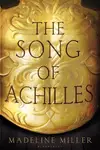 The Song of AchillesMadeline Miller · 2011Community rating: 4.28 out of 5
Discover the legendary tale of Achilles, the greatest warrior of the Greeks, through the eyes of his devoted companion, Patroclus. Exiled from his homeland, Patroclus finds an unlikely bond with the demigod Achilles, their connection deepening amidst the brutal realities of the Trojan War. This retelling offers a fresh perspective on a timeless story of love, war, and destiny.
- 15
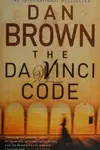 The Da Vinci CodeDan Brown · 2003Robert Langdon #2Community rating: 3.91 out of 5
A murder inside the Louvre pulls symbologist Robert Langdon into an overnight chase across Paris and London, chasing a trail of clues hidden in the works of Leonardo da Vinci.
- mystery box
- 16
 The Book ThiefMarkus Zusak · 2005Community rating: 4.34 out of 5
Narrated by Death itself, The Book Thief follows Liesel Meminger, a young girl sent to live with foster parents in a small German town after the death of her brother and the disappearance of her Communist mother. In her new home on Himmel Street, Liesel's foster father, Hans, teaches her to read using a book she stole at her brother's graveside, and reading soon becomes both an escape and a quiet act of defiance in a country consumed by Nazi rule. As the war tightens its grip, the Hubermanns take an even greater risk: hiding Max Vandenburg, a young Jewish man, in their basement. Liesel's friendship with Max, and with the boy next door, Rudy Steiner, gives the novel its warmth even as Death — who narrates with weary, unsentimental compassion — reminds readers throughout how precarious and temporary these small kindnesses are. Markus Zusak's novel is at once a coming-of-age story, a meditation on the power of words to console and to destroy, and an unusual, deeply humane account of ordinary Germans living under a regime built on cruelty.
- coming of age
- 17
 CirceMadeline Miller · 2018Community rating: 4.03 out of 5
Circe is born to Helios, god of the sun, but she is a disappointment: not powerful, not beautiful by the standards of gods, with a voice like a mortal's and none of the obvious gifts of her siblings. Overlooked in her father's glittering halls, she discovers a talent the gods fear, the mortal art of witchcraft, and when she uses it she is exiled to the deserted island of Aiaia to live out eternity alone. There, in solitude, Circe grows into her power. She tames wild beasts, masters herbs and transformations, and over the centuries crosses paths with some of the most famous figures of Greek myth, including Daedalus, the Minotaur, Medea, and the cunning Odysseus, whose visit changes the course of her long life. As threats gather from both gods and mortals, Circe must decide where she truly belongs. Madeline Miller retells the story of a minor goddess from The Odyssey as a full life, giving voice to a woman written for millennia as a footnote. Lyrical and quietly fierce, Circe is a meditation on power, motherhood, mortality, and the freedom of choosing one's own nature.
- 18
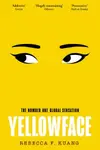 YellowfaceR. F. Kuang · 2023Community rating: 4.02 out of 5
June Hayward and Athena Liu were supposed to be twin rising stars of the literary world. Instead, Athena is a wildly successful, critically adored Chinese American novelist, and June is a struggling white writer no one remembers. When Athena dies in a freak accident, June impulsively steals her just-finished manuscript, a sweeping novel about the Chinese laborers of the First World War, and revises and publishes it as her own, under the racially ambiguous pen name Juniper Song. The book is a smash, and June finally has the fame she believes she deserves. But the lie is fragile. As readers, journalists, and the internet begin to probe the story's origins, accusations of plagiarism and cultural appropriation gather, and June is pulled into a spiral of justification, paranoia, and escalating deceit. Narrated entirely in June's slippery, self-serving first-person voice, this contemporary novel is a sharp, propulsive satire of the publishing industry, performative diversity, racism, and the outrage machine of social media. It is Kuang's first departure from fantasy, turning her eye on the very business that made her, and on who gets to tell which stories.
- unreliable narrator
- morally grey
- 19
 DuneFrank Herbert · 1965Dune #1Community rating: 4.16 out of 5
On the desert planet Arrakis, the only source in the universe of the spice melange — a substance that extends life, expands consciousness, and makes interstellar travel possible — power is everything and water is worth more than gold. When the Emperor grants stewardship of Arrakis to House Atreides, Duke Leto knows the gift is a trap laid by his mortal enemies, House Harkonnen. He takes it anyway, moving his family and household to the harsh world of sand, sandworms, and the fierce, blue-eyed native Fremen. At the center of the story is Leto's young son, Paul Atreides, heir to a noble house and the possible fulfilment of a centuries-old breeding program and prophecy. Betrayal scatters his world, and Paul is forced into the deep desert, where he must survive among the Fremen and reckon with a destiny that could reshape the galaxy — and cost far more than he imagines. Frank Herbert's landmark novel is a dense, layered epic of ecology, religion, politics, and the perils of messianic power. Winner of the first Nebula Award and co-winner of the Hugo, it founded one of science fiction's most influential universes and remains a touchstone of the genre.
- chosen one
- court intrigue
- 20
 The AlchemistPaulo Coelho · 1988Community rating: 3.64 out of 5
An Andalusian shepherd sells his flock to chase a recurring dream of treasure at the Egyptian pyramids, and learns along the way to read the omens of his own life.
- quest
- 22
 BabelR. F. Kuang · 2022Community rating: 4.25 out of 5
Oxford, the 1830s. Robin Swift, orphaned by cholera in Canton and raised in London by the enigmatic Professor Lovell, has spent his childhood drilled in Latin, Greek, and Mandarin for one purpose: enrollment at Babel, Oxford's Royal Institute of Translation and the source of the British Empire's power. At Babel, translators inscribe silver bars with the meaning lost between languages, unlocking magic that keeps the Empire's ships, factories, and armies running. Robin finds a fierce found family among his cohort of fellow outsiders — Ramy, Victoire, and Letty — but as Britain's hunger for silver pushes it toward war with China over opium, Robin is forced to choose between the institution that made him and the revolutionary resistance sworn to bring it down.
- dark academia
- 23
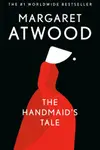 The Handmaid's TaleMargaret Atwood · 1985The Handmaid's Tale #1Community rating: 4.33 out of 5
In the near future, a fundamentalist regime called the Republic of Gilead has overthrown the United States government. In response to plummeting birth rates, the new order strips women of their rights, their money, their names, and their autonomy. The few remaining fertile women are conscripted as Handmaids and assigned to powerful households to bear children for the ruling Commanders and their wives. Offred is one such Handmaid, serving in the home of the Commander and his wife Serena Joy. Through her quiet, watchful narration, she reconstructs the ordinary life that was taken from her — a husband, a daughter, a job, a name — and records the ceremonies, surveillance, and small rebellions that define her present. As she navigates the dangers of forbidden connection and a nascent resistance, she holds onto memory itself as a form of defiance. First published in 1985, Margaret Atwood's The Handmaid's Tale is one of the defining dystopian novels of the twentieth century, a chilling meditation on gender, power, complicity, and reproductive control that has only grown in resonance. It inspired an acclaimed television adaptation and the 2019 sequel The Testaments.
- 24
 Normal PeopleSally Rooney · 2018Community rating: 3.48 out of 5
Connell and Marianne grow up in the same small town in County Sligo — he is popular and she is not, and his mother cleans her family's house. Over four years, through Trinity College Dublin and back again, they keep circling each other, drawn together and pulled apart by class, silence and the difficulty of saying plainly what they want.
- coming of age
- multiple povs
- 26
 The Two TowersJ.R.R. Tolkien · 1954The Lord of the Rings #2Community rating: 4.41 out of 5
The Fellowship has broken. Frodo and Sam press on toward Mordor alone, guided — and stalked — by the treacherous Gollum, who knows the way through the Dead Marshes and to the black gate of the enemy's land. Their path will take them into the lair of a monstrous, ancient evil that guards the pass into Mordor itself. Meanwhile Aragorn, Legolas, and Gimli pursue the orc-band that has captured Merry and Pippin, a chase that carries them into the ancient forest of Fangorn and to the towers of Isengard, where the wizard Saruman has turned traitor and the Ents, oldest of all speaking creatures, are stirred at last to war. In Rohan, the Riddermark stands on the edge of ruin under a king held captive by his own councillor's treachery, and Aragorn must help rally its people before Saruman's armies overwhelm them. The second volume of The Lord of the Rings splits its narrative between these two threads — the small, grim journey toward Mount Doom and the mounting war across Middle-earth — building toward the fall of Isengard and the desperate defense of Helm's Deep.
- quest
- 27
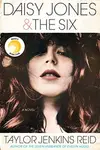 Daisy Jones & The SixTaylor Jenkins Reid · 2019Famous Women Quartet #2Community rating: 4.06 out of 5
In the late 1960s, a wild young singer named Daisy Jones and an up-and-coming rock band led by the intense Billy Dunne cross paths. Together, they rise to global superstardom as Daisy Jones & The Six, creating legendary music while spiraling into a web of addiction, rivalry, and forbidden attraction. This oral history chronicles their meteoric rise and the sudden, mysterious split that shocked the world at the height of their fame.
- multiple povs
- forbidden love
- 28
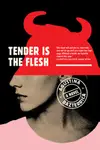 Tender Is the FleshAgustina Bazterrica · 2017Community rating: 3.98 out of 5
After a virus makes all animal meat lethal to humans, the state legalizes the breeding and slaughter of people for food, laundering it into the euphemism 'special meat.' Marcos Tejo runs a processing plant and moves through the trade with practiced, grief-numbed detachment—until a supplier gifts him a live female of the finest breed, and the wall between product and person starts to give way. A cold, precise dystopian horror about capitalism, complicity, and the language that makes atrocity routine.
- morally grey
- 29
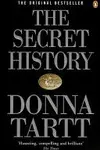 The Secret HistoryDonna Tartt · 1992Community rating: 3.89 out of 5
At Hampden College in rural Vermont, scholarship student Richard Papen talks his way into an insular circle of Classics students studying under the magnetic Julian Morrow. Their pursuit of beauty and transcendence carries them past ordinary morality and into a killing — and the novel, narrated in hindsight, is less a whodunit than a study of guilt, complicity and intellectual arrogance. Donna Tartt's 1992 debut is credited with popularizing dark academia.
- dark academia
- morally grey
- betrayal
- 30
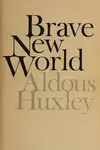 Brave New WorldAldous Huxley · 1932Brave New World #1Community rating: 4.02 out of 5
Brave New World is Aldous Huxley's 1932 dystopian novel and one of the defining works of twentieth-century science fiction. It imagines a distant-future World State that has traded away family, art, religion, and struggle for guaranteed stability: children are decanted from bottles and conditioned into rigid castes, discontent is dissolved by the pleasure-drug soma, and citizens are engineered from birth to love the servitude assigned to them. The story follows Bernard Marx, an Alpha who feels subtly out of step with his frictionless society, and Lenina Crowne, who embodies its ideals. A trip to a "Savage Reservation" brings them back to London with John, a young man raised on Shakespeare and outside the World State's control. His collision with a civilization that cannot understand grief, longing, or belief drives the novel toward its unsettling conclusion. By turns satirical and chilling, Huxley's book interrogates the price of manufactured happiness and the loss of individuality in a technological age. Alongside Orwell's Nineteen Eighty-Four, it remains one of the most argued-over visions of where comfort and control might lead.