Mona AwadLiterary Fiction · Horror·b. 1978
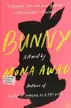
Bunny
Synopsis
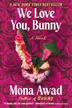
Bunny is Mona Awad's cult dark-academia novel — a surreal, savagely funny, horror-tinged satire of female friendship, creative ambition, and the ache to belong.
Samantha Mackey is a scholarship outsider in the tiny, hyper-selective MFA fiction program at New England's Warren University. She loathes her cohort: a clique of twee, wealthy women who call one another "Bunny" and seem to move and speak as a single saccharine organism. Then an invitation arrives, and against every instinct Samantha finds herself pulled into their orbit — and into the strange, ritualistic "Workshop" they hold off campus.
As Samantha sinks deeper into the Bunnies' cloying, sinister world, the line between imagination and reality dissolves. Awad twists the familiar "outsider joins the mean-girl clique" story into something grotesque and hallucinatory, equal parts campus comedy and body-horror fever dream. Unsettling, allusive, and deliberately disorienting, Bunny rewards readers who like their literary fiction genuinely strange.
How it reads
Prose complexity 7/10
Content warnings (4)
Substance AbuseViolenceGoreAnimal Cruelty
- MehUna protagonista sin sentido ni pensamiento crítico. Es escribir Mean girls pero tratándolo de hacer parecer misterioso.
- Bunny swings for something audacious and lands half the shots. The other half? They sail past, trailing ambition and leaving bewilderment in their wake. Here's the thing: Awad understands spectacle. She grasps the mechanics of menace wrapped in pastel, the grotesque hiding beneath surface-level cuteness. Samantha—our narrator, lonely and prone to elaborate fictions—gets pulled into the orbit of four girls who call themselves Bunny, who exist in some liminal space between MFA workshop satire and body-horror nightmare. The premise crackles. Friendship as possession. Creation as destruction. Narrative unreliability as both shield and weapon. But the execution snags. Consistently. The surrealism that should unsettle instead becomes exhausting. Awad piles image upon image—grotesque fauna, melting bodies, rabbits as metaphor and literal horror—but without emotional through-line, the strangeness reads as performance rather than revelation. You recognize the author working very hard to be strange, and that recognition kills the strangeness dead. Samantha's voice is the book's central problem. She's supposedly a pathological liar whose unreliability should make us question everything, yet the narrative never commits to this ambiguity. We oscillate between believing her account and suspecting it's warped—but not in ways that deepen the thriller. Instead, this wavering feels like the author hasn't decided what story to tell, so she's telling all of them at once, badly. The Bunnies themselves—the four girls—remain sketch-thin despite being the novel's predatory engine. They function as collective menace rather than individual humans. What made them this way? What do they actually want beyond creating grotesque sculptures? The novel poses these questions and then sidesteps them, preferring atmosphere to anatomy. And the workshop scenes—this is where the book truly deflates. The supposedly transgressive "creations" emerge as adolescent edgeliness dressed up in purple prose. There's shock value but no real stakes, no genuine consequence that lands emotionally. You sense Awad enjoying the transgression more than exploring what transgression actually costs. The body horror elements read dated now, recycled from a specific moment of internet-driven surrealism. The grotesque became its own aesthetic cliché faster than anyone anticipated, and Bunny—published in 2019—already feels trapped in that amber. What bothers me most: the book mistakes being opaque for being profound. Genuine ambiguity serves mystery. This just feels withholding, like the author is playing keep-away with the reader and calling it depth. We're supposed to excavate meaning from Samantha's contradictions, but there's only so much analysis can do when the narrative offers no handholds. The ending especially dissatisfies—a turn toward violence that arrives with all the emotional weight of a shrug. After 300+ pages of surreal accumulation, the finale doesn't crack the code. It just ends, leaving you with fragments and the suspicion that the emperor's clothes aren't just transparent—they were never there. Here's what saves it from one star: Awad has genuine stylistic flair. Sentences snap with dark humor. The initial premise hooks immediately. The early chapters possess real dread. She's clearly talented; Bunny just reads like a talented writer overextending herself, mistaking excess for depth. It's a book that works better in concept than execution—better summarized at parties than actually read.
- DNF (but I read the summary to know the ending, made me happier that I decided to leave this book behind) So basically this is mean girls on crack x True blood minus the vampires (excuse me if I'm a millennial and these are my references). So far every hyped book I read was a downer, I read so many good reviews from my GR friends that I couldn't wait to read it, but I got bored, I was halfway through this when I decided life is too short and my tbr too big to waste time on something I'm not enjoying. Maybe I read it in the wrong time (started it right after Lapvona because I wanted to maintain the bizarre vibe I was in, but super meh). All in all, I'm old, I don't get young people tastes, OR I know a lot about my own tastes that the hype doesn't affect me? Sounds pretentious, I just didn't enjoy the book. Period.
- Realmente existe esse negócio de que alguns livros não são pra todo mundo, e esses definitivamente não é pra mim ... A escrita da autora é maravilhosa e só por isso esse livro não foi pra mim ... No começo nada fazia sentido, mas depois piorou um pouco, acho que eu estava sóbria demais pra entender essa história !
- Brain f••• in the best way ❤️🐇