Most Read Psychology Books
Most Read Psychology Books
These are the Psychology books most read by Seekquel members, ranked by real reading activity across 85 titles, not scraped popularity.
Based on Seekquel member reading activity. Updated weekly.
- 1
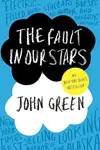 The Fault in Our StarsJohn Green · 2012Community rating: 4.15 out of 5
Hazel Grace Lancaster is sixteen and has lived with terminal thyroid cancer for years, kept alive by an experimental drug and tethered to a portable oxygen tank. Wry, guarded, and impatient with the platitudes that surround the dying, she attends a support group mostly to appease her mother. There she meets Augustus Waters, a confident seventeen-year-old in remission from osteosarcoma who lost part of a leg to the disease and who is preoccupied with the fear of leaving no mark on the world. Their friendship turns into a tentative, clear-eyed romance built on shared humor, a love of books, and an unwillingness to pretend that illness is noble. Hazel's favorite novel, An Imperial Affliction, ends mid-sentence, and Augustus arranges a trip to Amsterdam so the two can ask its reclusive author what happens to the characters after the final page. John Green writes about young people facing mortality without sentimentality or easy uplift. The Fault in Our Stars is a story about first love, the search for meaning, and the difference between being remembered and being loved while you are here. Sharp and funny as often as it is devastating, it became one of the defining young-adult novels of its decade.
- 2
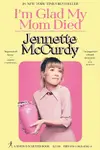 I'm Glad My Mom DiedJennette McCurdy · 2022Community rating: 4.42 out of 5
The #1 New York Times bestselling memoir by the iCarly and Sam & Cat star, about a childhood organised entirely around her mother's ambitions — auditions from the age of six, calorie restriction taught as "a secret between us," and the eating disorders, addiction and early fame that followed — and the disorienting grief and relief that came after her mother's death in 2013. Adapted from McCurdy's one-woman stage show and written with mordant, disarming humour.
- coming of age
- 3
 The Bell JarSylvia Plath · 1963Community rating: 3.84 out of 5
A talented, ambitious young woman in 1950s New England spirals into a mental breakdown while struggling with the expectations of her generation. Told through Esther Greenwood's darkly comic and lyrical internal monologue, The Bell Jar is a semi-autobiographical portrait of depression, ambition, and the suffocating role women were forced to play before they could choose their own paths.
- coming of age
- 4
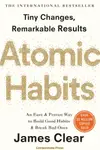 Atomic HabitsJames Clear · 2018Community rating: 4.05 out of 5
This book explores how small, incremental changes can lead to remarkable results in personal and professional life. It offers practical strategies for building good habits, breaking bad ones, and mastering the tiny behaviors that shape who you are. Discover how to make big improvements by focusing on atomic habits.
- 5
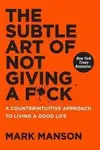 The Subtle Art of Not Giving a F*ckMark Manson · 2016Mark Manson Collection #1Community rating: 3.74 out of 5
Mark Manson's The Subtle Art of Not Giving a F*ck is a counterintuitive self-help book that pushes back against the relentless positivity of the genre. Manson's argument is simple but bracing: caring about everything leaves you exhausted and anxious, so the real skill is choosing the few things that genuinely deserve your attention and letting the rest go. Drawing on Stoic ideas, blunt personal anecdotes, and the occasional pointed profanity, Manson makes the case that struggle is unavoidable and even necessary — that a good life comes not from escaping problems but from picking better problems to have. He examines how values shape our sense of success, why entitlement and the pursuit of constant happiness backfire, and how accepting responsibility (even for things that aren't our fault) restores a sense of control. Irreverent, funny, and deliberately unglamorous, the book reframes self-improvement around honesty, limitation, and the acceptance of death rather than affirmations and hustle. It became a global bestseller and a defining title of the modern "anti-self-help" wave.
- 6
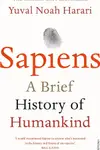 Sapiens: A Brief History of HumankindYuval Noah Harari · 2011Homo #1Community rating: 4.14 out of 5
Harari's account of how Homo sapiens rose from an unremarkable ape to the dominant species on Earth, tracing the cognitive, agricultural, and scientific revolutions that shaped human societies.
- 7
 Tuesdays with MorrieMitch Albom · 1997Community rating: 4.17 out of 5
When Mitch Albom stumbles across a television interview with his old college sociology professor, Morrie Schwartz, he realizes how far he has drifted from the person he once meant to become. Sixteen years after promising to keep in touch, Albom—now a driven, workaholic sports journalist—reconnects with Morrie, who is in the final months of his life after a diagnosis of amyotrophic lateral sclerosis (ALS). What begins as a single visit becomes a standing appointment: every Tuesday, Albom flies across the country to sit with his dying mentor for one last course, this one on the meaning of life. Over fourteen Tuesdays, Morrie shares hard-won wisdom on the subjects that matter most—love, work, family, aging, forgiveness, regret, and how to make peace with death—while his body steadily fails him. Published in 1997, Tuesdays with Morrie is a slim, deeply personal memoir that became one of the best-selling books of its kind. Its power lies less in plot than in the plain, unsentimental honesty of Morrie's lessons and the quiet transformation they work on the student who came to say goodbye.
- 8
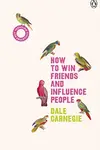 How to Win Friends and Influence PeopleDale Carnegie · 1936Community rating: 3.98 out of 5
Dale Carnegie's 1936 guide to getting along with people, built from decades of public-speaking and human-relations courses he had taught since around 1912. It argues that most social and business success comes down to a short list of habits: never criticize or complain, give honest appreciation, remember a person's name, and let someone reach your conclusion on their own. It has sold more than 30 million copies since publication, one of the best-selling nonfiction books ever printed.
- 9
 Man's Search for MeaningViktor E. Frankl · 1946Community rating: 4.13 out of 5
Psychiatrist Viktor Frankl draws on his survival of three years in Nazi concentration camps to ask why some prisoners kept their will to live while others gave up. His answer — that we always retain the freedom to choose our attitude — grounds logotherapy, his conviction that the deepest human drive is the search for meaning. A sober, humane, and quietly hopeful classic.
- 10
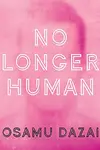 No Longer Human太宰 治 · 1948Community rating: 3.91 out of 5
A man who has spent his life hiding behind a mask of clownish performance because he cannot understand or connect with others' emotions, and whose self-loathing drives him toward addiction.
- 11
 WonderR. J. Palacio · 2012Wonder #1Community rating: 4.21 out of 5
August "Auggie" Pullman is an ordinary ten-year-old in almost every way — he loves Star Wars, video games, and ice cream, and he has a wry, funny way of looking at the world. But Auggie was born with a rare facial difference, and after twenty-seven surgeries and a childhood spent being homeschooled, he has never gone to a real school. That changes when his parents enroll him in fifth grade at Beecher Prep. Wonder follows Auggie's first year among classmates who stare, whisper, and sometimes cruelly exclude him — and the handful who become true friends. Told in turn by Auggie and the people around him, including his fiercely protective older sister Via and his friends Jack and Summer, the novel widens its lens so that we see the same events from many sides. R.J. Palacio's modern classic is a warm, clear-eyed story about kindness, courage, and the ordinary heroism of simply choosing to be good to one another.
- coming of age
- multiple povs
- 12
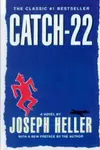 Catch-22Joseph Heller · 1961Catch-22 #1Community rating: 4.17 out of 5
Captain John Yossarian is a U.S. Army Air Forces bombardier stationed on the tiny Mediterranean island of Pianosa in the final year of World War II, and he has decided that everyone is trying to kill him. It doesn't matter that there's a war on; the enemy, as far as Yossarian is concerned, is anyone — friend or foe — who wants him to fly more missions. He would very much like to stop. The only way out is to be declared insane, but here he runs into the catch. Catch-22 specifies that a concern for one's own safety in the face of real and immediate danger is the process of a rational mind. To be excused from flying missions, a man must be crazy; but any man who asks to be excused is obviously sane, and so must keep flying. It is, Yossarian realizes, a perfect trap, and it is everywhere. Joseph Heller's savage, hilarious, and structurally daring novel spirals through a huge cast of grotesques — the war-profiteering mess officer Milo Minderbinder, the glory-hungry Colonel Cathcart who keeps raising the number of required missions, the bewildered chaplain — in a looping, non-chronological assault on the logic of war and bureaucracy. Beneath the farce runs real horror, and Catch-22 has become one of the defining anti-war novels of the twentieth century, its title now a byword for any absurd, no-win situation.
- 13
 The Body Keeps the ScoreBessel van der Kolk · 2014Community rating: 3.93 out of 5
Trauma is not just an event that took place sometime in the past; it is also the imprint left by that experience on mind, brain and body. Drawing on more than three decades of work with combat veterans, abused children, and survivors of assault and disaster, Dr. Bessel van der Kolk shows how trauma literally reshapes both body and brain, compromising sufferers' capacities for pleasure, engagement, self-control and trust. Blending clinical case studies with cutting-edge neuroscience, van der Kolk explains why traumatized people are haunted by intolerable sensations and emotions long after the danger has passed, and why talk therapy alone is often not enough. He then explores a range of treatments — from EMDR and neurofeedback to yoga, theatre, and mindfulness — that can help the brain to "rewire" itself and reactivate the innate capacity for healing. The Body Keeps the Score is a landmark work on the science of trauma and recovery, arguing with clarity and compassion that by understanding how trauma lives in the body, we can find genuine paths back to wholeness.
- 14
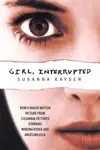 Girl, InterruptedSusanna Kaysen · 1993Community rating: 4.02 out of 5
In 1967, after a session with a psychiatrist she'd never met, Susanna Kaysen was diagnosed with borderline personality disorder and sent to McLean Hospital. This memoir recounts her two-year stay in the psychiatric hospital, offering a candid look at the lives of the young women she met there. Kaysen navigates the blurred lines between sanity and madness, reflecting on her experiences and the nature of mental illness.
- 16
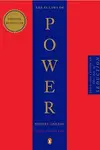 The 48 Laws of PowerRobert Greene · 1999Community rating: 3.88 out of 5
Explore the timeless strategies of power and influence with Robert Greene's essential guide. This book draws on historical examples and philosophical insights to teach you how to navigate social dynamics and achieve your goals. Understand the hidden rules of human interaction and master the art of power.
- 17
 Thinking, Fast and SlowDaniel Kahneman · 2014Community rating: 3.47 out of 5
Explore the two distinct systems that shape human thought: the rapid, intuitive System 1 and the deliberate, logical System 2. Through engaging examples, this book reveals the extraordinary power of quick thinking, the influence of emotion on our choices, and the pitfalls of cognitive biases. Learn when to trust your intuition and when to engage in deeper reflection, gaining practical insights for both personal and professional life.
- 18
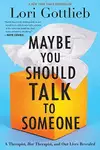 Maybe You Should Talk to SomeoneLori Gottlieb · 2019Community rating: 4.07 out of 5
Lori Gottlieb is a practicing psychotherapist whose days are spent helping other people untangle their lives. Then her own long-term relationship collapses without warning, and she finds herself doing something she has spent her career recommending to others: sitting on the other side of the room, in a state of crisis, seeing a therapist of her own. The book braids Gottlieb's sessions with her wry, unsparing therapist, Wendell, together with the stories of four of her own patients. There is John, an abrasive Hollywood producer convinced everyone around him is an idiot; Julie, a young newlywed forced to reckon with a devastating diagnosis; Rita, approaching seventy and haunted by regret; and Charlotte, a twenty-something caught in self-defeating patterns. As their lives unfold, the line between healer and patient blurs, and Gottlieb turns the same searching attention on herself. Funny, humane, and quietly profound, Maybe You Should Talk to Someone is a memoir about the strange intimacy of therapy and a wide-ranging meditation on change, mortality, and meaning. It demystifies what actually happens in the consulting room and makes a persuasive case that self-examination, however uncomfortable, is where real change begins.
- 19
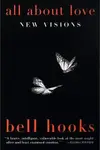 All About Lovebell hooks · 1999Love Song to the Nation #1Community rating: 3.72 out of 5
In All About Love: New Visions, cultural critic and feminist theorist bell hooks argues that our society's confusion and cynicism about love stem from a failure to understand what love truly is. Rejecting the idea of love as a mere feeling, she insists that love is an action — a practice rooted in care, commitment, trust, responsibility, respect, and honesty — and one that cannot be separated from justice. Across a series of clear, personal, and searching essays, hooks examines how a culture shaped by patriarchy, consumerism, and domination distorts our capacity to love, from childhood and family to romance, friendship, community, and spiritual life. Blending memoir, criticism, and ethics, All About Love is both a diagnosis of a loveless culture and a hopeful blueprint for change. It is the first book in hooks's Love Song to the Nation trilogy.
- 20
 The Last LectureRandy Pausch · 2008Community rating: 4.07 out of 5
What would you say if you knew you had only one chance left to speak? Computer science professor Randy Pausch, facing a terminal cancer diagnosis, delivered a powerful "Last Lecture" that became a message about living life fully. This book shares his inspiring wisdom on achieving childhood dreams, overcoming obstacles, and cherishing every moment.
- 21
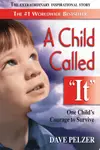 A Child Called "It"David J. Pelzer · 1995The Childhood Abuse Trilogy #1Community rating: 4.27 out of 5
Dave Pelzer's account of the childhood he survived in Daly City, California — singled out by his alcoholic mother, stripped of his name, and starved and beaten while his father looked away. The first volume of his memoir trilogy.
- survival
- 22
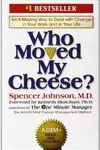 Who Moved My Cheese?Spencer Johnson · 1998Who Moved My Cheese? #1Community rating: 3.79 out of 5
A business fable about two mice and two "littlepeople" who live in a maze and depend on finding cheese at Station C. When the cheese disappears, the four react differently to change: some go looking for more, others cling to what is gone. Spencer Johnson's 1998 parable has sold more than 30 million copies in 37 languages and remains a staple of corporate training and self-help reading.
- 23
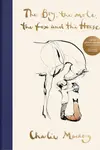 Boy, the Mole, the Fox and the HorseCharlie Mackesy · 2019Community rating: 4.47 out of 5
This is a charming collection of drawings and simple, profound words about a boy's journey. He encounters a mole, a fox, and a horse, and together they share gentle conversations about life, hope, and friendship. It's a lovely reminder of the power of kindness.
- found family
- 24
 12 Rules for Life: An Antidote to ChaosJordan B. Peterson · 2018Rules for Life #1Community rating: 3.88 out of 5
Clinical psychologist Jordan B. Peterson distils decades of practice, mythology, and philosophy into twelve rules for a meaningful life. Ranging from posture and honesty to responsibility and the pursuit of what matters, each rule becomes a wide-ranging essay on confronting chaos with order. A demanding, discursive work of practical psychology rather than easy self-help.
- 25
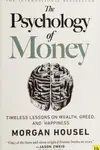 The Psychology of MoneyMorgan Housel · 2020Community rating: 4.1 out of 5
Doing well with money has little to do with how smart you are and a lot to do with how you behave. Morgan Housel makes the case across nineteen short, story-driven chapters, pairing a frugal Vermont janitor who quietly built an eight-million-dollar portfolio with a Harvard-educated finance executive who went bankrupt chasing more. The book argues that patience, humility about luck and risk, and a temperament that can hold steady under uncertainty do more for a person's wealth than any formula, and that money's real reward is the independence to control your own time.
- 26
 The Courage to Be DislikedIchirō Kishimi, Fumitake Koga · 2013The Courage To Series #1Community rating: 3.47 out of 5
Structured as five nights of debate between a philosopher and a skeptical young man, this international bestseller introduces the psychology of Alfred Adler. Its provocative claims — that the past need not determine us, that all problems are interpersonal, and that real freedom requires the courage to be disliked — build toward a vision of living courageously in the present. Accessible, argumentative practical philosophy by Ichiro Kishimi and Fumitake Koga.
- 27
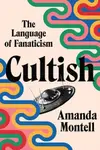 Cultish: The Language of FanaticismAmanda Montell · 2021Community rating: 3.67 out of 5
Linguist Amanda Montell argues that what really binds people to cults and cult-like groups is language — the loaded jargon, chants, mantras, and thought-terminating clichés that build belonging and shut down doubt. Ranging from Jonestown and Scientology to SoulCycle, MLMs, and wellness influencers, she shows how the same techniques operate on a spectrum. A brisk, witty work of linguistics and cultural criticism about the persuasive power of the words around us.
- 28
 MindhunterJohn E. Douglas, Mark Olshaker · 1996Community rating: 3.97 out of 5
Go behind the scenes with FBI legend John E. Douglas, the man who pioneered criminal profiling. This book takes you inside the minds of America's most notorious serial killers as Douglas recounts his experiences interviewing them and reconstructing crime scenes. Discover how he sought to understand the darkest corners of the human psyche.
- mentor figure
- 29
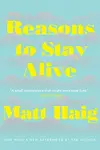 Reasons To Stay AliveMatt Haig · 2015Community rating: 3.97 out of 5
At twenty-four, novelist Matt Haig's world caved in and he came close to ending his life. This bestselling memoir is his frank, hopeful account of living through severe depression and anxiety and slowly finding his way back — part personal story, part reflection on mental illness, and part reassurance, addressed to anyone in the dark, that things can and do get better.
- 30
 In the Dream HouseCarmen Maria Machado · 2019Community rating: 4.08 out of 5
Carmen Maria Machado's memoir explores a past abusive relationship with innovative storytelling. Each chapter uses a different narrative trope to examine the psychological abuse from various angles. Machado also reflects on her upbringing and challenges stereotypes about lesbian relationships, offering a unique perspective on abuse within the queer community.
- multiple povs
- unreliable narrator