Most Read Philosophy & Religion Books
Most Read Philosophy & Religion Books
These are the Philosophy & Religion books most read by Seekquel members, ranked by real reading activity across 53 titles, not scraped popularity.
Based on Seekquel member reading activity. Updated weekly.
- 1
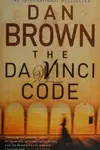 The Da Vinci CodeDan Brown · 2003Robert Langdon #2Community rating: 3.91 out of 5
A murder inside the Louvre pulls symbologist Robert Langdon into an overnight chase across Paris and London, chasing a trail of clues hidden in the works of Leonardo da Vinci.
- mystery box
- 2
 The AlchemistPaulo Coelho · 1988Community rating: 3.64 out of 5
An Andalusian shepherd sells his flock to chase a recurring dream of treasure at the Egyptian pyramids, and learns along the way to read the omens of his own life.
- quest
- 3
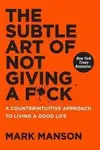 The Subtle Art of Not Giving a F*ckMark Manson · 2016Mark Manson Collection #1Community rating: 3.74 out of 5
Mark Manson's The Subtle Art of Not Giving a F*ck is a counterintuitive self-help book that pushes back against the relentless positivity of the genre. Manson's argument is simple but bracing: caring about everything leaves you exhausted and anxious, so the real skill is choosing the few things that genuinely deserve your attention and letting the rest go. Drawing on Stoic ideas, blunt personal anecdotes, and the occasional pointed profanity, Manson makes the case that struggle is unavoidable and even necessary — that a good life comes not from escaping problems but from picking better problems to have. He examines how values shape our sense of success, why entitlement and the pursuit of constant happiness backfire, and how accepting responsibility (even for things that aren't our fault) restores a sense of control. Irreverent, funny, and deliberately unglamorous, the book reframes self-improvement around honesty, limitation, and the acceptance of death rather than affirmations and hustle. It became a global bestseller and a defining title of the modern "anti-self-help" wave.
- 4
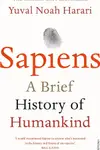 Sapiens: A Brief History of HumankindYuval Noah Harari · 2011Homo #1Community rating: 4.14 out of 5
Harari's account of how Homo sapiens rose from an unremarkable ape to the dominant species on Earth, tracing the cognitive, agricultural, and scientific revolutions that shaped human societies.
- 5
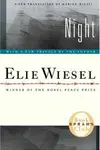 La NuitElie Wiesel · 1956The Night Trilogy #1Community rating: 4.51 out of 5
Elie Wiesel's memoir of his year in the Nazi camps: deported as a teenager from Sighet to Auschwitz, Buna and Buchenwald, he records less the catalogue of atrocity than what the camps did to a devout boy's faith. One of the central texts of Holocaust literature.
- survival
- coming of age
- 6
 Life of PiYann Martel · 2001Community rating: 4.06 out of 5
Pi Patel — full name Piscine Molitor Patel — grows up the son of a zookeeper in Pondicherry, India, a curious, spiritually voracious boy who decides, to the bafflement of everyone around him, to practice Hinduism, Christianity, and Islam all at once. When his family sells the zoo and sails for Canada with some of their animals, disaster strikes: the ship sinks in the Pacific, and sixteen-year-old Pi survives in a lifeboat with the unlikeliest of companions — a wounded zebra, a hyena, an orangutan, and a 450-pound Bengal tiger named Richard Parker. What follows is 227 days adrift: a harrowing, luminous story of survival in which a boy must feed, outwit, and coexist with a predator in the middle of an indifferent ocean. Faith, reason, and the raw will to live are all put to the test, until Pi reaches shore and offers his rescuers a second, very different account of what happened. Yann Martel's Booker Prize–winning Life of Pi is a modern fable about storytelling itself — about the tales we choose to believe and why. By turns thrilling, funny, and philosophical, it asks whether the truest story is the one that happened, or the one that makes us see the world with God in it.
- 7
 Man's Search for MeaningViktor E. Frankl · 1946Community rating: 4.13 out of 5
Psychiatrist Viktor Frankl draws on his survival of three years in Nazi concentration camps to ask why some prisoners kept their will to live while others gave up. His answer — that we always retain the freedom to choose our attitude — grounds logotherapy, his conviction that the deepest human drive is the search for meaning. A sober, humane, and quietly hopeful classic.
- 8
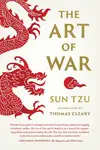 The Art of WarSun Tzu · 500 BCECommunity rating: 3.89 out of 5
Discover the ancient wisdom of Sun Tzu's "The Art of War." This foundational text offers enduring strategies for conflict and leadership, focusing on meticulous planning and understanding your adversary. It remains a vital read for anyone seeking to master strategy, whether in military affairs or modern business.
- mentor figure
- 9
 The ProphetKahlil Gibran · 1923Community rating: 4.13 out of 5
Kahlil Gibran's beloved 1923 book of prose poetry. As the prophet Almustafa prepares to sail home from the city of Orphalese, its people ask him to share his wisdom. In twenty-six poetic sermons he speaks on love, marriage, work, joy and sorrow, freedom, and death — a touchstone of modern spiritual literature.
- 10
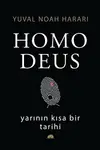 Homo Deus: A History of TomorrowYuval Noah Harari · 2015Homo #2Community rating: 4.14 out of 5
Having charted humanity's rise in Sapiens, Yuval Noah Harari turns from the past to the future. For most of history, humans struggled against famine, plague, and war; now, he argues, we have largely brought these ancient scourges under control and are setting ourselves new goals—immortality, bliss, and a god-like power to engineer life itself. Homo Deus asks what happens to a species that has run out of things to conquer except its own nature. Drawing on history, biology, and the study of intelligence, Harari examines how liberalism, humanism, and free will may give way to new creeds built on data and algorithms, and how biotechnology and artificial intelligence could split humanity or render most of it economically and politically irrelevant. Provocative and wide-ranging, this bestselling work of big-picture nonfiction is less a prediction than a set of urgent questions about where our newfound powers are taking us—and who will be left behind.
- 11
 MeditationsMarcus Aurelius · 180Harvard Classics #2Community rating: 4.16 out of 5
Marcus Aurelius, Roman Emperor from 161 to 180 AD, wrote the Meditations as a private notebook, never intended for publication. Composed largely during military campaigns on the Empire's northern frontier, the entries are addressed to no one but himself: brief exhortations, arguments, and reminders meant to steady his own conduct against anger, ambition, grief, and the exhaustion of ruling an empire beset by plague and war. Grounded in Stoic philosophy, the book returns repeatedly to a small set of convictions: that the only things truly within our control are our own judgments and actions, that the universe is rational and interconnected, that death is natural and not to be feared, and that a person's worth is measured by virtue rather than reputation, wealth, or pleasure. Aurelius writes not as a philosopher building a system but as a man rehearsing, book by book, how to be good under pressure. Nearly two thousand years after it was written, the Meditations remains one of the most widely read works of practical philosophy, valued less as a historical curiosity than as a working manual for facing adversity, mortality, and the demands of daily life with equanimity.
- 12
 We Should All Be FeministsChimamanda Ngozi Adichie · 2014Community rating: 4.34 out of 5
Adapted from her celebrated TEDx talk, Chimamanda Ngozi Adichie's short essay makes a warm, clear-eyed case for feminism as the simple belief that everyone should be treated equally. Drawing on her life in Nigeria and beyond, she examines how gender expectations shape us from childhood — an accessible, quotable primer that has become a touchstone of modern conversations about equality.
- 13
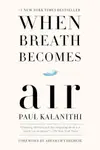 When Breath Becomes AirPaul Kalanithi · 2016Community rating: 3.97 out of 5
When Breath Becomes Air is the posthumously published memoir of Paul Kalanithi, a gifted neurosurgeon who was diagnosed with stage IV lung cancer at the age of 36, just as he was completing a decade of training and preparing to begin his career. A finalist for the Pulitzer Prize and a runaway bestseller, it is one of the most widely read meditations on illness and meaning of its generation. The book moves between two lives: Kalanithi's path into medicine and literature — the questions about mortality and the mind that drew him to neurosurgery — and his abrupt transformation from the doctor delivering diagnoses to the patient receiving one. With clarity and candor, he confronts what makes a life meaningful when the future he planned is taken away, and how to keep living fully while dying. Left unfinished at his death in 2015 and completed with an epilogue by his wife, Lucy, When Breath Becomes Air is a spare, unsentimental, and profoundly humane reckoning with mortality, vocation, and love.
- 15
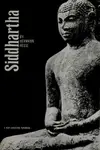 SiddharthaHermann Hesse · 1922Community rating: 4.05 out of 5
In the time of the Buddha, the young Brahmin Siddhartha leaves home convinced that wisdom must be lived, not taught. His search leads him through asceticism, wealth, love, despair, and finally to a river and a ferryman who teaches him to listen. Hermann Hesse's spare, lyrical novel is a century-old meditation on self-knowledge and the search for enlightenment.
- coming of age
- 16
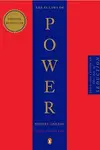 The 48 Laws of PowerRobert Greene · 1999Community rating: 3.88 out of 5
Explore the timeless strategies of power and influence with Robert Greene's essential guide. This book draws on historical examples and philosophical insights to teach you how to navigate social dynamics and achieve your goals. Understand the hidden rules of human interaction and master the art of power.
- 17
 Thinking, Fast and SlowDaniel Kahneman · 2014Community rating: 3.47 out of 5
Explore the two distinct systems that shape human thought: the rapid, intuitive System 1 and the deliberate, logical System 2. Through engaging examples, this book reveals the extraordinary power of quick thinking, the influence of emotion on our choices, and the pitfalls of cognitive biases. Learn when to trust your intuition and when to engage in deeper reflection, gaining practical insights for both personal and professional life.
- 18
 A Brief History of TimeStephen Hawking · 1988Community rating: 4.16 out of 5
Stephen Hawking's landmark work of popular science explains the universe in plain language: where it came from, how it works, and where it may be going. From the Big Bang and the nature of space and time to black holes, the uncertainty principle, and the search for a single theory of everything, Hawking makes the deepest questions of modern physics accessible to readers with no scientific background.
- 19
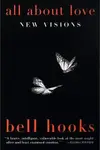 All About Lovebell hooks · 1999Love Song to the Nation #1Community rating: 3.72 out of 5
In All About Love: New Visions, cultural critic and feminist theorist bell hooks argues that our society's confusion and cynicism about love stem from a failure to understand what love truly is. Rejecting the idea of love as a mere feeling, she insists that love is an action — a practice rooted in care, commitment, trust, responsibility, respect, and honesty — and one that cannot be separated from justice. Across a series of clear, personal, and searching essays, hooks examines how a culture shaped by patriarchy, consumerism, and domination distorts our capacity to love, from childhood and family to romance, friendship, community, and spiritual life. Blending memoir, criticism, and ethics, All About Love is both a diagnosis of a loveless culture and a hopeful blueprint for change. It is the first book in hooks's Love Song to the Nation trilogy.
- 20
 The Last LectureRandy Pausch · 2008Community rating: 4.07 out of 5
What would you say if you knew you had only one chance left to speak? Computer science professor Randy Pausch, facing a terminal cancer diagnosis, delivered a powerful "Last Lecture" that became a message about living life fully. This book shares his inspiring wisdom on achieving childhood dreams, overcoming obstacles, and cherishing every moment.
- 21
 Under the Banner of HeavenJon Krakauer · 2003Community rating: 4.07 out of 5
Jon Krakauer investigates a shocking double murder committed by brothers who believed they were acting under divine command. This true crime account delves into the history of Mormon fundamentalism and its isolated communities, exploring the complex relationship between faith and violence.
- morally grey
- revenge
- 22
 GreenlightsMatthew McConaughey · 2020Greenlights #2Community rating: 4.17 out of 5
Matthew McConaughey invites you to explore the lessons and philosophies that have shaped his extraordinary life. From his Texas roots to global stardom, he shares candid stories and unconventional wisdom. Discover how to navigate life's challenges and find your own 'greenlights' for a more authentic existence.
- coming of age
- 23
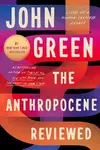 The Anthropocene ReviewedJohn Green · 2019Community rating: 4.3 out of 5
In "The Anthropocene Reviewed," John Green offers a collection of essays where he rates various facets of the human experience on a five-star scale. From the mundane to the monumental, Green examines everything from the QWERTY keyboard to the Great Barrier Reef. It's a personal exploration of our planet and our impact on it, reflecting on humanity's capacity for both great love and terrible destruction.
- 24
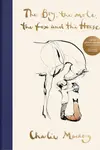 Boy, the Mole, the Fox and the HorseCharlie Mackesy · 2019Community rating: 4.47 out of 5
This is a charming collection of drawings and simple, profound words about a boy's journey. He encounters a mole, a fox, and a horse, and together they share gentle conversations about life, hope, and friendship. It's a lovely reminder of the power of kindness.
- found family
- 25
 12 Rules for Life: An Antidote to ChaosJordan B. Peterson · 2018Rules for Life #1Community rating: 3.88 out of 5
Clinical psychologist Jordan B. Peterson distils decades of practice, mythology, and philosophy into twelve rules for a meaningful life. Ranging from posture and honesty to responsibility and the pursuit of what matters, each rule becomes a wide-ranging essay on confronting chaos with order. A demanding, discursive work of practical psychology rather than easy self-help.
- 26
 Guns, Germs, and SteelJared M. Diamond · 1998Civilizations Rise and Fall #1Community rating: 4.18 out of 5
Jared Diamond argues that the broad sweep of history was shaped by geography and biology — not race — tracing how access to domesticable crops and animals gave some societies guns, germs, and steel. A Pulitzer-winning synthesis of world history.
- 27
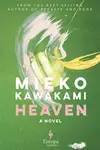 HeavenMieko Kawakami · 2021Community rating: 3.97 out of 5
A fourteen-year-old boy is savagely bullied for his lazy eye and suffers in silence, until he forms a secret bond with Kojima, a classmate who endures the same cruelty and has built a philosophy to give their pain meaning. Mieko Kawakami turns a story of schoolyard violence into a spare, unflinching inquiry into cruelty and morality.
- coming of age
- 28
 CandideVoltaire · 1759The 100 Greatest Books Ever Written (Easton Press)Community rating: 3.97 out of 5
Expelled from a sheltered castle life, the guileless Candide is flung across a violent world — war, earthquake, Inquisition, shipwreck, and Eldorado's gold — clinging all the while to his tutor's claim that this is "the best of all possible worlds." Voltaire's savage, hilarious satire of blind optimism and human folly, ending on its famous counsel to cultivate one's garden.
- 29
 The Courage to Be DislikedIchirō Kishimi, Fumitake Koga · 2013The Courage To Series #1Community rating: 3.47 out of 5
Structured as five nights of debate between a philosopher and a skeptical young man, this international bestseller introduces the psychology of Alfred Adler. Its provocative claims — that the past need not determine us, that all problems are interpersonal, and that real freedom requires the courage to be disliked — build toward a vision of living courageously in the present. Accessible, argumentative practical philosophy by Ichiro Kishimi and Fumitake Koga.
- 30
 21 Lessons for the 21st CenturyYuval Noah Harari · 2018Community rating: 3.51 out of 5
Yuval Noah Harari's "21 Lessons for the 21st Century" is your essential guide to understanding today's world. It cuts through the noise to examine the most significant global challenges we face, from political shifts and misinformation to environmental concerns. Harari offers clear insights to help you make sense of the issues shaping our collective future.