Most Read Business & Economics Books
Most Read Business & Economics Books
These are the Business & Economics books most read by Seekquel members, ranked by real reading activity across 27 titles, not scraped popularity.
Based on Seekquel member reading activity. Updated weekly.
- 1
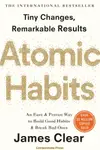 Atomic HabitsJames Clear · 2018Community rating: 4.05 out of 5
This book explores how small, incremental changes can lead to remarkable results in personal and professional life. It offers practical strategies for building good habits, breaking bad ones, and mastering the tiny behaviors that shape who you are. Discover how to make big improvements by focusing on atomic habits.
- 2
 QuietSusan Cain · 2012Quiet #1Community rating: 4.17 out of 5
Susan Cain's "Quiet" delves into the power of introverts in a world that often undervalues their contributions. Through research and real-life stories, Cain argues that introversion is a strength, not a weakness. The book challenges societal norms and encourages a deeper understanding of different personality types.
- 3
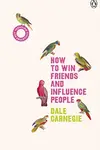 How to Win Friends and Influence PeopleDale Carnegie · 1936Community rating: 3.98 out of 5
Dale Carnegie's 1936 guide to getting along with people, built from decades of public-speaking and human-relations courses he had taught since around 1912. It argues that most social and business success comes down to a short list of habits: never criticize or complain, give honest appreciation, remember a person's name, and let someone reach your conclusion on their own. It has sold more than 30 million copies since publication, one of the best-selling nonfiction books ever printed.
- 4
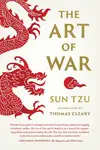 The Art of WarSun Tzu · 500 BCECommunity rating: 3.89 out of 5
Discover the ancient wisdom of Sun Tzu's "The Art of War." This foundational text offers enduring strategies for conflict and leadership, focusing on meticulous planning and understanding your adversary. It remains a vital read for anyone seeking to master strategy, whether in military affairs or modern business.
- mentor figure
- 5
 Rich Dad Poor DadRobert T. Kiyosaki, Sharon L. Lechter · 2002Rich Dad #1Community rating: 3.75 out of 5
Learn the financial secrets that have made 'Rich Dad Poor Dad' a bestseller for over two decades. This guide challenges common money advice, stressing the importance of financial literacy and acquiring assets. It's essential reading for anyone aiming to build wealth and achieve financial independence.
- mentor figure
- 6
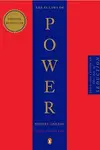 The 48 Laws of PowerRobert Greene · 1999Community rating: 3.88 out of 5
Explore the timeless strategies of power and influence with Robert Greene's essential guide. This book draws on historical examples and philosophical insights to teach you how to navigate social dynamics and achieve your goals. Understand the hidden rules of human interaction and master the art of power.
- 7
 Thinking, Fast and SlowDaniel Kahneman · 2014Community rating: 3.47 out of 5
Explore the two distinct systems that shape human thought: the rapid, intuitive System 1 and the deliberate, logical System 2. Through engaging examples, this book reveals the extraordinary power of quick thinking, the influence of emotion on our choices, and the pitfalls of cognitive biases. Learn when to trust your intuition and when to engage in deeper reflection, gaining practical insights for both personal and professional life.
- 8
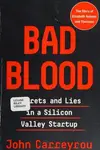 Bad BloodJohn Carreyrou · 2018Community rating: 4.16 out of 5
In 2003, nineteen-year-old Stanford dropout Elizabeth Holmes founded Theranos, a startup that promised to revolutionize blood testing with just a finger-prick of blood. Backed by a star-studded board and marquee investors, the company was valued at over $9 billion by 2014 — while its core technology never actually worked. Wall Street Journal reporter John Carreyrou, who broke the story in 2015, reconstructs Theranos's decade-long unraveling: the culture of secrecy and fear that Holmes built with her secret partner and COO, Sunny Balwani; the young employees who risked their careers to blow the whistle; and the patients whose health was put at risk by inaccurate results. Bad Blood won the 2018 Financial Times and McKinsey Business Book of the Year Award.
- morally grey
- betrayal
- 9
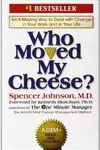 Who Moved My Cheese?Spencer Johnson · 1998Who Moved My Cheese? #1Community rating: 3.79 out of 5
A business fable about two mice and two "littlepeople" who live in a maze and depend on finding cheese at Station C. When the cheese disappears, the four react differently to change: some go looking for more, others cling to what is gone. Spencer Johnson's 1998 parable has sold more than 30 million copies in 37 languages and remains a staple of corporate training and self-help reading.
- 10
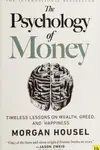 The Psychology of MoneyMorgan Housel · 2020Community rating: 4.1 out of 5
Doing well with money has little to do with how smart you are and a lot to do with how you behave. Morgan Housel makes the case across nineteen short, story-driven chapters, pairing a frugal Vermont janitor who quietly built an eight-million-dollar portfolio with a Harvard-educated finance executive who went bankrupt chasing more. The book argues that patience, humility about luck and risk, and a temperament that can hold steady under uncertainty do more for a person's wealth than any formula, and that money's real reward is the independence to control your own time.
- 11
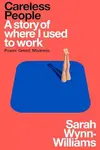 Careless PeopleSarah Wynn-Williams · 2025Community rating: 3.97 out of 5
This searing memoir exposes the personal and political fallout when unfettered power and a rotten company culture take hold. Sarah Wynn-Williams shares her experiences within Facebook, from its early rise to Mark Zuckerberg’s reaction to its role in Trump’s election, alongside the challenges of working motherhood in a high-pressure environment. It offers an eye-opening look at the global elite and how the leaders of Facebook became less responsible as they gained more power. Told in a sharp, candid voice, this book reveals why and how things have gone so horribly wrong in the past decade.
- morally grey
- betrayal
- 12
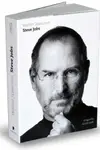 Steve JobsWalter Isaacson · 2011Community rating: 4.41 out of 5
Walter Isaacson's authorized biography of Apple co-founder Steve Jobs, drawn from years of interviews with Jobs and those around him. It traces his rise, exile, and return, the products that reshaped whole industries, and the mercurial, perfectionist personality—and its cost—behind them.
- 13
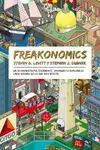 FreakonomicsStephen J. Dubner, Steven D. Levitt · 2005Freakonomics #1Community rating: 3.86 out of 5
Economist Steven D. Levitt and journalist Stephen J. Dubner turn economic tools loose on everyday puzzles—cheating sumo wrestlers, the finances of a crack gang, what really matters in parenting, and why crime fell in the 1990s. A playful, data-driven, myth-busting look at the hidden incentives that shape human behavior.
- 14
 Deep Work: Rules for Focused Success in a Distracted WorldCal Newport · 2016Community rating: 3.84 out of 5
Deep work — the ability to focus without distraction on a cognitively demanding task — is becoming both increasingly rare and increasingly valuable, argues computer scientist Cal Newport. As the economy rewards those who can learn hard things quickly and produce at an elite level, the capacity for sustained concentration has become a kind of superpower. Yet most knowledge workers have lost it, fragmenting their days across email, meetings, and social media. The book unfolds in two parts. The first makes the case that deep work is valuable, rare, and meaningful, drawing on neuroscience, psychology, and the working habits of figures from Carl Jung to Bill Gates. The second lays out a practical training program built on four rules: work deeply, embrace boredom, quit social media, and drain the shallows from your schedule. Part manifesto and part how-to, Deep Work offers concrete disciplines for reclaiming concentration in a distracted world, alongside a broader argument that a focused life is not only more productive but more fulfilling.
- 15
 Never Split the DifferenceChris Voss, Tahl Raz · 2016Community rating: 4.22 out of 5
Chris Voss spent twenty-four years in the FBI and rose to become its lead international kidnapping negotiator. Writing with journalist Tahl Raz, he distils nine principles from hostage standoffs into a method for ordinary negotiations — a salary, a house, a rent renewal, an argument at home. His core claim is that people are not rational actors, and that splitting the difference is usually the worst outcome on the table.
- 16
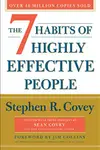 The 7 Habits of Highly Effective PeopleSean Covey, Stephen R. Covey · 1989Community rating: 3.52 out of 5
Discover the timeless principles that have guided millions toward greater effectiveness. This influential guide offers practical habits for personal and professional success, updated for today's world. Learn how to take control of your life and achieve your goals with clear, actionable strategies.
- 17
 Daring GreatlyBrené Brown · 2012Community rating: 3.97 out of 5
A research-based argument that embracing vulnerability, rather than armoring against it, is the path to courage, connection, and wholehearted living.
- 18
 Red NoticeBill Browder · 2015Community rating: 4.08 out of 5
Financier Bill Browder made a fortune in post-Soviet Russia — until exposing corruption got him expelled and marked as an enemy of the state. When his lawyer Sergei Magnitsky uncovered a $230 million fraud and was beaten to death in a Moscow prison, Browder became a full-time justice campaigner behind the Magnitsky Act. A true story of high finance, corruption, and murder, told with the pace of a thriller.
- 19
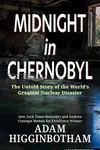 Midnight in ChernobylAdam Higginbotham · 2019Community rating: 4.09 out of 5
This book provides a definitive account of the Chernobyl disaster, moving beyond myths to reveal the human stories behind the catastrophe. Journalist Adam Higginbotham spent over a decade interviewing survivors and sifting through declassified documents to reconstruct the events of April 26, 1986. It's a harrowing look at how secrecy and misinformation compounded one of the 20th century's worst technological failures.
- survival
- betrayal
- 20
 Shoe DogPhil Knight, Victor Cébron de Lisle · 2016Community rating: 3.84 out of 5
Phil Knight's memoir, Shoe Dog, tells the story of how he turned a $50 loan into Nike, a global athletic brand. He shares the early days of importing shoes, the constant financial struggles, and the passionate team that helped build the company. It's an honest account of entrepreneurship and the creation of an icon.
- found family
- rivals
- 21
 Digital MinimalismCal Newport · 2019Community rating: 3.84 out of 5
The key to living well in a high-tech world is to spend much less time using technology. Cal Newport proposes a minimalist approach: radically reduce online time and focus on a small set of carefully chosen activities.
- 22
 Start with WhySimon Sinek · 2009Community rating: 3.75 out of 5
Simon Sinek argues that the most influential leaders and organisations all share one trait: they start with why — a clear sense of purpose — rather than with what they do. Using his "Golden Circle" framework and examples from Apple to Martin Luther King Jr., he makes the case that people don't buy what you do, they buy why you do it. A widely read work of purpose-driven leadership and business non-fiction.
- 23
 MoneyballMichael Lewis · 2003Community rating: 3.96 out of 5
This is the true story of how the Oakland A's, with one of the lowest payrolls in baseball, defied the odds and the established baseball wisdom. It follows general manager Billy Beane and his team as they used innovative statistical analysis to find overlooked talent and build a winning team. Discover how a small budget and big ideas changed the game forever.
- rivals
- 24
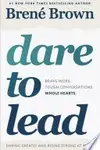 Dare to LeadBrené Brown · 2018Community rating: 3.52 out of 5
The original must-read, bestselling guide to becoming the best leader you can be from the critically-acclaimed author of Atlas of the Heart, Braving the Wilderness and The Gifts of Imperfection. ‘A practical and insightful guide to courageous leadership’ Sheryl Sandberg, former Facebook COO and bestselling author of Lean In ‘The ultimate playbook for daring leadership’ Scott Harrison, founder and CEO of Charity: Water Leadership is not about titles, status and power over people. Leaders are people who hold themselves accountable for recognising the potential in people and ideas, and look to develop that potential. Brené Brown spent the past two decades researching the emotions that give meaning to our lives. She has found that leaders in organisations ranging from small entrepreneurial start-ups and family-owned businesses to non-profits, civic organisations and Fortune 50 companies, are all asking the same questions: How do you cultivate braver, more daring leaders? And, how do you embed the value of courage in your culture? Dare to Lead answers these questions, giving us actionable strategies and real examples from her new research-based, courage-building programme. This inspiring book shows us that, when we dare to lead, we don’t pretend to have the right answers; we stay curious and ask the right questions. We don’t see power as finite and hoard it; we know that power becomes infinite when we share it with others. We don’t avoid difficult conversations and situations; we lean into vulnerability when it’s necessary to do good work. Written with Brown’s trademark mix of research, storytelling and honesty, Dare to Lead is a book for anyone who is ready to choose courage over comfort, make a difference and lead. Praise for Brené Brown ‘Brené empowers us each to be a little more courageous’ The Huffington Post ‘Brené cuts through the noise and speaks to what makes us human’ Brigadier General Brook J. Leonard, United States Air Force ‘Brené has profoundly inspired our product leaders to design in and embrace vulnerability, rather than engineer it out' Danielle Krettek, founder, Google Empathy Lab ‘The master of hope’ Metro
- 25
 Make Time: How to Focus on What Matters Every DayJake Knapp, John Zeratsky · 2018Community rating: 3.69 out of 5
From the New York Times bestselling authors of Sprint comes “a unique and engaging read about a proven habit framework [that] readers can apply to each day” (Insider, Best Books to Form New Habits). “If you want to achieve more (without going nuts), read this book.”—Charles Duhigg, author of The Power of Habit Nobody ever looked at an empty calendar and said, "The best way to spend this time is by cramming it full of meetings!" or got to work in the morning and thought, Today I'll spend hours on Facebook! Yet that's exactly what we do. Why? In a world where information refreshes endlessly and the workday feels like a race to react to other people's priorities faster, frazzled and distracted has become our default position. But what if the exhaustion of constant busyness wasn't mandatory? What if you could step off the hamster wheel and start taking control of your time and attention? That's what this book is about. As creators of Google Ventures' renowned "design sprint," Jake and John have helped hundreds of teams solve important problems by changing how they work. Building on the success of these sprints and their experience designing ubiquitous tech products from Gmail to YouTube, they spent years experimenting with their own habits and routines, looking for ways to help people optimize their energy, focus, and time. Now they've packaged the most effective tactics into a four-step daily framework that anyone can use to systematically design their days. Make Time is not a one-size-fits-all formula. Instead, it offers a customizable menu of bite-size tips and strategies that can be tailored to individual habits and lifestyles. Make Time isn't about productivity, or checking off more to-dos. Nor does it propose unrealistic solutions like throwing out your smartphone or swearing off social media. Making time isn't about radically overhauling your lifestyle; it's about making small shifts in your environment to liberate yourself from constant busyness and distraction. A must-read for anyone who has ever thought, If only there were more hours in the day..., Make Time will help you stop passively reacting to the demands of the modern world and start intentionally making time for the things that matter.
- 26
 The Life-Changing Magic of Tidying UpMarie Kondo · 2014Magic Cleaning #1Community rating: 3.72 out of 5
Marie Kondo's KonMari Method offers a revolutionary approach to decluttering. Instead of tackling your home room by room, you'll learn to tidy by category, keeping only those items that truly spark joy. This guide promises that a single, focused tidying session can lead to lasting order and a more peaceful state of mind.
- 27
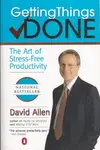 Getting Things Done The Art of Stress-Free ProductivityDavid Allen · 2001Getting Things Done #1Community rating: 3.67 out of 5
David Allen introduces a groundbreaking system for stress-free productivity, asserting that a relaxed and organized mind is essential for achieving effective results and unleashing creative potential. This guide provides practical methods to manage tasks, reassess goals, and overcome feelings of confusion or anxiety. Learn how to apply the "do it, delegate it, defer it, drop it" rule to clear your inbox and stay focused. This book offers core principles and proven tricks to help you work more efficiently and pick up the pace without wearing yourself down.
- mentor figure