Stephen King

Stephen King
Author • Narrator • Translatorb. 21 September 1947 · From United States- Books
- 302
- Followers
- 10
About
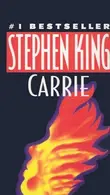
Stephen King (born September 21, 1947) is an American author whose work has defined popular horror fiction for more than half a century. Born in Portland, Maine, he grew up in poverty after his father abandoned the family, and credits his mother's resilience and a voracious reading habit as the foundations of his imagination. He began selling short stories to men's magazines while working as a high school English teacher, and published his first novel, Carrie, in 1974—his wife Tabitha retrieved the draft from a wastebasket after he abandoned it.
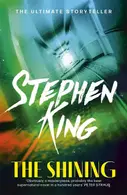
The decades that followed produced a torrent of work: The Shining, The Stand, It, Misery, and dozens of other novels that fused literary character study with genre horror, reshaping what popular fiction could do. King wrote much of his early work while struggling with addiction to alcohol and cocaine—a period he has written about candidly in his memoir On Writing (2000)—and has said he has little memory of writing Cujo. He has been sober since the late 1980s.
King was hit by a van while walking near his Maine home in 1999 and spent months in recovery. The accident is credited with reorienting his relationship to writing: he began finishing the Dark Tower series he had started in 1982, and On Writing, completed during rehabilitation, became one of the most widely read books about the craft of fiction.
He has published under the pen name Richard Bachman—initially to test whether his commercial success was a result of his name or his writing—and has acknowledged seven Bachman novels, the most notable being The Long Walk, Rage, and The Running Man. His son Joe Hill is also a novelist and has established a separate, acclaimed career in horror fiction.
King lives in Bangor and Center Lovell, Maine, with his wife Tabitha, also a novelist. He is an avid baseball fan (the Boston Red Sox), and his philanthropic work has focused on literacy programs in Maine.
Top genres
Fiction Horror Thriller Suspense Fantasy
Also known as
Links
Featured works


Series











Authors in the same genres


Frequently asked questions
Many readers suggest starting with "Carrie" for a concise introduction to his horror, or "The Shining" for a classic example of his psychological suspense. For those interested in his epic storytelling, "The Stand" is a popular choice.
Stephen King has also published several novels under the pseudonym Richard Bachman. These works often explore darker themes and a more direct, less supernatural style.
King began publishing as Richard Bachman in 1977 because his publisher, Doubleday, believed the market could support only one King novel per year. He wanted to test whether his commercial success was tied to his name or his writing—Bachman's early books sold modestly until a bookstore clerk named Steve Brown noticed stylistic similarities and investigated. King acknowledged the pseudonym in 1985 after Brown's discovery became public. He has continued to use the Bachman name occasionally.
While many of his books are standalone, a significant portion of Stephen King's work is interconnected, particularly through the overarching narrative of "The Dark Tower" series. Characters, locations, and events from other novels frequently appear or are referenced within this series and other books.
On June 19, 1999, King was struck by a van while walking on the shoulder of a road near his home in Lovell, Maine. He suffered multiple injuries including a broken hip, broken leg, cracked spine, and a collapsed lung. His recovery took months and was extremely painful. He has said the accident fundamentally changed his relationship to writing—he wrote his way through rehabilitation and completed On Writing during recovery, describing writing as a form of therapy. The accident is also referenced obliquely in the final volumes of the Dark Tower series.
Many of Stephen King's novels and short stories have been adapted into films and television series, including iconic works like "The Shining," "It," "Carrie," "The Shawshank Redemption," and "Misery." These adaptations span various genres and have been produced consistently over several decades.
Maine is both King's home and his primary literary landscape. He was born in Portland, grew up in several Maine towns, attended the University of Maine at Orono, and has lived primarily in Bangor and Center Lovell for most of his adult life. The fictional towns of Castle Rock, Derry, and Jerusalem's Lot are all set in Maine, and the state's landscape—its forests, small communities, and isolation—permeates his fiction. He has said Maine is the landscape of his imagination.
On Writing (2000) is part memoir, part guide to the craft of fiction. The first half narrates King's childhood, early career, and addiction; the second offers direct advice on writing—word choice, pacing, revision, the role of reading in a writer's education. It is widely considered one of the best books about writing craft by any author, and many readers who have no particular interest in King's fiction cite it as influential. He wrote it during rehabilitation after his 1999 accident.
Yes. King's fiction shares a connected multiverse anchored by the Dark Tower series. Recurring fictional locations (Derry, Castle Rock, Jerusalem's Lot) appear across dozens of novels, and characters cross over between books. The Dark Tower itself functions as the axis of all King's realities, explaining both the supernatural forces in individual novels and their ultimate origin. The connections range from brief Easter eggs to plot-critical crossovers.
King has been publicly critical of Stanley Kubrick's 1980 adaptation of The Shining—he has said it is a technically accomplished film but fundamentally misunderstands the novel's emotional core and Jack Torrance's character. He produced and starred in a 1997 television miniseries adaptation that he prefers. Conversely, he has praised many other adaptations, including Frank Darabont's The Shawshank Redemption, Rob Reiner's Stand by Me, and Mike Flanagan's Doctor Sleep film.
In 2003, the National Book Foundation awarded King the Medal for Distinguished Contribution to American Letters—a lifetime achievement honor. The decision was controversial in literary circles: critic Harold Bloom publicly condemned it as a capitulation to commercial popularity over literary merit, writing that King's prose was 'subliterary.' King's acceptance speech addressed the tension directly, arguing that the distinction between 'literary' and 'popular' fiction was arbitrary and harmful to both readers and writers.
King has published over 65 novels, roughly 200 short stories, and five nonfiction books. In On Writing, he describes writing 2,000 words every day—including holidays and his birthday—as his baseline discipline. He has said the consistency matters more than inspiration: he shows up and writes whether or not he feels motivated. He drafts quickly without extensive outlining, allowing stories to develop organically, and has said the first draft is always written 'with the door closed'—without concern for an audience.