#0.01
#0.02
#0.03
#0.05
#0.06
#0.07

#0.08
#0.09
#0.1
#0.11

#0.12
#0.13
Agatha Christie
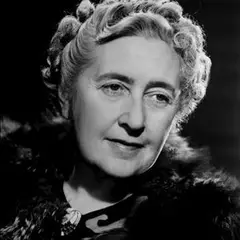
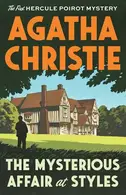
Dame Agatha Christie (1890-1976) is the best-selling novelist of all time and the writer the world calls the "Queen of Crime." Born Agatha Miller in Torquay, Devon, she came to fiction on a dare: her sister Madge bet she could not write a convincing detective story, and the result, The Mysterious Affair at Styles, introduced the Belgian detective Hercule Poirot.
Her dispensing work in a hospital pharmacy during the First World War, repeated again during the Second, gave her the expert knowledge of poisons that runs through her plots. She is best known for Poirot, the village sleuth Miss Jane Marple, the standalone And Then There Were None, and the stage thriller The Mousetrap, the longest-running play in the world.
Her output is staggering: 66 detective novels and 14 short-story collections, plus six psychological novels published for nearly twenty years under the secret pen name Mary Westmacott. Two episodes set her apart. In 1926 she vanished for eleven days, sparking a national manhunt before she was found at a Harrogate hotel.
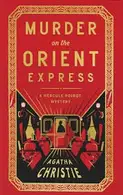
In 1930 she married the archaeologist Max Mallowan and joined his excavations across the Middle East, mining those journeys for novels such as Murder on the Orient Express. She was made a Dame (DBE) in 1971.



Yes. Guinness World Records lists her as the best-selling fiction writer of all time, with sales estimated at around two billion copies across her novels. Her work is often ranked only behind the Bible and the works of Shakespeare in total copies sold.
After her first husband Archie asked for a divorce, Christie vanished on 3 December 1926, leaving her abandoned car near Newlands Corner and triggering a nationwide search involving thousands of people. Eleven days later she was found alive at a hydropathic hotel in Harrogate, registered under an assumed name. She never publicly explained the episode, and biographers still debate whether it was a fugue state, a breakdown, or something deliberate.
Christie trained and worked as a hospital dispenser during the First World War, qualifying through the Society of Apothecaries, and returned to pharmacy work at University College Hospital in London during the Second World War. That hands-on knowledge of drugs and toxins is why so many of her murders turn on precisely described poisons.
Yes. She published six psychological, non-detective novels under the pen name Mary Westmacott, beginning with Giant's Bread in 1930. She kept the secret for nearly twenty years before her identity as Westmacott became public.
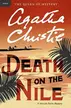
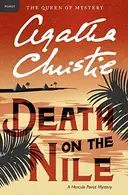
Yes. In 1930 she married the archaeologist Max Mallowan, who was over a decade younger than her, after meeting him on a trip to the Middle East. She regularly joined his excavations in Iraq and Syria, helping with finds and photography, and drew on those settings for novels including Murder in Mesopotamia and Death on the Nile.
The Mousetrap is the longest-running play in the world. It opened in London's West End in 1952 and has been performed there ever since, becoming a fixture of British theatre.
Yes. She was appointed a Dame Commander of the Order of the British Empire (DBE) in 1971 for her services to literature, having earlier been made a CBE in 1956. She is therefore properly styled Dame Agatha Christie.
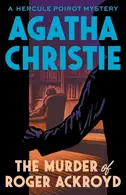
Common entry points are her standalone masterpiece And Then There Were None, and the Poirot novels The Murder of Roger Ackroyd and Murder on the Orient Express. If you prefer her village sleuth, begin Miss Marple with The Murder at the Vicarage. You do not need to read in publication order, since most titles stand on their own.