Most read Politics & Society books
Most read Politics & Society books
These are the Politics & Society books most read by Seekquel members, ranked by real reading activity across 85 titles, not scraped popularity.
Based on Seekquel member reading activity. Updated weekly.
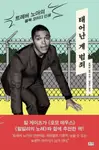
- Born a CrimeTrevor Noah · 2016Community rating: 4.46 out of 5
Born a Crime (2016) is Trevor Noah's sharp, funny, and moving memoir of growing up mixed-race in South Africa during the final years of apartheid and the turbulent decade that followed. The son of a Black Xhosa mother and a white Swiss father, Noah was born when such a union was literally illegal — his very existence was evidence of a crime. He recounts a childhood spent partly in hiding, navigating the absurd and brutal logic of a system built on racial classification, and the poverty, violence, and improvised survival of township life after apartheid's fall. At the center of every story is his mother, Patricia — fearless, devout, stubborn, and endlessly resourceful — whose tough love and refusal to be limited shaped the man Noah became. Told in vivid, self-deprecating vignettes, the book is by turns hilarious and harrowing, a portrait of a singular family and a country remaking itself.
- coming of age
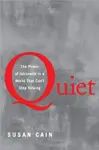
- QuietSusan Cain · 2012Quiet #1Community rating: 4.19 out of 5
Susan Cain's "Quiet" delves into the power of introverts in a world that often undervalues their contributions. Through research and real-life stories, Cain argues that introversion is a strength, not a weakness. The book challenges societal norms and encourages a deeper understanding of different personality types.
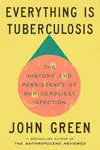
- Everything Is TuberculosisJohn Green · 2025Community rating: 3.93 out of 5
John Green, known for his advocacy in global healthcare, shares a deeply human story about the fight against tuberculosis. Through the personal journey of a young patient named Henry in Sierra Leone, Green explores the history of the disease, its connection to poverty and injustice, and the ongoing efforts to combat it. This book highlights the critical need for increased access to treatment and awareness of healthcare inequities.
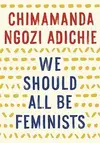
- We Should All Be FeministsChimamanda Ngozi Adichie · 2014Community rating: 4.33 out of 5
Adapted from her celebrated TEDx talk, Chimamanda Ngozi Adichie's short essay makes a warm, clear-eyed case for feminism as the simple belief that everyone should be treated equally. Drawing on her life in Nigeria and beyond, she examines how gender expectations shape us from childhood — an accessible, quotable primer that has become a touchstone of modern conversations about equality.
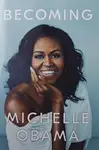
- BecomingMichelle Obama · 2018Community rating: 4.48 out of 5
Former First Lady Michelle Obama's candid, best-selling memoir traces her life from a working-class childhood on the South Side of Chicago, through Princeton and Harvard Law, to marriage, motherhood, and the White House. Structured as "Becoming Me," "Becoming Us," and "Becoming More," it's an intimate meditation on identity, resilience, and finding your voice.
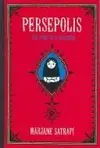
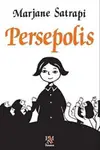
- Persepolis: The Story of a ChildhoodMarjane Satrapi · 2003I Classici del Fumetto di Repubblica - Serie Oro #37Community rating: 4.26 out of 5
The first part of Marjane Satrapi's celebrated graphic memoir. Marji is a bright, headstrong girl in Tehran when the 1979 Islamic Revolution overturns her world. As the regime tightens and war with Iraq begins, she witnesses arrests, bombings, and the gap between public conformity and private life — until her parents make the wrenching decision to send her abroad. A coming-of-age story told in bold black-and-white artwork, balancing humour and horror.
- coming of age
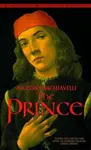
- The PrinceNiccolò Machiavelli · 1513Community rating: 3.55 out of 5
Written in 1513 and circulated in manuscript during Machiavelli's lifetime, The Prince is the most famous — and most notorious — work of political philosophy in the Western canon. Composed after the author's fall from office in Florence, it is a compact, unsentimental manual on how rulers seize power, hold it, and keep their states intact. Breaking sharply with the classical tradition that treated politics as a branch of ethics, Machiavelli argues that a ruler must be prepared to act against conventional morality when necessity demands it. He weighs whether it is better to be feared or loved, why appearing virtuous can matter more than being virtuous, how fortune must be mastered rather than trusted, and why a prince's first concern must be the strength of his own arms. Drawing on the recent history of Italy's city-states and figures such as Cesare Borgia, he illustrates his maxims with cold, concrete examples. Published in 1532, five years after his death, The Prince has been read ever since as everything from a cynical handbook for tyrants to a clear-eyed diagnosis of how power actually works.
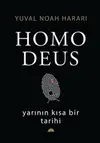
- Homo Deus: A History of TomorrowYuval Noah Harari · 2015Homo #2Community rating: 4.15 out of 5
Having charted humanity's rise in Sapiens, Yuval Noah Harari turns from the past to the future. For most of history, humans struggled against famine, plague, and war; now, he argues, we have largely brought these ancient scourges under control and are setting ourselves new goals—immortality, bliss, and a god-like power to engineer life itself. Homo Deus asks what happens to a species that has run out of things to conquer except its own nature. Drawing on history, biology, and the study of intelligence, Harari examines how liberalism, humanism, and free will may give way to new creeds built on data and algorithms, and how biotechnology and artificial intelligence could split humanity or render most of it economically and politically irrelevant. Provocative and wide-ranging, this bestselling work of big-picture nonfiction is less a prediction than a set of urgent questions about where our newfound powers are taking us—and who will be left behind.
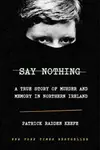
- Say NothingPatrick Radden Keefe · 2018Community rating: 4.19 out of 5
In 1972 Belfast, a mother of ten is violently abducted from her home. This book uses her disappearance and murder as a starting point to examine the complex history of The Troubles in Northern Ireland. Through extensive research and interviews with people on all sides of the conflict, the author sheds light on the human cost of political violence.
- morally grey
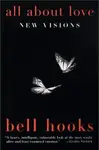
- All About Lovebell hooks · 1999Love Song to the Nation #1Community rating: 3.77 out of 5
In All About Love: New Visions, cultural critic and feminist theorist bell hooks argues that our society's confusion and cynicism about love stem from a failure to understand what love truly is. Rejecting the idea of love as a mere feeling, she insists that love is an action — a practice rooted in care, commitment, trust, responsibility, respect, and honesty — and one that cannot be separated from justice. Across a series of clear, personal, and searching essays, hooks examines how a culture shaped by patriarchy, consumerism, and domination distorts our capacity to love, from childhood and family to romance, friendship, community, and spiritual life. Blending memoir, criticism, and ethics, All About Love is both a diagnosis of a loveless culture and a hopeful blueprint for change. It is the first book in hooks's Love Song to the Nation trilogy.
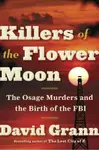
- Killers of the Flower MoonDavid Grann · 2017Community rating: 3.94 out of 5
In 1920s Oklahoma, members of the oil-rich Osage Nation were murdered one by one in a conspiracy that reached into their own families and the institutions meant to protect them. David Grann's acclaimed investigation follows Osage survivor Mollie Burkhart and FBI agent Tom White through one of the most chilling and consequential crimes in American history.
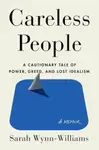
- Careless PeopleSarah Wynn-Williams · 2025Community rating: 3.94 out of 5
This searing memoir exposes the personal and political fallout when unfettered power and a rotten company culture take hold. Sarah Wynn-Williams shares her experiences within Facebook, from its early rise to Mark Zuckerberg’s reaction to its role in Trump’s election, alongside the challenges of working motherhood in a high-pressure environment. It offers an eye-opening look at the global elite and how the leaders of Facebook became less responsible as they gained more power. Told in a sharp, candid voice, this book reveals why and how things have gone so horribly wrong in the past decade.
- morally grey
- betrayal
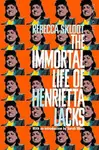
- The Immortal Life of Henrietta LacksRebecca Skloot · 2010Community rating: 4.02 out of 5
This book tells the incredible true story of Henrietta Lacks, a poor black woman whose cells were taken without her knowledge in 1951. These cells, known as HeLa, became one of the most important tools in medicine, vital for developing the polio vaccine and countless other breakthroughs. Yet, Henrietta's family remained unaware of her contribution and its impact for decades, living in poverty while her cells were bought and sold worldwide.
- morally grey
- sacrifice
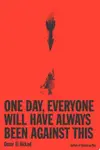
- One Day, Everyone Will Have Always Been Against ThisOmar El Akkad · 2025Community rating: 3.66 out of 5
Taking its title from a widely shared 2023 post by the author, Omar El Akkad's One Day, Everyone Will Have Always Been Against This is a searching book-length essay written in the shadow of the war on Gaza. El Akkad — born in Egypt, raised in Qatar, and a longtime journalist who reported from Afghanistan, Guantánamo Bay, and Ferguson — turns his attention to the distance between Western self-image and Western action. Moving between reportage, memoir, and polemic, he sets images of atrocity against the ordinary safety of his own family's life, and interrogates the liberal centrism that professes horror while tolerating it. The result is both an indictment of imperial hypocrisy and a reckoning with what it means to belong to a society that, El Akkad argues, will one day claim it was against all this — once claiming so costs nothing. Winner of the National Book Award, this is an urgent, unsparing, and deeply personal work about complicity, conscience, and the stories nations tell themselves.
- The Complete PersepolisMarjane Satrapi · 2007I Classici del Fumetto di Repubblica - Serie Oro #37Community rating: 4.27 out of 5
Marjane Satrapi's landmark graphic memoir of growing up in Iran during and after the 1979 Islamic Revolution. In stark black-and-white panels, she recalls her childhood in Tehran as the outspoken daughter of secular parents, her teenage exile in Vienna, and her fraught return home. Funny, angry, and humane, Persepolis pairs a child's-eye directness with adult political clarity, making recent Iranian history intimate and immediate.
- coming of age
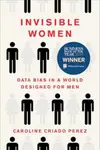
- Invisible WomenCaroline Criado Perez · 2019Community rating: 4.02 out of 5
Caroline Criado Perez exposes the "gender data gap" — the pervasive bias that follows from treating men as the default human. Marshalling studies from medicine, technology, urban planning, workplaces, and disaster relief, Invisible Women shows how a world measured around male bodies and lives quietly costs women in time, money, health, and safety, and makes the case for finally counting the other half of the population.
- A Room of One's OwnVirginia Woolf · 1929Vintage Classics Woolf SeriesCommunity rating: 4.07 out of 5
Virginia Woolf's seminal essay, "A Room of One's Own," argues for the necessity of financial independence and personal space for women to create. Drawing on lectures delivered at Cambridge, Woolf, through a fictional narrator, examines the historical and societal obstacles that have hindered women's literary contributions. It's a powerful assertion of women's right to intellectual and creative freedom.
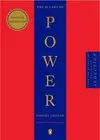
- The 48 Laws of PowerRobert Greene · 1999Community rating: 3.84 out of 5
Explore the timeless strategies of power and influence with Robert Greene's essential guide. This book draws on historical examples and philosophical insights to teach you how to navigate social dynamics and achieve your goals. Understand the hidden rules of human interaction and master the art of power.
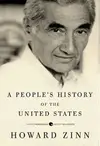
- A People's History of the United StatesHoward Zinn · 1980Community rating: 4.02 out of 5
Discover American history as it's rarely told. Howard Zinn shifts the focus from presidents and generals to the everyday people who shaped the nation: workers, immigrants, and activists. This essential read offers a powerful counter-narrative, highlighting the struggles and triumphs of those often overlooked in traditional accounts.
- multiple povs
- SparePrince Harry, Duke of Sussex · 2023Community rating: 4.02 out of 5
Prince Harry's memoir, published by Penguin Random House in January 2023, follows his life from a royal childhood marked by his mother Diana's death to his decade in the British Army and his marriage to Meghan Markle. It opens with a meeting with his father and brother about stepping back from royal duties, then returns to his early years. The title plays on the phrase "an heir and a spare."
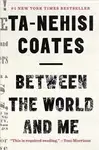
- Between the World and MeTa-Nehisi Coates · 2015Community rating: 4.32 out of 5
Ta-Nehisi Coates writes to his teenage son, Samori, about what it means to grow up Black in America with no illusions about safety for one's own body. He draws on his own childhood in West Baltimore, his years at Howard University, and the killing of his college friend Prince Jones by a police officer, to argue that the comfortable, unexamined life he calls "the Dream" rests on history that most of the country refuses to see.
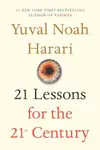
- 21 Lessons for the 21st CenturyYuval Noah Harari · 2018Community rating: 3.47 out of 5
Yuval Noah Harari's "21 Lessons for the 21st Century" is your essential guide to understanding today's world. It cuts through the noise to examine the most significant global challenges we face, from political shifts and misinformation to environmental concerns. Harari offers clear insights to help you make sense of the issues shaping our collective future.
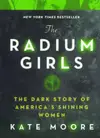
- The Radium GirlsKate Moore · 2016Community rating: 4.27 out of 5
Hired to paint watch dials with glowing radium paint, young women are told it is safe. Then their teeth fall out and their bones break, and the companies that knew the risk deny everything while the women take them to court.
- betrayal
- sacrifice
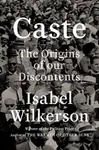
- CasteIsabel Wilkerson · 2020Community rating: 4.14 out of 5
Isabel Wilkerson's "Caste" explores the often-unseen social hierarchy that has profoundly shaped American society. It argues that a rigid system of human ranking, extending beyond race and class, dictates lives and national outcomes. Wilkerson draws parallels between the caste systems of America, India, and Nazi Germany to illuminate the deep-seated structures that perpetuate inequality.
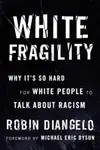
- White FragilityRobin J. DiAngelo · 2018Community rating: 4.02 out of 5
In "White Fragility," Robin DiAngelo examines the often-unconscious defensiveness white people experience when discussing race. This book explores how societal norms in North America can insulate white individuals from racial stress, impacting their ability to engage in productive conversations about racism. It offers insights to help readers understand and navigate these reactions.
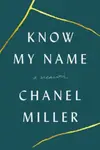
- Know My NameChanel Miller · 2019Community rating: 4.14 out of 5
Chanel Miller's memoir reclaims the identity she held as "Emily Doe," the young woman assaulted at Stanford whose victim impact statement went viral. With clarity, fury, and humor, she recounts the assault, the grueling legal ordeal, and the work of rebuilding herself — a searing indictment of how justice treats survivors and a testament to naming one's own story.
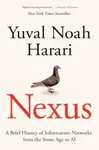
- NexusYuval Noah Harari · 2024Community rating: 3.91 out of 5
Yuval Noah Harari, author of Sapiens, returns with Nexus, a historical exploration of information networks and their impact on human civilization. From ancient times to the age of AI, Harari examines the connection between information, truth, and power. The book addresses humanity's self-destructive patterns and the critical decisions we face in our technologically advanced world.
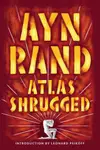
- Atlas ShruggedAyn Rand · 1957Community rating: 3.59 out of 5
In a nation on the brink of collapse, a powerful railroad executive fights to keep her business, and the world, from falling apart. As brilliant minds vanish one by one, she must race against time to uncover the mystery behind their disappearance and the identity of the elusive John Galt, who may hold the key to humanity's future.
- quest
- betrayal
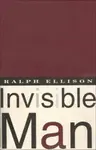
- Invisible ManRalph Ellison · 1952Community rating: 4.03 out of 5
A young Black man leaves the South for Harlem, seeking opportunity but finding a complex world of racial tension. After an expulsion from college, he becomes a political speaker, only to grapple with his identity and societal pressures. This novel follows his search for self, leading to a solitary realization.
- coming of age
- fish out of water
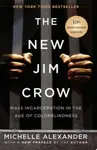
- The New Jim CrowMichelle Alexander · 2010Community rating: 3.61 out of 5
Michelle Alexander's groundbreaking book reveals how the United States has constructed a new racial caste system through its policies on drugs and mass incarceration. It argues that the justice system, despite claims of colorblindness, actively perpetuates racial inequality by disproportionately targeting Black men. This work is a crucial examination of systemic discrimination and its impact on society.
- morally grey