George OrwellEssays · Non-Fiction·1903–1950
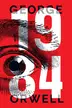
Nineteen Eighty-Four
Synopsis
Winston Smith works at the Ministry of Truth in Oceania, one of three perpetually warring super-states, where his job is to rewrite the historical record so that the Party is never wrong. Everywhere he goes, the face of Big Brother watches from posters and the ever-present telescreen watches back, recording every word and expression. Even a private thought against the Party is a crime punishable by death.
Worn down by hunger, surveillance, and the deliberate poverty of daily life, Winston begins to keep a secret diary and to nurse a quiet, dangerous conviction that the past was different and the truth still exists somewhere outside the Party's control.
When he falls into a forbidden love affair with a bold young woman named Julia, the two carve out a small world of their own and let themselves imagine resistance.
Their rebellion draws the attention of the inner Party and the enigmatic official O'Brien, and Winston is forced to confront just how far a total state will go to own not only a person's actions but their mind.
George Orwell's 1949 novel gave the language "Big Brother," "doublethink," "thoughtcrime," and "Newspeak," and remains one of the most influential warnings ever written about totalitarianism, propaganda, and the manipulation of truth. Bleak, exact, and unsparing, it is a study of how power sustains itself by controlling memory, language, and love.
Collected in
How it reads
Prose complexity 10/10
Content warnings (3)
TortureViolenceWar
- How we managed to reach a reality imagined in the 50s is beyond me. Seems like we're getting closer to a 1984 society so might as well prepare ourselves. Amazing book.
- 4/5 (7/10) Me da mucha rabia leer este libro. Ahora, ES un buen libro. Es, obviamente, una crítica a la URSS y al comunismo. Es sabido que, lo hacía públicamente, Orwell odiaba a un cierto comunista soviético. Y realmente... ¿Quién no odia el comunismo? Solo hay dos motivos por el que alguien defendería el comunismo: 1) es igual de malvado; 2) es ignorante y no sabe lo que realmente es el comunismo (y para eso, cállate). Y, como se muestra en este libro, el comunismo y el socialismo son amantes. El libro muestra el sueño húmedo de estas dos ideologías, a lo que aspiran en convertirse. Da miedo. Mucho miedo. Este libro es una advertencia; no está hecho para gustar, está hecho para advertir. Ahora, no puedo darle más de 4 estrellas por dos factores. Uno es más objetivo, otro es más personal. La razón objetiva es por el romance. Entiendo por qué está, por qué se incorpora. Pero no tiene sentido; ocurre demasiado rápido y sin motivo alguno. Se debería haber desarrollado más, o Julia debería haber sido más activa en contra del Partido. La razón por la que Winston se cuestiona más cosas de las que ya hace. La razón personal, es decir, la más subjetiva, es debido a que me habría gustado otro final. Uno en que el protagonista fuera la semilla del cambio que inicia una revolución, aunque sea fuera de la historia y no se vea, pese a su muerte. Es decir, que la vida del protagonista fuera el precio de ese cambio. Pero repito, eso es simplemente lo que a mí me habría gustado, y entiendo perfectamente la necesidad del final canon (es decir, el que existe en la historia). Por lo que mi comentario no es una queja, solo una exposición de lo que, a mí, sin caer en el narcisismo, me habría gustado. Dicho esto, entiendo, repito, el porqué de ese final. Su necesidad y su mensaje. Es, como ya he dicho, una advertencia que el autor quería dar al mundo. Pero soy una persona tan idealista como intelectual, o eso quiero creer, por lo que no puedo evitar sentir rabia, asco e impotencia ante ese final. No quiero eso en mi mundo. Este libro reafirma el por qué voto, a quién y el por qué mis valores y convicciones se basan en lo que se basan. Y no me arrepiento.