Most Read Philosophy Books
Most Read Philosophy Books
These are the Philosophy books most read by Seekquel members, ranked by real reading activity across 56 titles, not scraped popularity.
Based on Seekquel member reading activity. Updated weekly.
- 1
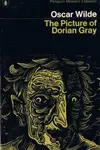 The Picture of Dorian GrayOscar Wilde · 1890Community rating: 4.4 out of 5
When the painter Basil Hallward completes a portrait of the beautiful young Dorian Gray, Dorian makes an idle, despairing wish: that the picture might age in his place, and that he could stay forever as young and lovely as the day it was painted. His wish is granted. As Dorian, encouraged by the cynical, epigram-spouting Lord Henry Wotton, gives himself over to a life of pleasure, cruelty, and corruption, his face remains untouched — while the portrait, hidden away, grows monstrous with every sin. Oscar Wilde's only novel is a dark fable of aestheticism, vanity, and moral consequence, as sharp in its wit as it is unsettling in its horror. Around Dorian's unchanging beauty, Wilde builds a Faustian parable about the cost of a life lived purely for sensation, and a portrait of Victorian society's obsession with surface and youth. First published in 1890 and expanded the following year, the book scandalised its first readers and remains one of the most enduring works of Gothic and philosophical fiction in English.
- 2
 The AlchemistPaulo Coelho · 1988Community rating: 3.64 out of 5
An Andalusian shepherd sells his flock to chase a recurring dream of treasure at the Egyptian pyramids, and learns along the way to read the omens of his own life.
- quest
- 4
 The StrangerAlbert Camus · 1942Cycle of the Absurd #1Community rating: 3.87 out of 5
Albert Camus's classic of the absurd. Meursault, a detached French Algerian clerk, meets his mother's death without tears — and after a senseless act of violence on a sunlit beach, finds himself on trial less for the crime than for his refusal to feign the emotions society demands.
- anti hero
- morally grey
- 5
 Crime and PunishmentFyodor Dostoyevsky · 1866Community rating: 4.06 out of 5
A destitute, brilliant former law student in St. Petersburg murders a pawnbroker to test his theory that extraordinary men are above the moral laws governing ordinary people — and is then consumed by paranoia as he tries to outmaneuver both the police and his own conscience.
- morally grey
- unreliable narrator
- 6
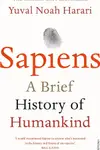 Sapiens: A Brief History of HumankindYuval Noah Harari · 2011Homo #1Community rating: 4.14 out of 5
Harari's account of how Homo sapiens rose from an unremarkable ape to the dominant species on Earth, tracing the cognitive, agricultural, and scientific revolutions that shaped human societies.
- 7
 HamletWilliam Shakespeare · 1603StagedCommunity rating: 3.93 out of 5
Prince Hamlet returns to Elsinore to find his father dead and his uncle Claudius on the throne. When his father's ghost names Claudius as his murderer, Hamlet is charged with revenge — and spends the play caught between conscience and action.
- revenge
- betrayal
- 8
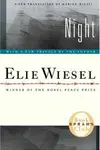 La NuitElie Wiesel · 1956The Night Trilogy #1Community rating: 4.51 out of 5
Elie Wiesel's memoir of his year in the Nazi camps: deported as a teenager from Sighet to Auschwitz, Buna and Buchenwald, he records less the catalogue of atrocity than what the camps did to a devout boy's faith. One of the central texts of Holocaust literature.
- survival
- coming of age
- 9
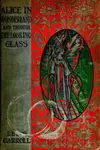 Alice's Adventures in Wonderland / Through the Looking GlassLewis Carroll · 1865Alice's Adventures in WonderlandCommunity rating: 4.1 out of 5
A collected edition of Lewis Carroll's two Alice novels: Alice's Adventures in Wonderland and Through the Looking-Glass. Alice falls down a rabbit hole into a world of shrinking potions, a grinning cat, and a tyrannical Queen of Hearts, then later climbs through a mirror into a chessboard world of talking twins and a knight who keeps falling off his horse.
- portal fantasy
- fish out of water
- 10
 Tuesdays with MorrieMitch Albom · 1997Community rating: 4.17 out of 5
When Mitch Albom stumbles across a television interview with his old college sociology professor, Morrie Schwartz, he realizes how far he has drifted from the person he once meant to become. Sixteen years after promising to keep in touch, Albom—now a driven, workaholic sports journalist—reconnects with Morrie, who is in the final months of his life after a diagnosis of amyotrophic lateral sclerosis (ALS). What begins as a single visit becomes a standing appointment: every Tuesday, Albom flies across the country to sit with his dying mentor for one last course, this one on the meaning of life. Over fourteen Tuesdays, Morrie shares hard-won wisdom on the subjects that matter most—love, work, family, aging, forgiveness, regret, and how to make peace with death—while his body steadily fails him. Published in 1997, Tuesdays with Morrie is a slim, deeply personal memoir that became one of the best-selling books of its kind. Its power lies less in plot than in the plain, unsentimental honesty of Morrie's lessons and the quiet transformation they work on the student who came to say goodbye.
- 11
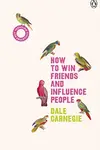 How to Win Friends and Influence PeopleDale Carnegie · 1936Community rating: 3.98 out of 5
Dale Carnegie's 1936 guide to getting along with people, built from decades of public-speaking and human-relations courses he had taught since around 1912. It argues that most social and business success comes down to a short list of habits: never criticize or complain, give honest appreciation, remember a person's name, and let someone reach your conclusion on their own. It has sold more than 30 million copies since publication, one of the best-selling nonfiction books ever printed.
- 12
 Life of PiYann Martel · 2001Community rating: 4.06 out of 5
Pi Patel — full name Piscine Molitor Patel — grows up the son of a zookeeper in Pondicherry, India, a curious, spiritually voracious boy who decides, to the bafflement of everyone around him, to practice Hinduism, Christianity, and Islam all at once. When his family sells the zoo and sails for Canada with some of their animals, disaster strikes: the ship sinks in the Pacific, and sixteen-year-old Pi survives in a lifeboat with the unlikeliest of companions — a wounded zebra, a hyena, an orangutan, and a 450-pound Bengal tiger named Richard Parker. What follows is 227 days adrift: a harrowing, luminous story of survival in which a boy must feed, outwit, and coexist with a predator in the middle of an indifferent ocean. Faith, reason, and the raw will to live are all put to the test, until Pi reaches shore and offers his rescuers a second, very different account of what happened. Yann Martel's Booker Prize–winning Life of Pi is a modern fable about storytelling itself — about the tales we choose to believe and why. By turns thrilling, funny, and philosophical, it asks whether the truest story is the one that happened, or the one that makes us see the world with God in it.
- 13
 Man's Search for MeaningViktor E. Frankl · 1946Community rating: 4.13 out of 5
Psychiatrist Viktor Frankl draws on his survival of three years in Nazi concentration camps to ask why some prisoners kept their will to live while others gave up. His answer — that we always retain the freedom to choose our attitude — grounds logotherapy, his conviction that the deepest human drive is the search for meaning. A sober, humane, and quietly hopeful classic.
- 14
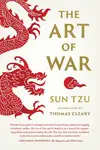 The Art of WarSun Tzu · 500 BCECommunity rating: 3.89 out of 5
Discover the ancient wisdom of Sun Tzu's "The Art of War." This foundational text offers enduring strategies for conflict and leadership, focusing on meticulous planning and understanding your adversary. It remains a vital read for anyone seeking to master strategy, whether in military affairs or modern business.
- mentor figure
- 16
 The ProphetKahlil Gibran · 1923Community rating: 4.13 out of 5
Kahlil Gibran's beloved 1923 book of prose poetry. As the prophet Almustafa prepares to sail home from the city of Orphalese, its people ask him to share his wisdom. In twenty-six poetic sermons he speaks on love, marriage, work, joy and sorrow, freedom, and death — a touchstone of modern spiritual literature.
- 17
 Homo Deus: A History of TomorrowYuval Noah Harari · 2015Homo #2Community rating: 4.14 out of 5
Having charted humanity's rise in Sapiens, Yuval Noah Harari turns from the past to the future. For most of history, humans struggled against famine, plague, and war; now, he argues, we have largely brought these ancient scourges under control and are setting ourselves new goals—immortality, bliss, and a god-like power to engineer life itself. Homo Deus asks what happens to a species that has run out of things to conquer except its own nature. Drawing on history, biology, and the study of intelligence, Harari examines how liberalism, humanism, and free will may give way to new creeds built on data and algorithms, and how biotechnology and artificial intelligence could split humanity or render most of it economically and politically irrelevant. Provocative and wide-ranging, this bestselling work of big-picture nonfiction is less a prediction than a set of urgent questions about where our newfound powers are taking us—and who will be left behind.
- 18
 MeditationsMarcus Aurelius · 180Harvard Classics #2Community rating: 4.16 out of 5
Marcus Aurelius, Roman Emperor from 161 to 180 AD, wrote the Meditations as a private notebook, never intended for publication. Composed largely during military campaigns on the Empire's northern frontier, the entries are addressed to no one but himself: brief exhortations, arguments, and reminders meant to steady his own conduct against anger, ambition, grief, and the exhaustion of ruling an empire beset by plague and war. Grounded in Stoic philosophy, the book returns repeatedly to a small set of convictions: that the only things truly within our control are our own judgments and actions, that the universe is rational and interconnected, that death is natural and not to be feared, and that a person's worth is measured by virtue rather than reputation, wealth, or pleasure. Aurelius writes not as a philosopher building a system but as a man rehearsing, book by book, how to be good under pressure. Nearly two thousand years after it was written, the Meditations remains one of the most widely read works of practical philosophy, valued less as a historical curiosity than as a working manual for facing adversity, mortality, and the demands of daily life with equanimity.
- 19
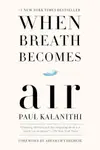 When Breath Becomes AirPaul Kalanithi · 2016Community rating: 3.97 out of 5
When Breath Becomes Air is the posthumously published memoir of Paul Kalanithi, a gifted neurosurgeon who was diagnosed with stage IV lung cancer at the age of 36, just as he was completing a decade of training and preparing to begin his career. A finalist for the Pulitzer Prize and a runaway bestseller, it is one of the most widely read meditations on illness and meaning of its generation. The book moves between two lives: Kalanithi's path into medicine and literature — the questions about mortality and the mind that drew him to neurosurgery — and his abrupt transformation from the doctor delivering diagnoses to the patient receiving one. With clarity and candor, he confronts what makes a life meaningful when the future he planned is taken away, and how to keep living fully while dying. Left unfinished at his death in 2015 and completed with an epilogue by his wife, Lucy, When Breath Becomes Air is a spare, unsentimental, and profoundly humane reckoning with mortality, vocation, and love.
- 21
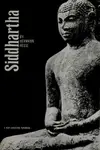 SiddharthaHermann Hesse · 1922Community rating: 4.05 out of 5
In the time of the Buddha, the young Brahmin Siddhartha leaves home convinced that wisdom must be lived, not taught. His search leads him through asceticism, wealth, love, despair, and finally to a river and a ferryman who teaches him to listen. Hermann Hesse's spare, lyrical novel is a century-old meditation on self-knowledge and the search for enlightenment.
- coming of age
- 22
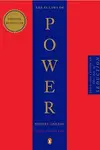 The 48 Laws of PowerRobert Greene · 1999Community rating: 3.88 out of 5
Explore the timeless strategies of power and influence with Robert Greene's essential guide. This book draws on historical examples and philosophical insights to teach you how to navigate social dynamics and achieve your goals. Understand the hidden rules of human interaction and master the art of power.
- 23
 Thinking, Fast and SlowDaniel Kahneman · 2014Community rating: 3.47 out of 5
Explore the two distinct systems that shape human thought: the rapid, intuitive System 1 and the deliberate, logical System 2. Through engaging examples, this book reveals the extraordinary power of quick thinking, the influence of emotion on our choices, and the pitfalls of cognitive biases. Learn when to trust your intuition and when to engage in deeper reflection, gaining practical insights for both personal and professional life.
- 24
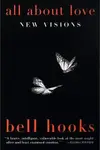 All About Lovebell hooks · 1999Love Song to the Nation #1Community rating: 3.72 out of 5
In All About Love: New Visions, cultural critic and feminist theorist bell hooks argues that our society's confusion and cynicism about love stem from a failure to understand what love truly is. Rejecting the idea of love as a mere feeling, she insists that love is an action — a practice rooted in care, commitment, trust, responsibility, respect, and honesty — and one that cannot be separated from justice. Across a series of clear, personal, and searching essays, hooks examines how a culture shaped by patriarchy, consumerism, and domination distorts our capacity to love, from childhood and family to romance, friendship, community, and spiritual life. Blending memoir, criticism, and ethics, All About Love is both a diagnosis of a loveless culture and a hopeful blueprint for change. It is the first book in hooks's Love Song to the Nation trilogy.
- 25
 A Short History of Nearly EverythingBill Bryson · 2003Community rating: 4.37 out of 5
Bill Bryson sets out to answer the biggest questions there are: how the universe began, how the Earth was formed, how we came to know its age, what everything is made of, and how life — and eventually we — arose from it all. Rather than simply reciting facts, he tracks down the answers and the often eccentric, quarrelsome, and brilliant scientists who found them. Ranging from the Big Bang to quantum physics, from the depths of geologic time to the fragility of life on a small blue planet, Bryson translates dense and forbidding science into vivid, funny, endlessly curious storytelling. Along the way he conveys just how improbable, precarious, and astonishing our existence really is. A hugely popular work of science writing, it turns the history of nearly everything into an accessible and genuinely delightful adventure.
- 26
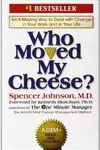 Who Moved My Cheese?Spencer Johnson · 1998Who Moved My Cheese? #1Community rating: 3.79 out of 5
A business fable about two mice and two "littlepeople" who live in a maze and depend on finding cheese at Station C. When the cheese disappears, the four react differently to change: some go looking for more, others cling to what is gone. Spencer Johnson's 1998 parable has sold more than 30 million copies in 37 languages and remains a staple of corporate training and self-help reading.
- 27
 GreenlightsMatthew McConaughey · 2020Greenlights #2Community rating: 4.17 out of 5
Matthew McConaughey invites you to explore the lessons and philosophies that have shaped his extraordinary life. From his Texas roots to global stardom, he shares candid stories and unconventional wisdom. Discover how to navigate life's challenges and find your own 'greenlights' for a more authentic existence.
- coming of age
- 28
 12 Rules for Life: An Antidote to ChaosJordan B. Peterson · 2018Rules for Life #1Community rating: 3.88 out of 5
Clinical psychologist Jordan B. Peterson distils decades of practice, mythology, and philosophy into twelve rules for a meaningful life. Ranging from posture and honesty to responsibility and the pursuit of what matters, each rule becomes a wide-ranging essay on confronting chaos with order. A demanding, discursive work of practical psychology rather than easy self-help.
- 29
 CandideVoltaire · 1759The 100 Greatest Books Ever Written (Easton Press)Community rating: 3.97 out of 5
Expelled from a sheltered castle life, the guileless Candide is flung across a violent world — war, earthquake, Inquisition, shipwreck, and Eldorado's gold — clinging all the while to his tutor's claim that this is "the best of all possible worlds." Voltaire's savage, hilarious satire of blind optimism and human folly, ending on its famous counsel to cultivate one's garden.
- 30
 The Courage to Be DislikedIchirō Kishimi, Fumitake Koga · 2013The Courage To Series #1Community rating: 3.47 out of 5
Structured as five nights of debate between a philosopher and a skeptical young man, this international bestseller introduces the psychology of Alfred Adler. Its provocative claims — that the past need not determine us, that all problems are interpersonal, and that real freedom requires the courage to be disliked — build toward a vision of living courageously in the present. Accessible, argumentative practical philosophy by Ichiro Kishimi and Fumitake Koga.