Most Read Classics Books
Most Read Classics Books
These are the Classics books most read by Seekquel members, ranked by real reading activity across 343 titles, not scraped popularity.
Based on Seekquel member reading activity. Updated weekly.
- 1
 Animal FarmGeorge Orwell · 1945Signet ClassicsCommunity rating: 4.23 out of 5
When the mistreated animals of Manor Farm rise up and drive out their drunken human owner, they establish a new order founded on a single, hopeful principle: all animals are equal. Led by the pigs, the most clever of the animals, the farm is renamed and the beasts set about running their world for their own benefit. But power reshapes those who hold it. As the ambitious boar Napoleon consolidates control, the founding ideals are quietly rewritten, dissent is punished, and the promises of the revolution curdle into a tyranny that looks unsettlingly like the one it replaced. The other animals, loyal and hardworking, struggle to remember how things were meant to be. George Orwell's short, savage fable uses a barnyard uprising to trace how revolutions are betrayed, how language is bent to serve power, and how easily the many can be ruled by the few. First published in 1945, it remains one of the most enduring political allegories ever written.
- 2
 1984George Orwell, Michael Dean · 2020Community rating: 4.35 out of 5
A simplified retelling of George Orwell's dystopian classic, adapted by Michael Dean for the Penguin Readers / Pearson English graded-reader series at Level 4 for learners of English. Winston Smith lives in Oceania, a state where the Party controls every fact, every image, and every thought, and where the face of Big Brother watches from every wall. Winston's job is to rewrite old newspapers so the past always agrees with the present, but in secret he hates the Party and longs for the truth. When he falls in love with Julia, the two try to hold on to something real in a world built on lies, and their quiet rebellion pulls them toward a confrontation with the Party's terrifying power. The graded text keeps the shape and force of Orwell's story while using controlled vocabulary and shorter sentences, making one of the twentieth century's most important novels accessible to intermediate readers.
- 3
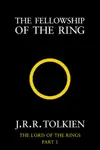 The Fellowship of the RingJ.R.R. Tolkien · 1954The Lord of the Rings #1Community rating: 4.45 out of 5
When the hobbit Frodo Baggins inherits a plain gold ring from his uncle Bilbo, the wizard Gandalf reveals a terrible truth: it is the One Ring, forged by the Dark Lord Sauron to control all other rings of power and dominate Middle-earth. To destroy it, Frodo must carry it to the fires of Mount Doom — deep in the land of Sauron's shadow. He leaves the Shire with three friends and eventually joins eight companions representing the free peoples: men, elves, dwarves, and hobbits. Their journey takes them through the mines of Moria, the forests of Lothlórien, and down the great river Anduin, as the shadow of the Ring grows heavier and the Fellowship is slowly torn apart by fear, grief, and the corruption that the Ring spreads among those who carry it. Tolkien's first volume sets a mythological scale against an intimate, human emotional register — a combination that defined an entire genre.
- quest
- found family
- 4
 The HobbitJ.R.R. Tolkien, Jemima Catlin, Michael Hague · 1937Middle-earth #1Community rating: 4.17 out of 5
Bilbo Baggins is a comfortable, respectable hobbit who wants nothing more than a quiet life in his hole at Bag End. That peace ends when the wizard Gandalf arrives with thirteen dwarves and recruits a reluctant Bilbo as the burglar for an expedition to the Lonely Mountain. There the dragon Smaug guards a vast treasure that once belonged to the dwarves, and their leader Thorin Oakenshield means to reclaim both the gold and his ancestral kingdom. The journey takes the company across a perilous landscape of trolls, goblins, giant spiders, and shape-shifters, testing a homebody who never expected adventure. Along the way Bilbo stumbles upon a magic ring and a strange creature named Gollum in the dark beneath the mountains, an encounter that will matter far beyond this tale. As the company nears its goal, Bilbo grows from timid passenger into the resourceful heart of the expedition, and the prospect of recovered treasure draws armies toward a single mountain. Written for younger readers but rich enough for any age, it is a tale of courage found in unlikely places, the pull of home, and the cost of greed, set in the world that would become Middle-earth.
- reluctant hero
- quest
- 5
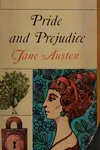 Pride and PrejudiceJane Austen · 1813The Penguin English LibraryCommunity rating: 4.3 out of 5Community spice: 1.0 out of 51.0
Elizabeth Bennet, a spirited young woman, navigates the rigid social expectations of Regency England. When she meets the wealthy and proud Mr. Darcy, their initial disdain for each other sets the stage for a complex dance of wit, misunderstanding, and unexpected attraction. This story explores themes of class, reputation, and the search for true love amidst societal pressures.
- enemies to lovers
- grumpy sunshine
- 6
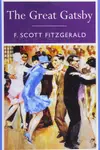 The Great GatsbyF. Scott Fitzgerald · 1925Scribner Library #1Community rating: 4.01 out of 5Community spice: 1.5 out of 51.5
Set on Long Island in the summer of 1922, The Great Gatsby is narrated by Nick Carraway, a young Midwesterner newly arrived in New York and renting a modest cottage next door to a vast mansion. His neighbor is Jay Gatsby, a self-made millionaire famous for the lavish parties he throws every weekend, though almost no one knows where his fortune came from or what he truly wants. Through Nick, we learn that Gatsby's glittering displays are all in service of a single obsession: Daisy Buchanan, the woman he loved before the war and who is now married to the wealthy, brutish Tom Buchanan. As Nick is drawn into the tangled lives of the East Egg and West Egg elite, the distance between old money and new, between illusion and reality, becomes impossible to bridge. F. Scott Fitzgerald's 1925 novel is a compact, lyrical portrait of the Jazz Age and a piercing critique of the American Dream. Its symbols — the green light across the bay, the fading eyes of Doctor T. J. Eckleburg, the valley of ashes — have become part of the language, and its story of longing, class, and self-invention remains one of the most enduring in American literature.
- 7
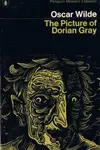 The Picture of Dorian GrayOscar Wilde · 1890Community rating: 4.4 out of 5
When the painter Basil Hallward completes a portrait of the beautiful young Dorian Gray, Dorian makes an idle, despairing wish: that the picture might age in his place, and that he could stay forever as young and lovely as the day it was painted. His wish is granted. As Dorian, encouraged by the cynical, epigram-spouting Lord Henry Wotton, gives himself over to a life of pleasure, cruelty, and corruption, his face remains untouched — while the portrait, hidden away, grows monstrous with every sin. Oscar Wilde's only novel is a dark fable of aestheticism, vanity, and moral consequence, as sharp in its wit as it is unsettling in its horror. Around Dorian's unchanging beauty, Wilde builds a Faustian parable about the cost of a life lived purely for sensation, and a portrait of Victorian society's obsession with surface and youth. First published in 1890 and expanded the following year, the book scandalised its first readers and remains one of the most enduring works of Gothic and philosophical fiction in English.
- 8
 Fahrenheit 451Ray Bradbury · 1963Community rating: 3.95 out of 5
In a future America, firemen do not put out fires—they start them. Books are illegal, and Guy Montag's job is to burn any that are found, along with the houses that hide them. He does his work without question until a series of encounters cracks the surface of his contented life: a curious teenage neighbor who asks whether he is really happy, a woman who chooses to die with her books rather than live without them, and a wife who has quietly given up on everything but the voices coming from the walls. Unsettled, Montag begins to steal the books he is supposed to destroy, hoping they hold whatever it is his world has lost. His awakening puts him on a collision course with his superior and with a society engineered to keep everyone entertained, medicated, and incapable of sustained thought. Ray Bradbury's classic dystopian novel is a fierce, lyrical warning about censorship, mass media, and the quiet ways a culture can decide that thinking is too much trouble. Decades after publication it remains one of the most widely read and debated novels about the value of books and the cost of their loss.
- 11
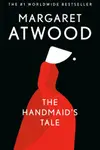 The Handmaid's TaleMargaret Atwood · 1985The Handmaid's Tale #1Community rating: 4.33 out of 5
In the near future, a fundamentalist regime called the Republic of Gilead has overthrown the United States government. In response to plummeting birth rates, the new order strips women of their rights, their money, their names, and their autonomy. The few remaining fertile women are conscripted as Handmaids and assigned to powerful households to bear children for the ruling Commanders and their wives. Offred is one such Handmaid, serving in the home of the Commander and his wife Serena Joy. Through her quiet, watchful narration, she reconstructs the ordinary life that was taken from her — a husband, a daughter, a job, a name — and records the ceremonies, surveillance, and small rebellions that define her present. As she navigates the dangers of forbidden connection and a nascent resistance, she holds onto memory itself as a form of defiance. First published in 1985, Margaret Atwood's The Handmaid's Tale is one of the defining dystopian novels of the twentieth century, a chilling meditation on gender, power, complicity, and reproductive control that has only grown in resonance. It inspired an acclaimed television adaptation and the 2019 sequel The Testaments.
- 12
 And Then There Were NoneAgatha Christie · 1939Community rating: 4.4 out of 5
Ten strangers, each invited under a different pretext, arrive on an isolated island off the Devon coast. None of them has met their absent host, the elusive U. N. Owen, and as the boat that brought them departs, they settle in for what promises to be an unusual stay. After dinner on the first evening, a recorded voice fills the room, accusing every guest of having caused a death and escaped justice. Soon afterward, one of them dies. As a storm cuts the island off from the mainland, the remaining guests realize their deaths are being staged to mirror the verses of an old nursery rhyme that hangs framed in each bedroom. One by one, the survivors fall, and with no way to summon help and no sign of any other living soul, suspicion turns inward. Each person studies the others, certain that the killer is among them, while the rhyme counts steadily down. Trapped, watched, and unable to trust anyone, they must reckon with the secrets that brought them here even as the circle of the living shrinks. Christie builds a closed, methodical puzzle in which guilt, fear, and isolation press on every character, and the question is not only who will be next but how anyone could orchestrate such a sequence of deaths on a deserted island. It is a tightly constructed account of crime and consequence with no series detective to set things right.
- locked room
- 14
 The Two TowersJ.R.R. Tolkien · 1954The Lord of the Rings #2Community rating: 4.41 out of 5
The Fellowship has broken. Frodo and Sam press on toward Mordor alone, guided — and stalked — by the treacherous Gollum, who knows the way through the Dead Marshes and to the black gate of the enemy's land. Their path will take them into the lair of a monstrous, ancient evil that guards the pass into Mordor itself. Meanwhile Aragorn, Legolas, and Gimli pursue the orc-band that has captured Merry and Pippin, a chase that carries them into the ancient forest of Fangorn and to the towers of Isengard, where the wizard Saruman has turned traitor and the Ents, oldest of all speaking creatures, are stirred at last to war. In Rohan, the Riddermark stands on the edge of ruin under a king held captive by his own councillor's treachery, and Aragorn must help rally its people before Saruman's armies overwhelm them. The second volume of The Lord of the Rings splits its narrative between these two threads — the small, grim journey toward Mount Doom and the mounting war across Middle-earth — building toward the fall of Isengard and the desperate defense of Helm's Deep.
- quest
- 15
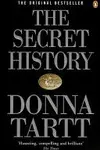 The Secret HistoryDonna Tartt · 1992Community rating: 3.89 out of 5
At Hampden College in rural Vermont, scholarship student Richard Papen talks his way into an insular circle of Classics students studying under the magnetic Julian Morrow. Their pursuit of beauty and transcendence carries them past ordinary morality and into a killing — and the novel, narrated in hindsight, is less a whodunit than a study of guilt, complicity and intellectual arrogance. Donna Tartt's 1992 debut is credited with popularizing dark academia.
- dark academia
- morally grey
- betrayal
- 16
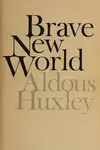 Brave New WorldAldous Huxley · 1932Brave New World #1Community rating: 4.02 out of 5
Brave New World is Aldous Huxley's 1932 dystopian novel and one of the defining works of twentieth-century science fiction. It imagines a distant-future World State that has traded away family, art, religion, and struggle for guaranteed stability: children are decanted from bottles and conditioned into rigid castes, discontent is dissolved by the pleasure-drug soma, and citizens are engineered from birth to love the servitude assigned to them. The story follows Bernard Marx, an Alpha who feels subtly out of step with his frictionless society, and Lenina Crowne, who embodies its ideals. A trip to a "Savage Reservation" brings them back to London with John, a young man raised on Shakespeare and outside the World State's control. His collision with a civilization that cannot understand grief, longing, or belief drives the novel toward its unsettling conclusion. By turns satirical and chilling, Huxley's book interrogates the price of manufactured happiness and the loss of individuality in a technological age. Alongside Orwell's Nineteen Eighty-Four, it remains one of the most argued-over visions of where comfort and control might lead.
- 17
 Lord of the FliesWilliam Golding · 1954Community rating: 3.73 out of 5
A group of British schoolboys are stranded on an uninhabited island after a plane crash. Initially, they attempt to form a civilized society, but their efforts quickly devolve into a brutal struggle for power and survival. The boys' descent into savagery reveals the darker aspects of human nature when removed from societal constraints.
- 21
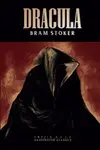 DraculaBram Stoker · 1897Arcturus ClassicsCommunity rating: 3.91 out of 5
A young solicitor travels to Transylvania on ordinary business and discovers his client is no ordinary nobleman. When the count relocates to England, a small circle of friends led by the physician Van Helsing must piece together the truth from letters, diaries, and telegrams before it is too late. Bram Stoker's 1897 epistolary novel that defined the modern vampire.
- epistolary
- 22
 The Hitchhiker's Guide to the GalaxyDouglas Adams · 1979The Hitchhiker's Guide to the Galaxy #1Community rating: 4.2 out of 5
Arthur Dent is having a very bad day. First, his house is about to be demolished. Then, he discovers the Earth is also scheduled for demolition to make way for a hyperspace bypass. Luckily, his friend Ford Prefect is an alien researcher for the Hitchhiker's Guide to the Galaxy and whisks Arthur away just in time. Join them on a bizarre and hilarious journey through space.
- fish out of water
- 23
 The Lion, the Witch and the WardrobeC. S. Lewis · 1950The Chronicles of Narnia #2Community rating: 3.97 out of 5
Four evacuee siblings step through an old wardrobe into Narnia, a land of talking beasts held in endless winter by the White Witch. Guided by the great lion Aslan, they're drawn into a fight for Narnia's freedom that costs one of them a terrible betrayal — and Aslan an even greater price.
- portal fantasy
- sacrifice
- betrayal
- redemption arc
- 24
 The Bell JarSylvia Plath · 1963Community rating: 3.84 out of 5
A talented, ambitious young woman in 1950s New England spirals into a mental breakdown while struggling with the expectations of her generation. Told through Esther Greenwood's darkly comic and lyrical internal monologue, The Bell Jar is a semi-autobiographical portrait of depression, ambition, and the suffocating role women were forced to play before they could choose their own paths.
- coming of age
- 26
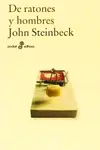 Of Mice and MenJohn Steinbeck · 1937Labor Trilogy #2Community rating: 3.89 out of 5
George Milton and Lennie Small are itinerant ranch workers during the Great Depression, drifting from job to job across California with a shared dream: to save enough to buy a small plot of land where they can live off "the fatta the lan'" and, crucially, where Lennie can tend rabbits. George is sharp and protective; Lennie is a gentle giant of enormous strength and the mind of a child, prone to accidentally crushing whatever he loves too hard. Arriving at a new ranch, they find a fragile foothold among a cast of the dispossessed — the aging swamper Candy, the isolated Black stable hand Crooks, and the lonely, unnamed wife of the boss's son, whose need for attention becomes dangerous. For a moment their dream of land seems within reach, buoyed by Candy's offer to pitch in his savings. But Lennie's inability to control his own strength sets in motion a tragedy that forces George into an impossible final act of loyalty. John Steinbeck's 1937 novella is a spare, devastating parable about friendship, dreams deferred, and the loneliness of migrant labor in Depression-era America. Frequently taught and frequently banned, it remains one of the most widely read short novels in American literature.
- 27
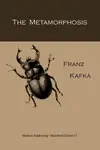 Die VerwandlungFranz Kafka · 1915Modern Library ClassicsCommunity rating: 4.08 out of 5
Gregor Samsa wakes to find himself transformed into a giant insect, and his family's care slowly turns to revulsion. Kafka's spare, unsettling parable of alienation, dependence, and conditional love — a cornerstone of modern literature.
- 28
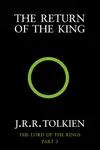 The Return of the KingJ.R.R. Tolkien · 1955The Lord of the Rings #3Community rating: 4.35 out of 5
As the armies of Mordor march on Gondor, Gandalf and Pippin race to Minas Tirith to rally its defense while Aragorn, Legolas, and Gimli lead the Grey Company along the Paths of the Dead to gather an army of the forsworn. The Battle of Pelennor Fields becomes the war's turning point, as Rohan's charge, Éowyn's stand against the Witch-king, and Aragorn's arrival with the dead combine to break Sauron's assault — buying time, but not victory. While the armies of the West march on the Black Gate as a final, desperate diversion, Frodo and Sam, guided and betrayed in turns by Gollum, struggle through Mordor's wasteland toward Mount Doom, the Ring's corruption growing heavier with every step. The fate of Middle-earth rests not on armies but on whether one exhausted hobbit can complete an impossible task. The concluding volume of The Lord of the Rings resolves the quest, the war, and the fellowship's individual fates, including Aragorn's crowning, the Scouring of the Shire, and the Grey Havens — Tolkien's meditation on loss, the passing of an age, and what victory costs those who win it.
- quest
- found family
- 30
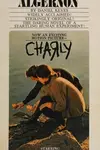 Flowers for AlgernonDaniel Keyes · 1966Community rating: 4.55 out of 5
Charlie Gordon is thirty-two, works as a janitor at a bakery, and desperately wants to be smart. When scientists at Beekman offer him an experimental operation that has already transformed a laboratory mouse named Algernon into a maze-solving genius, Charlie volunteers, and the story unfolds through the progress reports he keeps before, during, and after the surgery. As his intelligence climbs past that of his teachers, his co-workers, and finally the doctors who created him, Charlie gains not only knowledge but painful insight: into the cruelty of people he once thought were his friends, into his lonely childhood, and into the limits of the science that remade him. When Algernon's own brilliance begins to falter, Charlie races to understand what it means for his own future. Daniel Keyes's classic — winner of both the Hugo and Nebula Awards — uses its ingenious first-person structure, whose spelling and syntax rise and fall with Charlie's mind, to ask what intelligence is really worth, and what we owe to one another regardless of it. Moving and humane, it remains one of science fiction's most beloved and widely taught novels.
- epistolary