Books from Russia
Books from Russia
Based on Seekquel member reading activity. Updated weekly.
- 1
 Crime and PunishmentFyodor Dostoyevsky · 1866Community rating: 4.14 out of 5
A destitute, brilliant former law student in St. Petersburg murders a pawnbroker to test his theory that extraordinary men are above the moral laws governing ordinary people — and is then consumed by paranoia as he tries to outmaneuver both the police and his own conscience.
- morally grey
- unreliable narrator
- 2
 White NightsFyodor Dostoyevsky, إدريس الملياني · 1848Community rating: 4.07 out of 5
The Arabic edition of Dostoevsky's 1848 novella. Over four glowing summer nights in St. Petersburg, a lonely dreamer forms a tender bond with Nastenka, a young woman awaiting another man. A delicate, melancholy meditation on loneliness and fleeting connection.
- 3
 Anna KareninaLeo Tolstoy · 1878Community rating: 3.92 out of 5
Trapped in a loveless marriage, the aristocratic Anna Karenina risks her position and family for a consuming affair with Count Vronsky — and discovers that Russian society will forgive the man but ruin the woman. Against her tragedy Tolstoy sets the landowner Levin's quieter search for meaning in love, faith and work. A sweeping, psychologically exact masterpiece of nineteenth-century realism.
- forbidden love
- betrayal
- family saga
- multiple povs
- 4
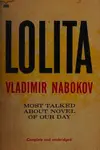 LolitaVladimir Nabokov · 1955Community rating: 3.64 out of 5
Humbert Humbert, a cultured European academic newly arrived in America, narrates his own story from a prison cell. He rents a room in a New England town and becomes fixated on his landlady's twelve-year-old daughter, Dolores Haze, whom he privately calls Lolita. To stay near her, he marries her mother, and when circumstances leave him her sole guardian, he takes the girl on a long, restless drive across the United States. Told entirely in Humbert's ornate, self-justifying voice, the novel is a masterpiece of unreliable narration: seductive, allusive, and grotesque at once. Nabokov gives his predator dazzling language precisely so the reader must work to see past it to the child being harmed and the life being destroyed. First published in 1955 and long controversial, Lolita is widely regarded as one of the great and most difficult novels of the twentieth century, a dark study of obsession, delusion, and the abuse of power, and a demonstration of how beautiful prose can be used to conceal monstrous acts.
- unreliable narrator
- 5
 The Death of Ivan IlyichLeo Tolstoy, Anthony Briggs, Anthony Horvath, David Goldfarb, Zinc Read · 1886Community rating: 4.11 out of 5
Ivan Ilyich, a respectable judge who has done everything correctly, develops a fatal illness after a trivial fall and must confront the emptiness of the comfortable life he built. As those around him retreat into denial, only his servant Gerasim offers honest kindness. Tolstoy's spare, piercing novella on mortality and an authentic life.
- 6
 FoundationIsaac Asimov · 1951Foundation #3Community rating: 4.25 out of 5
The Galactic Empire has ruled twelve million worlds for twelve thousand years, and to almost everyone it looks eternal. Only Hari Seldon, master of the predictive science of psychohistory, can read the figures that say otherwise: the Empire will fall, and thirty thousand years of barbarism will follow. Seldon cannot prevent the collapse, but he can shorten the dark age to a single millennium. To do it he founds an outpost of scientists and scholars at the very edge of the galaxy, on the barren world of Terminus, charged on the surface with compiling a great Encyclopedia. As the Empire's authority recedes, the young Foundation must survive a series of "Seldon Crises," turning points at which its only weapons are knowledge, trade, and nerve against the warlords and neighboring kingdoms rising in the vacuum of imperial power. Assembled from Asimov's 1940s magazine stories, Foundation is a landmark of idea-driven science fiction, less about heroes than about the long arc of history and whether it can be steered.
- 7
 I, RobotIsaac Asimov · 1950Robot #0.1Community rating: 3.71 out of 5
Isaac Asimov's foundational collection of nine linked stories, framed by the recollections of robopsychologist Dr. Susan Calvin. Built around the famous Three Laws of Robotics, each tale is an ingenious logic puzzle in which a robot seems to break the rules—and the truth must be reasoned out. A cerebral, hugely influential classic of machine ethics and AI.
- 8
 Ward No. 6Антон Павлович Чехов · 1893Community rating: 3.5 out of 5
Step into the suffocating confines of a provincial Russian hospital ward in the late 19th century. Dr. Andrei Yefimych Ragin finds himself increasingly disillusioned with his medical practice and the provincial life he leads. His intellectual curiosity leads him to engage in philosophical discussions with his patients, blurring the lines between sanity and madness, and challenging the very nature of societal norms and personal freedom.
- morally grey
- 9
 Доктор ЖивагоBoris Leonidovich Pasternak · 1957Community rating: 5 out of 5
Amidst the chaos of the Russian Revolution, a poet and doctor named Yury Zhivago finds his life and loves swept away by historical forces. His artistic spirit clashes with the era's brutality as he navigates personal relationships, especially his deep connection with Lara. This novel explores the fate of an individual caught in the relentless tide of history.
- forbidden love
- sacrifice
- survival
- 10
 Один день Ивана ДенисовичаАлександр Исаевич Солженицын · 1992Community rating: 4.5 out of 5
This novel follows Ivan Denisovich Shukhov, a prisoner in a Soviet labor camp, through a single day of his brutal existence. It vividly portrays his daily struggle for survival and dignity amidst the harsh realities of communist oppression. The book offers a stark look into the world of Stalin's forced work camps.
- survival
- betrayal
- 11D
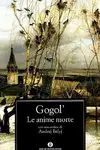 DEAD SOULS: A POEMAnthony Briggs, Gustave Aucouturier, Николай Васильевич Гоголь · 1842Community rating: 4.5 out of 5
This satirical masterpiece follows Chichikov, a peculiar gentleman traveling through provincial Russia. He concocts an audacious scheme to buy the names of deceased serfs, the 'dead souls,' from landowners who are still legally obligated to pay taxes on them. As he navigates the corrupt and absurd bureaucracy, he encounters a cast of eccentric characters and exposes the rot beneath the surface of Russian society.
- betrayal
- revenge
- 12
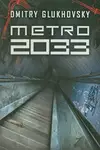 Metro 2033Dmitry Alekseyevich Glukhovsky · 2005Metro #1Community rating: 5 out of 5
In the year 2033, the world is a wasteland, and the last remnants of humanity survive in the Moscow Metro. Artyom, a young man from the VDNKh station, must journey into the heart of the Metro to deliver a vital message. His mission could save his home, and perhaps all of humanity, from a new and terrifying threat.
- quest
- survival
- 13
 Fogo PálidoVladimir Nabokov · 1962Community rating: 5 out of 5
This novel centers on a lengthy poem written by a recently deceased poet, John Shade. The poem is presented alongside extensive commentary by his former father-in-law, Charles Kinbote, who claims to be the exiled king of Zembla. As Kinbote's annotations grow increasingly bizarre and self-serving, the true nature of the poem and the relationship between the two men becomes disturbingly unclear.
- 14
 The NoseНиколай Васильевич Гоголь · 1836Community rating: 3.5 out of 5
Collegiate Assessor Kovalyov wakes up one morning to find his nose missing from his face — and shortly after spots it, dressed in the uniform of a high-ranking official, going about St. Petersburg on its own business, apparently outranking him. Gogol's absurdist satire skewers the vanity, status-obsession and bureaucratic pretension of Russian society through one of literature's strangest premises.
- 15
 The Bet and Other StoriesАнтон Павлович Чехов · 1980Community rating: 5 out of 5
This collection features Anton Chekhov's renowned short story, 'The Bet,' where a banker and a young lawyer make a life-altering wager involving fifteen years of solitary confinement. As the lawyer endures his isolation, the story explores the profound psychological impact of his choice and the shifting perspectives on wealth, freedom, and human existence. The volume also includes other classic tales from the master of the short story form.
- 16
 First LoveIvan Sergeevich Turgenev · 2007Community rating: 4 out of 5
This novella tells the story of a young man's intense and overwhelming first love. Set against the backdrop of rural Russia, it explores the passionate, yet ultimately fleeting, nature of adolescent infatuation. Turgenev captures the raw emotions and the bittersweet realization that first loves often remain just that.
- 17
 Раковый корпусАлександр Исаевич Солженицын · 1968Community rating: 4 out of 5
In mid-1950s Soviet Union, Oleg Kostoglotov moves from a concentration camp to a cancer ward, mirroring author Solzhenitsyn's own experiences. This novel examines the corrupting influence of the police state and the resilience of individuals facing severe illness and oppression. It stands as a powerful testament to the human spirit under duress.
- survival
- 18
 The Queen of Spades and Other StoriesАлександр Сергеевич Пушкин · 1962Community rating: 4 out of 5
Alexander Pushkin’s collection showcases the brilliance of Russian literature’s founding father. At its center is the haunting tale of The Queen of Spades, where a young officer’s obsession with a secret gambling method leads him down a path of madness and ruin. These stories blend realism with the supernatural, capturing the social tensions and human frailties of 19th-century Russia.
- morally grey
- anti hero
- revenge
- betrayal
- 19
 Eugene OneginAleksandr Puskin, Александр Сергеевич Пушкин · 1833Community rating: 4 out of 5
Eugene Onegin (Russian: Евге́ний Оне́гин, BGN/PCGN: Yevgeniy Onegin) is a novel in verse written by Alexander Pushkin. It is a classic of Russian literature, and its eponymous protagonist has served as the model for a number of Russian literary heroes (so-called superfluous men). It was published in serial form between 1825 and 1832. The first complete edition was published in 1833, and the currently accepted version is based on the 1837 publication. Almost the entire work is made up of 389 stanzas of iambic tetrameter with the unusual rhyme scheme "AbAbCCddEffEgg", where the uppercase letters represent feminine rhymes while the lowercase letters represent masculine rhymes. This form has come to be known as the "Onegin stanza" or the "Pushkin sonnet." The rhythm, innovative rhyme scheme, the natural tone and diction, and the economical transparency of presentation all demonstrate the virtuosity which has been instrumental in proclaiming Pushkin as the undisputed master of Russian poetry. The story is told by a narrator (a lightly fictionalized version of Pushkin's public image), whose tone is educated, worldly, and intimate. The narrator digresses at times, usually to expand on aspects of this social and intellectual world. This allows for a development of the characters and emphasises the drama of the plot despite its relative simplicity. The book is admired for the artfulness of its verse narrative as well as for its exploration of life, death, love, ennui, convention and passion. It influenced Vikram Seth's Golden Gate.
- 20
 Отцы и детиIvan Sergeevich Turgenev · 1862Community rating: 3 out of 5
Ivan Turgenev's classic novel delves into the generational divide through the eyes of Yevgeny Bazarov, a self-proclaimed Nihilist, and his student Arkady Kirsanov. When Bazarov visits Arkady's family estate, his radical views clash with the traditional values of Arkady's uncle, Pavel. This ideological conflict escalates into a dangerous confrontation, sparking controversy upon its 1862 publication and continuing to resonate with readers today.
- family saga
- rivals
- 21
 Anya's ghostVera Brosgol · 2011Koibitogokoro seriesCommunity rating: 4 out of 5
Anya, a self-conscious teenager embarrassed by her family and her own body, struggles to fit in. After an accidental fall down a well, she finds an unexpected friend in a ghost. However, Anya soon discovers that having a spectral companion comes with its own set of peculiar challenges.
- coming of age
- fish out of water
- 22

- 23
 Les Allées sombresИван Алексеевич Бунин · 1990Community rating: 1 out of 5
This collection of 38 short stories by Nobel laureate Ivan Bounine delves into the profound themes of love, death, and the complexities of women. The narratives feature characters who experience love with a raw, carnal, and sometimes violent intensity. Bounine's work is noted for its deliberate exploration of eroticism, a rare quality in classic Russian literature.
- morally grey
- 24
 Life and FateВасилий Семёнович Гроссман · 1960
 - 25
 Red CavalryIsaac Babel, Boris Dralyuk · 1926
 - 26
 StalingradElizabeth Chandler, Robert Chandler, Василий Семёнович Гроссман · 1952
 - 27
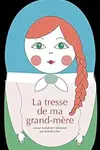 La tresse de ma grand-mèreAlina Bronsky · 2019
Max's grandmother, a former celebrated dancer, now rules a refugee home with an iron fist, fiercely protecting her grandson from the new world. She rails against German society, its sweets, and its people, oblivious to her husband's growing affection for someone else. What seems like an ending for other families is just the beginning for Max and his grandparents, as they navigate the complexities of a blended family.
- found family
- 28
 A woman lovedAndreï Makine · 2015
Young filmmaker Oleg Erdmann spends years writing a screenplay about the enigmatic Catherine the Great only to fail to capture the true essence of her. As the Soviet Union changes before him, new opportunities arise for him to bring her to life.
- 29
 Be preparedVera Brosgol · 2018
A misfit girl and her brother attend summer camp, where they struggle with primitive plumbing, snobby tentmates, and boys-versus-girls competitions.
- 30
 Baba Dunja's Last LoveAlina Bronsky · 2015
Baba Dunja ist eine Tschernobyl-Heimkehrerin. Wo der Der Rest der Welt nach dem Reaktorunglück die tickenden Geigerzähler und die strahlenden Waldfrüchte fürchtet, baut sich die ehemalige Krankenschwester mit Gleichgesinnten ein neues Leben auf. Wasser gibt es aus dem Brunnen, Elektrizität an guten Tagen und Gemüse aus dem eigenen Garten. Die Vögel rufen im Niemandsland so laut wie nirgends sonst, die Spinnen weben verrückte Netze, und manchmal kommt sogar ein Toter auf einen Plausch vorbei. Während der sterbenskranke Petrov in der Hängematte Liebesgedichte liest, die Gavrilovs im Garten Schach spielen und die Melkerin Marja mit dem fast hundertjährigen Sidorov anbandelt, schreibt Baba Dunja Briefe an ihre Tochter Irina, die Chirurgin bei der deutschen Bundeswehr ist. Und an ihre Enkelin Laura. Doch dann kommen Fremde in Dorf - und die Gemeinschaft steht erneut vor der Auflösung. Alina Bronsky lässt in ihrem neuen Roman eine untergegangene Welt wieder auferstehen. Komisch, klug und herzzerreißend erzählt sie die Geschichte eines Dorfes, das es nicht mehr geben soll - und einer außergewöhnlichen Frau, die im hohen Alter ihr selbstbestimmtes Paradies findet. Auf kleinem Raum gelingt ihr eine märchenhafte und zugleich fesselnde gegenwärtige Geschichte.