B
Bill McKibben
Bill McKibben is a writer whose work often explores environmental and social issues. You might know him from his contributions to Plough Quarterly No. 4.
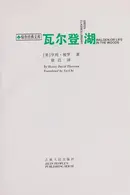
Walden or, Life in the Woods
On July 4, 1845, twenty-seven-year-old Henry David Thoreau moved into a small cabin he had built by hand on the shore of Walden Pond, on land owned by his friend Ralph Waldo Emerson. He stayed two years, two months, and two days, and Walden — compressing that time into the arc of a single year — is his account of the experiment: part practical record of building, planting, and keeping house on almost nothing, part sustained argument for a life lived on purpose.
The book moves between closely observed nature writing — ice breaking up on the pond, a battle between colonies of ants, a loon's cry across the water at dusk — and pointed, often satirical commentary on the "quiet desperation" Thoreau saw in his neighbors' pursuit of property, fashion, and needless labor. Chapters such as "Economy," "Solitude," and "Higher Laws" build toward his central claim: that self-reliance, simplicity, and unhurried attention to the natural world aren't deprivations but the surest route to a considered life.
Part memoir, part nature writing, part social critique, Walden became a foundational text of American transcendentalism and remains one of the most influential arguments ever made for living deliberately.
Two years, two months, and two days — from July 4, 1845 to September 6, 1847 — in a small cabin he built himself on land owned by his friend Ralph Waldo Emerson. Walden compresses that stay into the narrative arc of a single year.
Yes. Walden Pond is a real glacial lake in Concord, Massachusetts, about two miles south of the town center. The site of Thoreau's cabin, on the pond's north shore, is marked today and sits within Walden Pond State Reservation.