Mark TwainClassics · Fiction·1835–1910
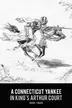
A Connecticut Yankee in King Arthur's Court
Imagine being knocked unconscious and waking up in 528 AD, right in the middle of King Arthur's court! That's exactly what happens to Hank Morgan, a practical American from the 19th century. Armed with his modern know-how, he sets out to 'improve' Camelot, introducing everything from schools and telephones to the printing press. It's a hilarious clash of cultures as he tries to bring the future to a land of knights and magic.
This novel is a standalone work and does not require reading any other books by Mark Twain to understand or enjoy it. It presents a complete narrative within its pages.
Several film adaptations of this novel exist, including a notable 1949 musical film starring Bing Crosby. These adaptations often capture the comedic and satirical elements of the book.
A Connecticut Yankee in King Arthur's Court showcases Twain's characteristic use of satire and social commentary, similar to his more famous works, but it uniquely applies these elements to a historical fantasy setting rather than contemporary American life.