Most Read Sociology Books
Most Read Sociology Books
These are the Sociology books most read by Seekquel members, ranked by real reading activity across 55 titles, not scraped popularity.
Based on Seekquel member reading activity. Updated weekly.
- 1
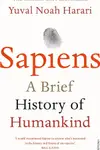 Sapiens: A Brief History of HumankindYuval Noah Harari · 2011Homo #1Community rating: 4.14 out of 5
Harari's account of how Homo sapiens rose from an unremarkable ape to the dominant species on Earth, tracing the cognitive, agricultural, and scientific revolutions that shaped human societies.
- 2
 QuietSusan Cain · 2012Quiet #1Community rating: 4.17 out of 5
Susan Cain's "Quiet" delves into the power of introverts in a world that often undervalues their contributions. Through research and real-life stories, Cain argues that introversion is a strength, not a weakness. The book challenges societal norms and encourages a deeper understanding of different personality types.
- 3
 Tuesdays with MorrieMitch Albom · 1997Community rating: 4.17 out of 5
When Mitch Albom stumbles across a television interview with his old college sociology professor, Morrie Schwartz, he realizes how far he has drifted from the person he once meant to become. Sixteen years after promising to keep in touch, Albom—now a driven, workaholic sports journalist—reconnects with Morrie, who is in the final months of his life after a diagnosis of amyotrophic lateral sclerosis (ALS). What begins as a single visit becomes a standing appointment: every Tuesday, Albom flies across the country to sit with his dying mentor for one last course, this one on the meaning of life. Over fourteen Tuesdays, Morrie shares hard-won wisdom on the subjects that matter most—love, work, family, aging, forgiveness, regret, and how to make peace with death—while his body steadily fails him. Published in 1997, Tuesdays with Morrie is a slim, deeply personal memoir that became one of the best-selling books of its kind. Its power lies less in plot than in the plain, unsentimental honesty of Morrie's lessons and the quiet transformation they work on the student who came to say goodbye.
- 4
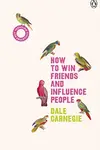 How to Win Friends and Influence PeopleDale Carnegie · 1936Community rating: 3.98 out of 5
Dale Carnegie's 1936 guide to getting along with people, built from decades of public-speaking and human-relations courses he had taught since around 1912. It argues that most social and business success comes down to a short list of habits: never criticize or complain, give honest appreciation, remember a person's name, and let someone reach your conclusion on their own. It has sold more than 30 million copies since publication, one of the best-selling nonfiction books ever printed.
- 5
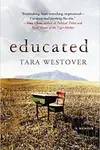 EducatedTara Westover · 2018Community rating: 4.05 out of 5
Tara Westover was seventeen the first time she set foot in a classroom. Born to survivalist parents in the mountains of rural Idaho, she grew up without a birth certificate, without school, and without doctors — her father distrusted the government and modern medicine, and the family spent its days preparing for the end of the world and working in a dangerous scrapyard. Educated is Westover's account of how she taught herself enough mathematics and grammar to win a place at university, and of the widening gulf that opened between the person she was becoming and the family she left behind. From Brigham Young University she went on to Cambridge and a doctorate — an education that gave her the tools to understand her own past, including the violence and denial that fractured her family. Honest and unsparing, this bestselling memoir is about the price and the promise of self-invention: how learning can remake a mind, and how hard it is to hold on to those you love when you can no longer share their version of reality.
- coming of age
- 6
 The Glass CastleJeannette Walls · 2005The Glass Castle #2Community rating: 4.12 out of 5
Jeannette Walls recounts her unconventional childhood in this memoir. Raised by nomadic, artistic parents who moved the family constantly and often left them without food, heat, or a fixed home, Walls and her siblings learned early to fend for themselves. The book follows her from a mining-town Southwest childhood to a chaotic settling-in in Welch, West Virginia, and eventually to New York City, where she builds an adult life apart from her parents even as they remain a persistent, complicated presence. It is a clear-eyed account of poverty, resilience, and the pull between loyalty to family and the need to leave.
- family saga
- 7
 The Body Keeps the ScoreBessel van der Kolk · 2014Community rating: 3.93 out of 5
Trauma is not just an event that took place sometime in the past; it is also the imprint left by that experience on mind, brain and body. Drawing on more than three decades of work with combat veterans, abused children, and survivors of assault and disaster, Dr. Bessel van der Kolk shows how trauma literally reshapes both body and brain, compromising sufferers' capacities for pleasure, engagement, self-control and trust. Blending clinical case studies with cutting-edge neuroscience, van der Kolk explains why traumatized people are haunted by intolerable sensations and emotions long after the danger has passed, and why talk therapy alone is often not enough. He then explores a range of treatments — from EMDR and neurofeedback to yoga, theatre, and mindfulness — that can help the brain to "rewire" itself and reactivate the innate capacity for healing. The Body Keeps the Score is a landmark work on the science of trauma and recovery, arguing with clarity and compassion that by understanding how trauma lives in the body, we can find genuine paths back to wholeness.
- 8
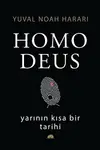 Homo Deus: A History of TomorrowYuval Noah Harari · 2015Homo #2Community rating: 4.14 out of 5
Having charted humanity's rise in Sapiens, Yuval Noah Harari turns from the past to the future. For most of history, humans struggled against famine, plague, and war; now, he argues, we have largely brought these ancient scourges under control and are setting ourselves new goals—immortality, bliss, and a god-like power to engineer life itself. Homo Deus asks what happens to a species that has run out of things to conquer except its own nature. Drawing on history, biology, and the study of intelligence, Harari examines how liberalism, humanism, and free will may give way to new creeds built on data and algorithms, and how biotechnology and artificial intelligence could split humanity or render most of it economically and politically irrelevant. Provocative and wide-ranging, this bestselling work of big-picture nonfiction is less a prediction than a set of urgent questions about where our newfound powers are taking us—and who will be left behind.
- 9
 We Should All Be FeministsChimamanda Ngozi Adichie · 2014Community rating: 4.34 out of 5
Adapted from her celebrated TEDx talk, Chimamanda Ngozi Adichie's short essay makes a warm, clear-eyed case for feminism as the simple belief that everyone should be treated equally. Drawing on her life in Nigeria and beyond, she examines how gender expectations shape us from childhood — an accessible, quotable primer that has become a touchstone of modern conversations about equality.
- 10
 The Immortal Life of Henrietta LacksRebecca Skloot · 2010Community rating: 4.06 out of 5
This book tells the incredible true story of Henrietta Lacks, a poor black woman whose cells were taken without her knowledge in 1951. These cells, known as HeLa, became one of the most important tools in medicine, vital for developing the polio vaccine and countless other breakthroughs. Yet, Henrietta's family remained unaware of her contribution and its impact for decades, living in poverty while her cells were bought and sold worldwide.
- morally grey
- sacrifice
- 11
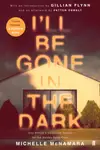 I'll Be Gone in the DarkMichelle McNamara · 2018Community rating: 3.97 out of 5
Michelle McNamara's landmark true-crime account of her obsessive hunt for the Golden State Killer—the masked predator behind dozens of rapes and murders across 1970s–80s California. Braiding a chilling reconstruction of the crimes with her own consuming investigation, and published after her sudden death, it centers the victims. A suspect was arrested two months after publication.
- 12
 Human ActsHan Kang · 2017Community rating: 4.16 out of 5
In May 1980, a student uprising in the South Korean city of Gwangju is crushed by the military, and a young boy searches the makeshift morgues for his missing friend. From that centre, Han Kang moves across decades and narrators — survivors, the bereaved, an editor, a prisoner, the dead — tracing how a week of state violence keeps reverberating through ordinary lives. Translated by Deborah Smith, Human Acts is a spare, harrowing meditation on grief, conscience, and memory.
- multiple povs
- dual timeline
- 13
 Between the World and MeTa-Nehisi Coates · 2015Community rating: 4.37 out of 5
Ta-Nehisi Coates writes to his teenage son, Samori, about what it means to grow up Black in America with no illusions about safety for one's own body. He draws on his own childhood in West Baltimore, his years at Howard University, and the killing of his college friend Prince Jones by a police officer, to argue that the comfortable, unexamined life he calls "the Dream" rests on history that most of the country refuses to see.
- 14
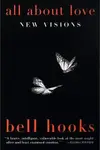 All About Lovebell hooks · 1999Love Song to the Nation #1Community rating: 3.72 out of 5
In All About Love: New Visions, cultural critic and feminist theorist bell hooks argues that our society's confusion and cynicism about love stem from a failure to understand what love truly is. Rejecting the idea of love as a mere feeling, she insists that love is an action — a practice rooted in care, commitment, trust, responsibility, respect, and honesty — and one that cannot be separated from justice. Across a series of clear, personal, and searching essays, hooks examines how a culture shaped by patriarchy, consumerism, and domination distorts our capacity to love, from childhood and family to romance, friendship, community, and spiritual life. Blending memoir, criticism, and ethics, All About Love is both a diagnosis of a loveless culture and a hopeful blueprint for change. It is the first book in hooks's Love Song to the Nation trilogy.
- 15
 Under the Banner of HeavenJon Krakauer · 2003Community rating: 4.07 out of 5
Jon Krakauer investigates a shocking double murder committed by brothers who believed they were acting under divine command. This true crime account delves into the history of Mormon fundamentalism and its isolated communities, exploring the complex relationship between faith and violence.
- morally grey
- revenge
- 16
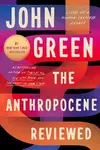 The Anthropocene ReviewedJohn Green · 2019Community rating: 4.3 out of 5
In "The Anthropocene Reviewed," John Green offers a collection of essays where he rates various facets of the human experience on a five-star scale. From the mundane to the monumental, Green examines everything from the QWERTY keyboard to the Great Barrier Reef. It's a personal exploration of our planet and our impact on it, reflecting on humanity's capacity for both great love and terrible destruction.
- 17
 A People's History of the United StatesHoward Zinn · 1980Community rating: 3.97 out of 5
Discover American history as it's rarely told. Howard Zinn shifts the focus from presidents and generals to the everyday people who shaped the nation: workers, immigrants, and activists. This essential read offers a powerful counter-narrative, highlighting the struggles and triumphs of those often overlooked in traditional accounts.
- multiple povs
- 18
 Guns, Germs, and SteelJared M. Diamond · 1998Civilizations Rise and Fall #1Community rating: 4.18 out of 5
Jared Diamond argues that the broad sweep of history was shaped by geography and biology — not race — tracing how access to domesticable crops and animals gave some societies guns, germs, and steel. A Pulitzer-winning synthesis of world history.
- 19
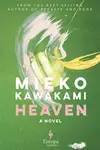 HeavenMieko Kawakami · 2021Community rating: 3.97 out of 5
A fourteen-year-old boy is savagely bullied for his lazy eye and suffers in silence, until he forms a secret bond with Kojima, a classmate who endures the same cruelty and has built a philosophy to give their pain meaning. Mieko Kawakami turns a story of schoolyard violence into a spare, unflinching inquiry into cruelty and morality.
- coming of age
- 20
 In Cold BloodTruman Capote · 1966Community rating: 4.19 out of 5
In 1959, four members of the Clutter family were murdered in their Kansas farmhouse for almost no money and no clear reason. Truman Capote spent years reconstructing the crime, the investigation, and the lives of the two killers, rendering it all with the detail of a novel while insisting on its literal truth. A landmark "non-fiction novel" that helped define modern true crime — chilling, controlled, and morally uneasy.
- 21
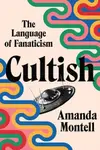 Cultish: The Language of FanaticismAmanda Montell · 2021Community rating: 3.67 out of 5
Linguist Amanda Montell argues that what really binds people to cults and cult-like groups is language — the loaded jargon, chants, mantras, and thought-terminating clichés that build belonging and shut down doubt. Ranging from Jonestown and Scientology to SoulCycle, MLMs, and wellness influencers, she shows how the same techniques operate on a spectrum. A brisk, witty work of linguistics and cultural criticism about the persuasive power of the words around us.
- 22
 MindhunterJohn E. Douglas, Mark Olshaker · 1996Community rating: 3.97 out of 5
Go behind the scenes with FBI legend John E. Douglas, the man who pioneered criminal profiling. This book takes you inside the minds of America's most notorious serial killers as Douglas recounts his experiences interviewing them and reconstructing crime scenes. Discover how he sought to understand the darkest corners of the human psyche.
- mentor figure
- 23
 In the Dream HouseCarmen Maria Machado · 2019Community rating: 4.08 out of 5
Carmen Maria Machado's memoir explores a past abusive relationship with innovative storytelling. Each chapter uses a different narrative trope to examine the psychological abuse from various angles. Machado also reflects on her upbringing and challenges stereotypes about lesbian relationships, offering a unique perspective on abuse within the queer community.
- multiple povs
- unreliable narrator
- 24
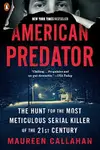 American PredatorMaureen Callahan · 2019Community rating: 4.17 out of 5
Maureen Callahan's "American Predator" plunges into the terrifying world of Israel Keyes, a serial killer who evaded capture for years. This true crime account details his disturbing methods and the extensive investigation to bring him to justice. It's a chilling look at a predator's mind and the relentless pursuit of truth.
- morally grey
- 25
 NexusYuval Noah Harari · 2024Community rating: 3.96 out of 5
Yuval Noah Harari, author of Sapiens, returns with Nexus, a historical exploration of information networks and their impact on human civilization. From ancient times to the age of AI, Harari examines the connection between information, truth, and power. The book addresses humanity's self-destructive patterns and the critical decisions we face in our technologically advanced world.
- 26
 FreakonomicsStephen J. Dubner, Steven D. Levitt · 2005Freakonomics #1Community rating: 3.86 out of 5
Economist Steven D. Levitt and journalist Stephen J. Dubner turn economic tools loose on everyday puzzles—cheating sumo wrestlers, the finances of a crack gang, what really matters in parenting, and why crime fell in the 1990s. A playful, data-driven, myth-busting look at the hidden incentives that shape human behavior.
- 27
 The Fire Next TimeJames Baldwin · 1963Community rating: 3.97 out of 5
James Baldwin's 1963 masterpiece is a powerful examination of race in America. Written as two letters on the 100th anniversary of the Emancipation Proclamation, it explores the author's experiences growing up in Harlem and the deep wounds inflicted by racism. Baldwin calls for an honest reckoning with this history.
- 28
 The New Jim CrowMichelle Alexander · 2010Community rating: 3.86 out of 5
Michelle Alexander's groundbreaking book reveals how the United States has constructed a new racial caste system through its policies on drugs and mass incarceration. It argues that the justice system, despite claims of colorblindness, actively perpetuates racial inequality by disproportionately targeting Black men. This work is a crucial examination of systemic discrimination and its impact on society.
- morally grey
- 29
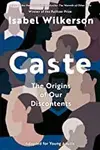 CasteAntonio Francisco Rodríguez Esteban, Isabel Wilkerson · 2021Community rating: 4.09 out of 5
Isabel Wilkerson's "Caste" explores the often-unseen social hierarchy that has profoundly shaped American society. It argues that a rigid system of human ranking, extending beyond race and class, dictates lives and national outcomes. Wilkerson draws parallels between the caste systems of America, India, and Nazi Germany to illuminate the deep-seated structures that perpetuate inequality.
- 30
 Interior ChinatownCharles Yu · 2020Community rating: 4.08 out of 5
Willis Wu lives a life scripted by the roles he's forced to play, from his cramped Chinatown apartment to the set of a fictional TV show. He dreams of being more than just an extra, but his journey to find his own identity uncovers the hidden history of his community and family. This novel explores race, assimilation, and the struggle to break free from stereotypes.
- fish out of water