Most Read Science Books
Most Read Science Books
These are the Science books most read by Seekquel members, ranked by real reading activity across 31 titles, not scraped popularity.
Based on Seekquel member reading activity. Updated weekly.
- 2
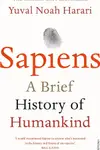 Sapiens: A Brief History of HumankindYuval Noah Harari · 2011Homo #1Community rating: 4.14 out of 5
Harari's account of how Homo sapiens rose from an unremarkable ape to the dominant species on Earth, tracing the cognitive, agricultural, and scientific revolutions that shaped human societies.
- 3
 The Body Keeps the ScoreBessel van der Kolk · 2014Community rating: 3.93 out of 5
Trauma is not just an event that took place sometime in the past; it is also the imprint left by that experience on mind, brain and body. Drawing on more than three decades of work with combat veterans, abused children, and survivors of assault and disaster, Dr. Bessel van der Kolk shows how trauma literally reshapes both body and brain, compromising sufferers' capacities for pleasure, engagement, self-control and trust. Blending clinical case studies with cutting-edge neuroscience, van der Kolk explains why traumatized people are haunted by intolerable sensations and emotions long after the danger has passed, and why talk therapy alone is often not enough. He then explores a range of treatments — from EMDR and neurofeedback to yoga, theatre, and mindfulness — that can help the brain to "rewire" itself and reactivate the innate capacity for healing. The Body Keeps the Score is a landmark work on the science of trauma and recovery, arguing with clarity and compassion that by understanding how trauma lives in the body, we can find genuine paths back to wholeness.
- 4
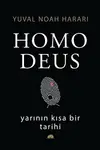 Homo Deus: A History of TomorrowYuval Noah Harari · 2015Homo #2Community rating: 4.14 out of 5
Having charted humanity's rise in Sapiens, Yuval Noah Harari turns from the past to the future. For most of history, humans struggled against famine, plague, and war; now, he argues, we have largely brought these ancient scourges under control and are setting ourselves new goals—immortality, bliss, and a god-like power to engineer life itself. Homo Deus asks what happens to a species that has run out of things to conquer except its own nature. Drawing on history, biology, and the study of intelligence, Harari examines how liberalism, humanism, and free will may give way to new creeds built on data and algorithms, and how biotechnology and artificial intelligence could split humanity or render most of it economically and politically irrelevant. Provocative and wide-ranging, this bestselling work of big-picture nonfiction is less a prediction than a set of urgent questions about where our newfound powers are taking us—and who will be left behind.
- 5
 The Immortal Life of Henrietta LacksRebecca Skloot · 2010Community rating: 4.06 out of 5
This book tells the incredible true story of Henrietta Lacks, a poor black woman whose cells were taken without her knowledge in 1951. These cells, known as HeLa, became one of the most important tools in medicine, vital for developing the polio vaccine and countless other breakthroughs. Yet, Henrietta's family remained unaware of her contribution and its impact for decades, living in poverty while her cells were bought and sold worldwide.
- morally grey
- sacrifice
- 6
 Thinking, Fast and SlowDaniel Kahneman · 2014Community rating: 3.47 out of 5
Explore the two distinct systems that shape human thought: the rapid, intuitive System 1 and the deliberate, logical System 2. Through engaging examples, this book reveals the extraordinary power of quick thinking, the influence of emotion on our choices, and the pitfalls of cognitive biases. Learn when to trust your intuition and when to engage in deeper reflection, gaining practical insights for both personal and professional life.
- 7
 What If?Randall Munroe · 2014What If? (Randall Munroe) #1Community rating: 3.88 out of 5
What if you tried to hit a baseball at near light speed? Or what if humanity faced a robot apocalypse? Randall Munroe, the creator of xkcd, uses science and humor to answer these wild questions. He explores bizarre 'what ifs' with hilarious, often explosive, results.
- 8
 A Brief History of TimeStephen Hawking · 1988Community rating: 4.16 out of 5
Stephen Hawking's landmark work of popular science explains the universe in plain language: where it came from, how it works, and where it may be going. From the Big Bang and the nature of space and time to black holes, the uncertainty principle, and the search for a single theory of everything, Hawking makes the deepest questions of modern physics accessible to readers with no scientific background.
- 9
 A Short History of Nearly EverythingBill Bryson · 2003Community rating: 4.37 out of 5
Bill Bryson sets out to answer the biggest questions there are: how the universe began, how the Earth was formed, how we came to know its age, what everything is made of, and how life — and eventually we — arose from it all. Rather than simply reciting facts, he tracks down the answers and the often eccentric, quarrelsome, and brilliant scientists who found them. Ranging from the Big Bang to quantum physics, from the depths of geologic time to the fragility of life on a small blue planet, Bryson translates dense and forbidding science into vivid, funny, endlessly curious storytelling. Along the way he conveys just how improbable, precarious, and astonishing our existence really is. A hugely popular work of science writing, it turns the history of nearly everything into an accessible and genuinely delightful adventure.
- 10
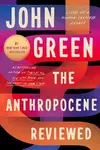 The Anthropocene ReviewedJohn Green · 2019Community rating: 4.3 out of 5
In "The Anthropocene Reviewed," John Green offers a collection of essays where he rates various facets of the human experience on a five-star scale. From the mundane to the monumental, Green examines everything from the QWERTY keyboard to the Great Barrier Reef. It's a personal exploration of our planet and our impact on it, reflecting on humanity's capacity for both great love and terrible destruction.
- 11
 Guns, Germs, and SteelJared M. Diamond · 1998Civilizations Rise and Fall #1Community rating: 4.18 out of 5
Jared Diamond argues that the broad sweep of history was shaped by geography and biology — not race — tracing how access to domesticable crops and animals gave some societies guns, germs, and steel. A Pulitzer-winning synthesis of world history.
- 12
 NexusYuval Noah Harari · 2024Community rating: 3.96 out of 5
Yuval Noah Harari, author of Sapiens, returns with Nexus, a historical exploration of information networks and their impact on human civilization. From ancient times to the age of AI, Harari examines the connection between information, truth, and power. The book addresses humanity's self-destructive patterns and the critical decisions we face in our technologically advanced world.
- 13
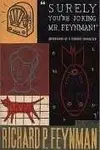 Surely You're Joking, Mr. Feynman!Ralph Leighton, Richard Phillips Feynman · 1985Richard P. Feynman #1Community rating: 3.97 out of 5
The beloved anecdotes of Nobel physicist Richard Feynman, told to Ralph Leighton. From boyhood experiments to cracking safes at Los Alamos, from samba drumming in Brazil to decoding Mayan math, these funny, irreverent stories celebrate an insatiable curiosity and a refusal to take anything on authority. A perennial favorite about science, learning, and living unconventionally.
- 14
 The Wicked + The Divine, Vol. 1Kieron Gillen · 2014The Wicked + The Divine #1Community rating: 3.92 out of 5
Every ninety years, twelve gods are reborn as young people, adored and reviled, only to die within two years. This cycle is happening again, with gods reimagined as the ultimate pop stars. But even for immortals, forever is a limited concept.
- chosen one
- 15
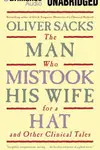 The Man Who Mistook His Wife for a HatOliver Sacks · 1985Community rating: 4.09 out of 5
Oliver Sacks, a practicing neurologist, gathers 24 case histories of patients living with unusual damage to the brain: a music teacher who can no longer recognize faces or ordinary objects by sight, a former sailor stuck in 1945 by amnesia, twin savants who trade six-digit primes like conversation. Sacks writes each case as a story, not a chart, and asks what these conditions show about memory, perception and identity in anyone.
- 16
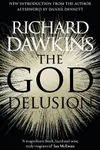 The God DelusionRichard Dawkins · 2006Community rating: 3.86 out of 5
Evolutionary biologist Richard Dawkins makes a sustained case against belief in a supernatural creator, arguing that faith in a personal God is a delusion sustained despite the evidence. He dismantles the classic arguments for God's existence, argues that a Darwinian world needs no designer, and contends that the improbability of a supreme being counts against, not for, it. Beyond metaphysics, Dawkins turns to religion's social effects, its role in conflict, intolerance, and the moral education of children, and argues that a life grounded in reason and science can be richer than one grounded in faith.
- 17
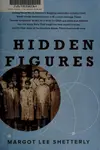 Hidden FiguresMargot Lee Shetterly · 2016Community rating: 3.97 out of 5
This book tells the incredible true story of the African American women who were the brains behind America's launch into space. Despite facing segregation and discrimination, these brilliant mathematicians, known as "human computers," performed the complex calculations essential for NASA's early missions. Their vital contributions helped make the Space Race a success, proving that talent and determination can overcome any barrier.
- found family
- 18
 Brain on FireSusannah Cahalan · 2012Community rating: 4.34 out of 5
A young journalist's life takes a terrifying turn when she begins experiencing memory loss and violent delusions. After numerous misdiagnoses, she's finally identified with a rare autoimmune disease affecting the brain. This memoir chronicles her arduous journey toward recovery and her quest to understand the lost month of her life.
- survival
- 19
 Braiding SweetgrassRobin Wall Kimmerer · 2020Community rating: 3.97 out of 5
Robin Wall Kimmerer, a botanist and member of the Citizen Potawatomi Nation, offers a unique perspective on the natural world. She skillfully combines scientific knowledge with Indigenous wisdom to show the profound connection between people and the living earth. Learn how paying attention to the messages from plants and animals can guide us toward a more harmonious and giving existence.
- 20
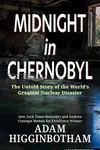 Midnight in ChernobylAdam Higginbotham · 2019Community rating: 4.09 out of 5
This book provides a definitive account of the Chernobyl disaster, moving beyond myths to reveal the human stories behind the catastrophe. Journalist Adam Higginbotham spent over a decade interviewing survivors and sifting through declassified documents to reconstruct the events of April 26, 1986. It's a harrowing look at how secrecy and misinformation compounded one of the 20th century's worst technological failures.
- survival
- betrayal
- 21
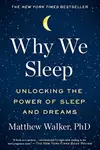 Why We SleepMatthew Walker · 2017Community rating: 4.25 out of 5
Neuroscientist Matthew Walker lays out what decades of sleep research have found: that too little sleep damages memory, mood, the immune system and long-term disease risk in specific, measurable ways. He explains how deep sleep consolidates memories and clears toxic waste from the brain, how REM sleep processes emotion, and what caffeine and alcohol actually do to both. The book closes with concrete steps for sleeping better.
- 22
 Nonviolent CommunicationMarshall B. Rosenberg · 1999Community rating: 4.09 out of 5
Learn to communicate with empathy and honesty using Nonviolent Communication. This guide provides practical strategies to express your needs and feelings without causing conflict. Build stronger relationships with yourself and others by understanding how to navigate disagreements compassionately.
- mentor figure
- 23
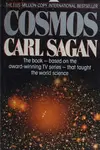 CosmosCarl Sagan · 1980Community rating: 4.09 out of 5
Carl Sagan's tour of the universe, from the birth of galaxies to the chemistry inside a single cell, arguing that science and civilization grew up together and that understanding one means understanding the other. Written to accompany his own television series, with one chapter per episode.
- 24
 Astrophysics for People in a HurryMaría del Carmen Román de la Peña, Neil deGrasse Tyson, Sandra Martha Dolinsky · 2017Community rating: 3.72 out of 5
Curious about the cosmos but short on time? Neil deGrasse Tyson makes understanding black holes, dark matter, and the Big Bang simple in this quick guide. It's the perfect way to get up to speed on the universe's biggest questions.
- 25
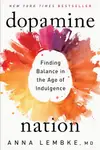 Dopamine NationAnna Lembke · 2021Community rating: 3.84 out of 5
In a world overflowing with instant gratification, Dr. Anna Lembke explores the science behind our constant pursuit of pleasure and its inevitable link to pain. This book offers practical advice for finding a healthier balance, helping readers manage their dopamine levels to achieve greater contentment and genuine connection.
- mentor figure
- 26
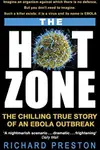 The Hot ZoneRichard Preston · 1995Community rating: 4.22 out of 5
Richard Preston explores the terrifying world of deadly viruses, including Ebola, tracing their origins and impact. This non-fiction account examines the science of these pathogens and the stories of those affected. It offers a chilling look at the potential for global pandemics.
- survival
- quest
- 27
 How to Take Smart NotesSönke Ahrens · 2017Community rating: 3.59 out of 5
Sönke Ahrens's practical guide to the Zettelkasten, or "slip-box," method — the linked-index-card system that let sociologist Niklas Luhmann produce dozens of books. Ahrens argues that writing should drive thinking, and lays out a simple workflow of fleeting, literature, and permanent notes to help students, academics, and knowledge workers read deliberately and turn scattered reading into finished writing.
- 28
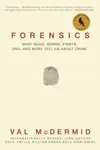 Forensics What Bugs, Burns, Prints, DNA, and More Tell Us about CrimeVal McDermid · 2015Community rating: 4.09 out of 5
Val McDermid is one of the finest crime writers we have, whose novels have captivated millions of readers worldwide with their riveting narratives of characters who solve complex crimes and confront unimaginable evil. In the course of researching her bestselling novels McDermid has become familiar with every branch of forensics, and now she uncovers the history of this science, real-world murders and the people who must solve them. The dead talk--to the right listener. They can tell us all about themselves: where they came from, how they lived, how they died, and, of course, who killed them. Forensic scientists can unlock the mysteries of the past and help serve justice using the messages left by a corpse, a crime scene, or the faintest of human traces. Forensics draws on interviews with some of these top-level professionals, ground-breaking research, and McDermid's own original interviews and firsthand experience on scene with top forensic scientists. Along the way, McDermid discovers how maggots collected from a corpse can help determine one's time of death; how a DNA trace a millionth the size of a grain of salt can be used to convict a killer; and how a team of young Argentine scientists led by a maverick American anthropologist were able to uncover the victims of a genocide. It's a journey that will take McDermid to war zones, fire scenes, and autopsy suites, and bring her into contact with both extraordinary bravery and wickedness, as she traces the history of forensics from its earliest beginnings to the cutting-edge science of the modern day.
- 29
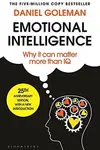 Emotional IntelligenceDaniel Goleman · 1995Community rating: 3.53 out of 5
Daniel Goleman's landmark bestseller argues that emotional intelligence — self-awareness, empathy, impulse control, and social skill — can matter as much as IQ for success in life, work, and relationships. Synthesizing brain and behavioral science, he shows these are learnable skills and makes the case for cultivating them from childhood.
- 30
 ComplicationsAtul Gawande · 2002Community rating: 3.96 out of 5
In "Complications," surgeon Atul Gawande offers a candid look inside the operating room. Through true stories, he explores the inherent uncertainties and the human side of medicine. Gawande shares the challenges and successes faced by medical professionals on the front lines of surgery.