Most Read History Books
Most Read History Books
These are the History books most read by Seekquel members, ranked by real reading activity across 190 titles, not scraped popularity.
Based on Seekquel member reading activity. Updated weekly.
- 1
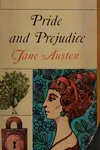 Pride and PrejudiceJane Austen · 1813The Penguin English LibraryCommunity rating: 4.3 out of 5Community spice: 1.0 out of 51.0
Elizabeth Bennet, a spirited young woman, navigates the rigid social expectations of Regency England. When she meets the wealthy and proud Mr. Darcy, their initial disdain for each other sets the stage for a complex dance of wit, misunderstanding, and unexpected attraction. This story explores themes of class, reputation, and the search for true love amidst societal pressures.
- enemies to lovers
- grumpy sunshine
- 2
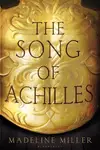 The Song of AchillesMadeline Miller · 2011Community rating: 4.28 out of 5
Discover the legendary tale of Achilles, the greatest warrior of the Greeks, through the eyes of his devoted companion, Patroclus. Exiled from his homeland, Patroclus finds an unlikely bond with the demigod Achilles, their connection deepening amidst the brutal realities of the Trojan War. This retelling offers a fresh perspective on a timeless story of love, war, and destiny.
- 3
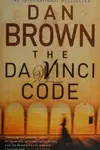 The Da Vinci CodeDan Brown · 2003Robert Langdon #2Community rating: 3.91 out of 5
A murder inside the Louvre pulls symbologist Robert Langdon into an overnight chase across Paris and London, chasing a trail of clues hidden in the works of Leonardo da Vinci.
- mystery box
- 4
 The Book ThiefMarkus Zusak · 2005Community rating: 4.34 out of 5
Narrated by Death itself, The Book Thief follows Liesel Meminger, a young girl sent to live with foster parents in a small German town after the death of her brother and the disappearance of her Communist mother. In her new home on Himmel Street, Liesel's foster father, Hans, teaches her to read using a book she stole at her brother's graveside, and reading soon becomes both an escape and a quiet act of defiance in a country consumed by Nazi rule. As the war tightens its grip, the Hubermanns take an even greater risk: hiding Max Vandenburg, a young Jewish man, in their basement. Liesel's friendship with Max, and with the boy next door, Rudy Steiner, gives the novel its warmth even as Death — who narrates with weary, unsentimental compassion — reminds readers throughout how precarious and temporary these small kindnesses are. Markus Zusak's novel is at once a coming-of-age story, a meditation on the power of words to console and to destroy, and an unusual, deeply humane account of ordinary Germans living under a regime built on cruelty.
- coming of age
- 6
 The Lion, the Witch and the WardrobeC. S. Lewis · 1950The Chronicles of Narnia #2Community rating: 3.97 out of 5
Four evacuee siblings step through an old wardrobe into Narnia, a land of talking beasts held in endless winter by the White Witch. Guided by the great lion Aslan, they're drawn into a fight for Narnia's freedom that costs one of them a terrible betrayal — and Aslan an even greater price.
- portal fantasy
- sacrifice
- betrayal
- redemption arc
- 8
 The Diary of a Young GirlAnne Frank · 1947Community rating: 4.09 out of 5
A thirteen-year-old's diary of two years in hiding from the Nazi occupation of the Netherlands, addressed to an imagined friend she called Kitty, and one of the most widely read personal accounts of the Holocaust.
- coming of age
- survival
- forced proximity
- 9
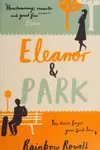 Eleanor & ParkRainbow Rowell · 2012Community rating: 3.69 out of 5
Set in Omaha, Nebraska, across the 1986–87 school year, Eleanor & Park is Rainbow Rowell's story of two sixteen-year-olds who fall in love on the wrong side of everything. Eleanor is the new girl: big, awkward, with wild red hair and thrift-store clothes, going home each night to a crowded house ruled by a violent stepfather. Park is a half-Korean kid who has learned to keep his head down and blend into the background of his working-class neighborhood. They meet on the school bus, where Eleanor takes the only open seat — next to Park. Neither wants to be there. But over weeks of shared comic books and mixtapes, a wary silence turns into something that consumes them both. Told in alternating voices, the novel traces first love in real time: awkward, breathless, and shadowed by the reality of Eleanor's home life. Honest about class, race, body image, and abuse, Eleanor & Park is a tender, clear-eyed portrait of two misfits who are smart enough to know first love rarely lasts, and brave enough to try anyway.
- coming of age
- multiple povs
- 10
 Crime and PunishmentFyodor Dostoyevsky · 1866Community rating: 4.06 out of 5
A destitute, brilliant former law student in St. Petersburg murders a pawnbroker to test his theory that extraordinary men are above the moral laws governing ordinary people — and is then consumed by paranoia as he tries to outmaneuver both the police and his own conscience.
- morally grey
- unreliable narrator
- 11
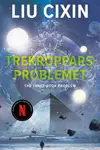 The Three-Body ProblemBenedetta Tavani, Liu Cixin, Mark Bremer · 2006Remembrance of Earth's Past #1Community rating: 4.07 out of 5
An alien signal arrives, igniting a decades-long crisis for humanity. As scientists race to understand the implications of first contact, a secret organization prepares for an inevitable invasion. This foundational novel in the Remembrance of Earth's Past trilogy launches an epic fight for humanity's future.
- first contact
- mystery box
- multiple povs
- 12
 The Count of Monte CristoAlexandre Dumas · 1846Classics Illustrated #3Community rating: 4.4 out of 5
On the day he is to be made captain and married to his beloved Mercédès, the young sailor Edmond Dantès is denounced as a traitor by men who envy his happiness. Without trial, he is buried in the island fortress of the Château d'If, where fourteen years of imprisonment nearly break him — until a fellow prisoner, the learned Abbé Faria, gives him an education, a plan of escape, and the secret of a vast treasure hidden on the isle of Monte Cristo. Free and immensely rich, Dantès reinvents himself as the mysterious Count of Monte Cristo and returns to a society that long ago left him for dead. Patient, brilliant, and seemingly all-knowing, he works his way into the lives of the three men who destroyed him, orchestrating an intricate reckoning that will test how far justice can be pushed before it curdles into revenge. One of the great adventure novels of the nineteenth century, The Count of Monte Cristo is a sweeping tale of betrayal, endurance, disguise, and retribution — and a meditation on whether any man has the right to play the hand of Providence.
- revenge
- secret identity
- 13
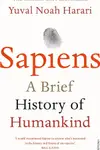 Sapiens: A Brief History of HumankindYuval Noah Harari · 2011Homo #1Community rating: 4.14 out of 5
Harari's account of how Homo sapiens rose from an unremarkable ape to the dominant species on Earth, tracing the cognitive, agricultural, and scientific revolutions that shaped human societies.
- 14
 The Secret GardenFrances Hodgson Burnett · 1911Community rating: 4.26 out of 5
When a cholera epidemic in India leaves ten-year-old Mary Lennox orphaned, she is sent across the world to Misselthwaite Manor, the vast, half-shuttered Yorkshire estate of an uncle she has never met. Sour, spoiled, and unwanted, Mary arrives as a difficult child with no idea how to make a friend. Left largely to herself, she begins to explore the manor's grounds and hears rumours of a walled garden that has been locked and abandoned for ten years, ever since the death of her aunt. With the help of a friendly robin, a plainspoken housemaid named Martha, and Martha's animal-charming brother Dickon, Mary finds the hidden door and slowly coaxes the neglected garden back to life. In the night she also discovers a secret of the house itself: her cousin Colin, a sickly, tyrannical boy who has been kept in his room and told he will not live to grow up. As the garden greens and grows, so do the children. Fresh air, hard work, and friendship transform Mary from a disagreeable girl into a curious, generous one, and draw Colin out of his bed and his despair. Frances Hodgson Burnett's 1911 classic is a quiet, enduring story about healing, the restorative power of nature, and the way kindness can bring both a garden and a child back to life.
- found family
- 15
 Born a CrimeTrevor Noah · 2016Community rating: 4.37 out of 5
Born a Crime (2016) is Trevor Noah's sharp, funny, and moving memoir of growing up mixed-race in South Africa during the final years of apartheid and the turbulent decade that followed. The son of a Black Xhosa mother and a white Swiss father, Noah was born when such a union was literally illegal — his very existence was evidence of a crime. He recounts a childhood spent partly in hiding, navigating the absurd and brutal logic of a system built on racial classification, and the poverty, violence, and improvised survival of township life after apartheid's fall. At the center of every story is his mother, Patricia — fearless, devout, stubborn, and endlessly resourceful — whose tough love and refusal to be limited shaped the man Noah became. Told in vivid, self-deprecating vignettes, the book is by turns hilarious and harrowing, a portrait of a singular family and a country remaking itself.
- coming of age
- 16
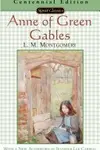 Anne of Green GablesLucy Maud Montgomery · 1908Anne of Green Gables #1Community rating: 4.1 out of 5
A talkative, imaginative orphan girl with a penchant for dramatic storytelling is sent by mistake to live with two elderly siblings who had hoped for a boy instead. Settling into life at Green Gables in the fictional town of Avonlea on Prince Edward Island, Anne Shirley navigates school, friendship, and her own growing sense of belonging while transforming the lives around her.
- found family
- fish out of water
- 17
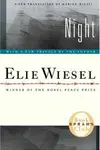 La NuitElie Wiesel · 1956The Night Trilogy #1Community rating: 4.51 out of 5
Elie Wiesel's memoir of his year in the Nazi camps: deported as a teenager from Sighet to Auschwitz, Buna and Buchenwald, he records less the catalogue of atrocity than what the camps did to a devout boy's faith. One of the central texts of Holocaust literature.
- survival
- coming of age
- 18
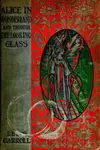 Alice's Adventures in Wonderland / Through the Looking GlassLewis Carroll · 1865Alice's Adventures in WonderlandCommunity rating: 4.1 out of 5
A collected edition of Lewis Carroll's two Alice novels: Alice's Adventures in Wonderland and Through the Looking-Glass. Alice falls down a rabbit hole into a world of shrinking potions, a grinning cat, and a tyrannical Queen of Hearts, then later climbs through a mirror into a chessboard world of talking twins and a knight who keeps falling off his horse.
- portal fantasy
- fish out of water
- 19
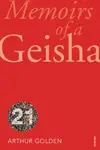 Memoirs of a GeishaArthur Golden · 1997Community rating: 3.9 out of 5
In a poor fishing village in 1929, nine-year-old Chiyo is sold along with her sister and taken to Kyoto, where her striking blue-grey eyes catch the attention of an okiya in the famous Gion geisha district. Torn from her family, she must survive the cruelties of the house and the rivalry of a reigning geisha before she can begin the long, exacting training that might transform her. Under the guidance of a legendary mentor, Chiyo becomes Sayuri, one of the most sought-after geisha of her generation, mastering an art of dance, music, conversation, and illusion in a world where a woman's heart is a luxury she can rarely afford. Through the Depression and the upheaval of the Second World War, she pursues a love she has held onto since childhood. Arthur Golden's sweeping novel offers an intimate, richly detailed portrait of a vanished world and one woman's struggle for autonomy within it.
- coming of age
- 20
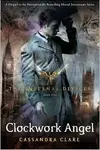 Clockwork AngelCassandra Clare · 2010The Infernal Devices #1Community rating: 3.92 out of 5
Tessa Gray travels to Victorian London hoping to find her brother, but instead finds herself entangled in a world of demons and Shadowhunters. Kidnapped by a secret organization, she discovers a rare power within herself. As she seeks refuge with the demon-hunting Shadowhunters, she finds herself drawn to two young men, James and Will.
- love triangle
- forbidden love
- found family
- 21
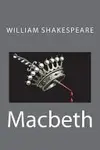 MacbethWilliam Shakespeare · 1623StagedCommunity rating: 3.95 out of 5
Told by three witches that he will be king, the Scottish general Macbeth, spurred on by his wife, murders King Duncan and takes the throne. But guilt and paranoia drive him to kill again and again, and his blood-soaked reign hurtles toward ruin. Shakespeare's darkest tragedy of ambition, prophecy, and moral collapse.
- villain protagonist
- betrayal
- morally grey
- 22
 Adventures of Huckleberry FinnMark Twain · 1884Tom Sawyer #2Community rating: 3.45 out of 5
Huckleberry Finn, the ragged, freedom-loving boy first met in The Adventures of Tom Sawyer, fakes his own death to escape his abusive, drunken father and lights out for the Mississippi. On an island he meets Jim, a man enslaved by Miss Watson who has run away to avoid being sold. Together the two set off downriver on a raft, an unlikely pair bound by circumstance and, gradually, by loyalty. Mark Twain's 1884 masterpiece follows Huck and Jim's episodic journey through the antebellum South, where they encounter feuding families, riverboat swindlers — the self-styled "Duke" and "King" — mobs, and frauds of every kind. As Huck helps Jim toward freedom, he wrestles with a conscience shaped by a society that has taught him that helping an escaped slave is a sin, and slowly reaches his own moral judgment against it. Written largely in vernacular dialect and narrated in Huck's own unschooled voice, the novel is at once a rollicking adventure and a scathing satire of racism, hypocrisy, and the myths of "civilized" society. Long celebrated as a foundational American novel and just as long debated for its unflinching language, Adventures of Huckleberry Finn remains one of the most influential and argued-over books in the country's literature.
- coming of age
- 23
 East of EdenJohn Steinbeck · 1952Community rating: 4.39 out of 5
Spanning the years from the Civil War to World War I, East of Eden traces two families through California's fertile Salinas Valley: the Trasks, wealthy and haunted by inherited sin, and the Hamiltons, poor, hardworking immigrants whose story mirrors Steinbeck's own family history. At the center is Adam Trask, whose inheritance and marriage to the beautiful, monstrous Cathy Ames set in motion a generational tragedy that falls hardest on his twin sons, Cal and Aron. Steinbeck builds the novel as a deliberate retelling of Genesis — brothers competing for a father's love, a fall from innocence, the mark of Cain — most explicitly through the novel's central word, timshel, Hebrew for "thou mayest," which Adam's Chinese servant Lee uncovers as the story's argument against fatalism: that people are not doomed by their nature or their parents' sins, but free to choose good. Sprawling, ambitious, and populated by some of Steinbeck's richest characters, East of Eden is his most personal novel and, by his own account, the one he considered his masterpiece — a sweeping American epic about inheritance, free will, and the possibility of redemption.
- family saga
- 24
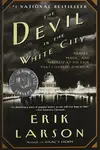 Devil in the White CityErik Larson · 2003Community rating: 3.61 out of 5
In 1893, Chicago staked its reputation on the World's Columbian Exposition — a fair meant to outshine Paris and announce America's arrival as a global power. Erik Larson's The Devil in the White City tells the story of the men who built it, centered on architect Daniel Burnham, who battled financial setbacks, engineering failures, and the death of his design partner to raise the "White City" from a swampy park in barely two years. Running alongside that story is a darker one. H. H. Holmes, a charismatic young doctor, built a block-long building near the fairgrounds outfitted with hidden rooms, a gas chamber, and a basement crematorium. Using the anonymity of the fair's crowds — young women drawn to the city for work, tourists passing through — Holmes lured victims into his "World's Fair Hotel" and killed an unknown number of them, a case that later shaped how Americans understood the idea of a serial killer. Larson tells both stories side by side, drawing on letters, court records, and contemporary newspapers to reconstruct the fair's engineering triumphs — the first Ferris wheel, the electric-lit "White City" itself — against the quiet horror unfolding a few streets away. It's history written with the momentum of a thriller, without inventing dialogue or events the record doesn't support.
- 25
 The Scarlet LetterNathaniel Hawthorne · 1850Modern Library ClassicsCommunity rating: 3.58 out of 5
In Puritan Boston, Hester Prynne is forced to wear a scarlet 'A' for adultery and to raise her daughter alone, refusing to name the child's father. As she bears her public shame with quiet strength, the man who shares her secret is destroyed by private guilt, and a vengeful stranger seeks to expose him. Hawthorne's classic study of sin, hypocrisy, and moral courage in early America.
- forbidden love
- revenge
- 26
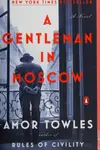 A Gentleman in MoscowAmor Towles · 2016Community rating: 4.27 out of 5
In 1922, a Bolshevik tribunal sentences Count Alexander Rostov to house arrest in Moscow's grand Hotel Metropol — banished from his suite to an attic room and forbidden ever to leave on pain of death. Over more than three decades, as Russia is remade beyond the hotel's doors, the unflappable Count builds an unexpectedly rich life among its staff, guests, and one remarkable young girl. An elegant, witty novel about resilience and the art of living well within limits.
- found family
- mentor figure
- 27
 Into Thin AirJon Krakauer · 1997Community rating: 4.25 out of 5
In 1996, journalist Jon Krakauer joined a climbing expedition on Mount Everest, a journey that tragically became the deadliest in the mountain's history. Krakauer details the extreme conditions and harrowing events that unfolded on the treacherous slopes. This account explores the immense physical dangers and the powerful human drive that leads people to face such extreme risks.
- survival
- quest
- 28
 Man's Search for MeaningViktor E. Frankl · 1946Community rating: 4.13 out of 5
Psychiatrist Viktor Frankl draws on his survival of three years in Nazi concentration camps to ask why some prisoners kept their will to live while others gave up. His answer — that we always retain the freedom to choose our attitude — grounds logotherapy, his conviction that the deepest human drive is the search for meaning. A sober, humane, and quietly hopeful classic.
- 29
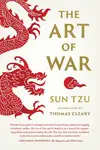 The Art of WarSun Tzu · 500 BCECommunity rating: 3.89 out of 5
Discover the ancient wisdom of Sun Tzu's "The Art of War." This foundational text offers enduring strategies for conflict and leadership, focusing on meticulous planning and understanding your adversary. It remains a vital read for anyone seeking to master strategy, whether in military affairs or modern business.
- mentor figure
- 30
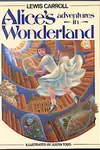 Alice's Adventures in Wonderland & Other StoriesJohn Tenniel, Lewis Carroll · 1865Alice's Adventures in Wonderland #1Community rating: 4.12 out of 5
A bilingual Spanish/English edition of Lewis Carroll's Alice's Adventures in Wonderland, illustrated by John Tenniel. Alice falls down a rabbit hole into a world of shrinking potions, a grinning cat, a mad tea party, and a tyrannical Queen of Hearts.
- portal fantasy