Most Read Historical Fiction Books
Most Read Historical Fiction Books
These are the Historical Fiction books most read by Seekquel members, ranked by real reading activity across 480 titles, not scraped popularity.
Based on Seekquel member reading activity. Updated weekly.
- 1
 The Seven Husbands of Evelyn HugoTaylor Jenkins Reid · 2017Famous Women Quartet #1Community rating: 4.45 out of 5Community spice: 1.0 out of 51.0
Legendary Hollywood icon Evelyn Hugo is ready to spill the secrets of her glamorous and scandalous life. She chooses an unknown reporter to tell her story, detailing her rise to fame, her seven marriages, and the truths behind the headlines. It's a look at the immense ambition and personal costs behind achieving ultimate stardom.
- secret identity
- dual timeline
- 2
 Animal FarmGeorge Orwell · 1945Signet ClassicsCommunity rating: 4.23 out of 5
When the mistreated animals of Manor Farm rise up and drive out their drunken human owner, they establish a new order founded on a single, hopeful principle: all animals are equal. Led by the pigs, the most clever of the animals, the farm is renamed and the beasts set about running their world for their own benefit. But power reshapes those who hold it. As the ambitious boar Napoleon consolidates control, the founding ideals are quietly rewritten, dissent is punished, and the promises of the revolution curdle into a tyranny that looks unsettlingly like the one it replaced. The other animals, loyal and hardworking, struggle to remember how things were meant to be. George Orwell's short, savage fable uses a barnyard uprising to trace how revolutions are betrayed, how language is bent to serve power, and how easily the many can be ruled by the few. First published in 1945, it remains one of the most enduring political allegories ever written.
- 3
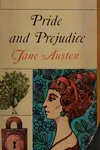 Pride and PrejudiceJane Austen · 1813The Penguin English LibraryCommunity rating: 4.3 out of 5Community spice: 1.0 out of 51.0
Elizabeth Bennet, a spirited young woman, navigates the rigid social expectations of Regency England. When she meets the wealthy and proud Mr. Darcy, their initial disdain for each other sets the stage for a complex dance of wit, misunderstanding, and unexpected attraction. This story explores themes of class, reputation, and the search for true love amidst societal pressures.
- enemies to lovers
- grumpy sunshine
- 4
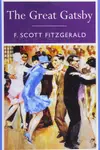 The Great GatsbyF. Scott Fitzgerald · 1925Scribner Library #1Community rating: 4.01 out of 5Community spice: 1.5 out of 51.5
Set on Long Island in the summer of 1922, The Great Gatsby is narrated by Nick Carraway, a young Midwesterner newly arrived in New York and renting a modest cottage next door to a vast mansion. His neighbor is Jay Gatsby, a self-made millionaire famous for the lavish parties he throws every weekend, though almost no one knows where his fortune came from or what he truly wants. Through Nick, we learn that Gatsby's glittering displays are all in service of a single obsession: Daisy Buchanan, the woman he loved before the war and who is now married to the wealthy, brutish Tom Buchanan. As Nick is drawn into the tangled lives of the East Egg and West Egg elite, the distance between old money and new, between illusion and reality, becomes impossible to bridge. F. Scott Fitzgerald's 1925 novel is a compact, lyrical portrait of the Jazz Age and a piercing critique of the American Dream. Its symbols — the green light across the bay, the fading eyes of Doctor T. J. Eckleburg, the valley of ashes — have become part of the language, and its story of longing, class, and self-invention remains one of the most enduring in American literature.
- 5
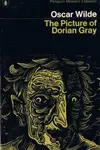 The Picture of Dorian GrayOscar Wilde · 1890Community rating: 4.4 out of 5
When the painter Basil Hallward completes a portrait of the beautiful young Dorian Gray, Dorian makes an idle, despairing wish: that the picture might age in his place, and that he could stay forever as young and lovely as the day it was painted. His wish is granted. As Dorian, encouraged by the cynical, epigram-spouting Lord Henry Wotton, gives himself over to a life of pleasure, cruelty, and corruption, his face remains untouched — while the portrait, hidden away, grows monstrous with every sin. Oscar Wilde's only novel is a dark fable of aestheticism, vanity, and moral consequence, as sharp in its wit as it is unsettling in its horror. Around Dorian's unchanging beauty, Wilde builds a Faustian parable about the cost of a life lived purely for sensation, and a portrait of Victorian society's obsession with surface and youth. First published in 1890 and expanded the following year, the book scandalised its first readers and remains one of the most enduring works of Gothic and philosophical fiction in English.
- 6
 The Invisible Life of Addie LaRueV.E. Schwab · 2020Community rating: 4.12 out of 5Community spice: 2.0 out of 52.0
In 1714, in the French village of Villon-sur-Sarthe, a young woman named Addie LaRue refuses the life of marriage and domesticity laid out for her and, in desperation, prays to the old gods after dark. A green-eyed stranger answers — granting her freedom and endless life, but at a cruel price: everyone she meets forgets her the moment she is out of sight. She can leave no mark on the world: no words she writes will stay, no face will hold her memory. For three hundred years Addie wanders through history — Revolutionary France, wartime Europe, modern New York — learning to live as a woman no one can remember, locked in a long duel of wills with the darkness that cursed her. Then, in 2014, she walks into a Manhattan bookshop and a young man named Henry says the impossible: he remembers her name. Moving between Addie's centuries-long past and her present in New York, the novel is a meditation on memory, art, freedom, and the human hunger to be remembered — and on what it costs to make a bargain you cannot take back.
- dual timeline
- 8
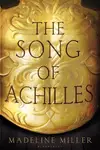 The Song of AchillesMadeline Miller · 2011Community rating: 4.28 out of 5
Discover the legendary tale of Achilles, the greatest warrior of the Greeks, through the eyes of his devoted companion, Patroclus. Exiled from his homeland, Patroclus finds an unlikely bond with the demigod Achilles, their connection deepening amidst the brutal realities of the Trojan War. This retelling offers a fresh perspective on a timeless story of love, war, and destiny.
- 9
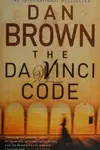 The Da Vinci CodeDan Brown · 2003Robert Langdon #2Community rating: 3.91 out of 5
A murder inside the Louvre pulls symbologist Robert Langdon into an overnight chase across Paris and London, chasing a trail of clues hidden in the works of Leonardo da Vinci.
- mystery box
- 10
 The Book ThiefMarkus Zusak · 2005Community rating: 4.34 out of 5
Narrated by Death itself, The Book Thief follows Liesel Meminger, a young girl sent to live with foster parents in a small German town after the death of her brother and the disappearance of her Communist mother. In her new home on Himmel Street, Liesel's foster father, Hans, teaches her to read using a book she stole at her brother's graveside, and reading soon becomes both an escape and a quiet act of defiance in a country consumed by Nazi rule. As the war tightens its grip, the Hubermanns take an even greater risk: hiding Max Vandenburg, a young Jewish man, in their basement. Liesel's friendship with Max, and with the boy next door, Rudy Steiner, gives the novel its warmth even as Death — who narrates with weary, unsentimental compassion — reminds readers throughout how precarious and temporary these small kindnesses are. Markus Zusak's novel is at once a coming-of-age story, a meditation on the power of words to console and to destroy, and an unusual, deeply humane account of ordinary Germans living under a regime built on cruelty.
- coming of age
- 11
 CirceMadeline Miller · 2018Community rating: 4.03 out of 5
Circe is born to Helios, god of the sun, but she is a disappointment: not powerful, not beautiful by the standards of gods, with a voice like a mortal's and none of the obvious gifts of her siblings. Overlooked in her father's glittering halls, she discovers a talent the gods fear, the mortal art of witchcraft, and when she uses it she is exiled to the deserted island of Aiaia to live out eternity alone. There, in solitude, Circe grows into her power. She tames wild beasts, masters herbs and transformations, and over the centuries crosses paths with some of the most famous figures of Greek myth, including Daedalus, the Minotaur, Medea, and the cunning Odysseus, whose visit changes the course of her long life. As threats gather from both gods and mortals, Circe must decide where she truly belongs. Madeline Miller retells the story of a minor goddess from The Odyssey as a full life, giving voice to a woman written for millennia as a footnote. Lyrical and quietly fierce, Circe is a meditation on power, motherhood, mortality, and the freedom of choosing one's own nature.
- 12
 BabelR. F. Kuang · 2022Community rating: 4.25 out of 5
Oxford, the 1830s. Robin Swift, orphaned by cholera in Canton and raised in London by the enigmatic Professor Lovell, has spent his childhood drilled in Latin, Greek, and Mandarin for one purpose: enrollment at Babel, Oxford's Royal Institute of Translation and the source of the British Empire's power. At Babel, translators inscribe silver bars with the meaning lost between languages, unlocking magic that keeps the Empire's ships, factories, and armies running. Robin finds a fierce found family among his cohort of fellow outsiders — Ramy, Victoire, and Letty — but as Britain's hunger for silver pushes it toward war with China over opium, Robin is forced to choose between the institution that made him and the revolutionary resistance sworn to bring it down.
- dark academia
- 13
 And Then There Were NoneAgatha Christie · 1939Community rating: 4.4 out of 5
Ten strangers, each invited under a different pretext, arrive on an isolated island off the Devon coast. None of them has met their absent host, the elusive U. N. Owen, and as the boat that brought them departs, they settle in for what promises to be an unusual stay. After dinner on the first evening, a recorded voice fills the room, accusing every guest of having caused a death and escaped justice. Soon afterward, one of them dies. As a storm cuts the island off from the mainland, the remaining guests realize their deaths are being staged to mirror the verses of an old nursery rhyme that hangs framed in each bedroom. One by one, the survivors fall, and with no way to summon help and no sign of any other living soul, suspicion turns inward. Each person studies the others, certain that the killer is among them, while the rhyme counts steadily down. Trapped, watched, and unable to trust anyone, they must reckon with the secrets that brought them here even as the circle of the living shrinks. Christie builds a closed, methodical puzzle in which guilt, fear, and isolation press on every character, and the question is not only who will be next but how anyone could orchestrate such a sequence of deaths on a deserted island. It is a tightly constructed account of crime and consequence with no series detective to set things right.
- locked room
- 15
 Daisy Jones & The SixTaylor Jenkins Reid · 2019Famous Women Quartet #2Community rating: 4.06 out of 5
In the late 1960s, a wild young singer named Daisy Jones and an up-and-coming rock band led by the intense Billy Dunne cross paths. Together, they rise to global superstardom as Daisy Jones & The Six, creating legendary music while spiraling into a web of addiction, rivalry, and forbidden attraction. This oral history chronicles their meteoric rise and the sudden, mysterious split that shocked the world at the height of their fame.
- multiple povs
- forbidden love
- 16
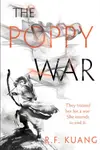 The Poppy WarR. F. Kuang · 2018The Poppy War #1Community rating: 4.27 out of 5
A war orphan from the rural south aces the Keju, the empire-wide examination, and wins a place at Sinegard, Nikan's elite military academy — where she is despised for being poor, dark-skinned and a girl, and where she uncovers a half-forgotten power that lets her channel the fire of a god. When the Federation of Mugen invades, Rin's gift becomes the weapon her empire needs, and she learns exactly what it costs to use it. R. F. Kuang's grimdark debut, drawn from twentieth-century Chinese history.
- academy
- coming of age
- morally grey
- mentor figure
- 17
 Angels & DemonsDan Brown · 2000Robert Langdon #1Community rating: 3.64 out of 5
When a physicist is found murdered at CERN with an ancient Illuminati symbol branded into his chest, Harvard symbologist Robert Langdon is summoned to help. The investigation reveals that the secretive brotherhood has stolen a canister of antimatter—a substance powerful enough to level a city—and hidden it somewhere beneath Vatican City. The countdown to detonation begins just as the cardinals gather in conclave to elect a new pope. Paired with physicist Vittoria Vetra, the murdered scientist's adopted daughter, Langdon follows an ancient "Path of Illumination" marked in the churches and sculptures of Rome. As the clock runs down, four kidnapped cardinals are murdered one by one in symbolic, brutal fashion, and Langdon must outpace a ruthless assassin to find the antimatter before it destroys the heart of the Catholic Church. The first novel to feature Robert Langdon, Angels & Demons sets his globe-spanning template: a race against time through real cities and monuments, threaded with art history, religious symbolism, and the age-old clash between science and faith.
- 18
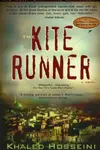 The Kite RunnerKhaled Hosseini · 2003Community rating: 4.35 out of 5
Khaled Hosseini's The Kite Runner (2003) is a sweeping, emotionally charged debut that follows one man's lifelong reckoning with a childhood betrayal. In 1970s Kabul, Amir is the privileged son of a wealthy merchant; Hassan is the loyal son of the family's servant. The two boys are inseparable, bound by kite-fighting tournaments and stolen afternoons — until a single act of cowardice, and the cruelty that provokes it, shatters their friendship and haunts Amir for decades. As the Soviet invasion and later the rise of the Taliban tear Afghanistan apart, Amir escapes to America, but the past refuses to stay buried. Spanning continents and generations, the novel traces guilt, class, fathers and sons, and the long and painful road toward atonement. A powerful, often harrowing story of friendship and redemption that introduced millions of readers to Afghanistan's recent history.
- betrayal
- redemption arc
- coming of age
- 21
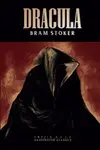 DraculaBram Stoker · 1897Arcturus ClassicsCommunity rating: 3.91 out of 5
A young solicitor travels to Transylvania on ordinary business and discovers his client is no ordinary nobleman. When the count relocates to England, a small circle of friends led by the physician Van Helsing must piece together the truth from letters, diaries, and telegrams before it is too late. Bram Stoker's 1897 epistolary novel that defined the modern vampire.
- epistolary
- 22
 The NightingaleKristin Hannah · 2015Community rating: 4.36 out of 5
In the French countryside on the eve of World War II, two estranged sisters face the coming occupation in very different ways. Vianne Mauriac, married with a young daughter, watches her husband leave to fight and then must share her home with a billeted German officer, making one small, agonizing compromise after another to keep her child alive. Her younger sister Isabelle, reckless and headstrong, refuses to bend: she joins the Resistance and takes on one of its most dangerous tasks, guiding downed Allied airmen over the Pyrenees to safety. Told largely through the sisters' alternating experiences, and framed by an unnamed elderly woman looking back from the present day, the novel follows the escalating cruelties of the occupation, the impossible choices forced on ordinary people, and the particular, often unrecorded courage of women in wartime. Kristin Hannah's The Nightingale is a work of historical fiction about love, survival, and resistance under Nazi rule. It became one of the most widely read novels of its decade, praised for its emotional force and its portrait of two very different kinds of bravery.
- 23
 Divine RivalsRebecca Ross · 2023Letters of Enchantment #1Community rating: 4.3 out of 5
Iris Winnow is a young typist at a newspaper in the city of Oath, competing for a columnist position against the infuriatingly talented Roman Kitt. But Iris has more pressing worries: her brother has vanished to the front of a war between the gods Enva and Dacre, and her mother is drinking herself into ruin. When Iris begins slipping letters beneath her wardrobe door, they are magically delivered to a stranger who writes back — a correspondence that becomes her one source of comfort, and whose author's identity she cannot guess. When Iris leaves the newspaper to work as a war correspondent, she travels to the small town of Avalon Bluff, close to the fighting, determined to find her brother and report the truth of a conflict most people would rather ignore. There the war stops being an abstraction, and the connection she has built through her letters follows her in ways she never expected. The first book in Rebecca Ross's Letters of Enchantment duology, Divine Rivals blends a slow-burn, enemies-to-lovers romance with a lightly historical, roughly early-twentieth-century setting and a mythology of feuding gods. It is a story about writing as a way of reaching another person, and about the ordinary courage of those caught up in a war they did not choose.
- enemies to lovers
- epistolary
- slow burn
- 24
 11/22/63Stephen King · 2011Community rating: 4.42 out of 5
Maine teacher Jake Epping discovers that a diner's pantry opens onto 1958 — and inherits a dying friend's mission to stop the assassination of John F. Kennedy. Living for years in a vivid, menacing past that resists every attempt to change it, Jake builds a life he was never meant to have, including a love he can't bear to lose. Stephen King's sweeping time-travel epic, equal parts thriller and love story.
- 26
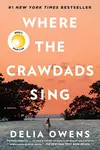 Where the Crawdads SingDelia Owens · 2018Community rating: 3.93 out of 5
In the marshes of coastal North Carolina, Catherine "Kya" Clark grows up almost entirely alone. Abandoned first by her mother and siblings and then by her violent father, she raises herself in a shack among the reeds, learning the tides, birds, and creatures of the marsh better than any schoolroom could teach her. To the people of the nearby town of Barkley Cove she is only the "Marsh Girl," an object of gossip and suspicion. The novel moves between two timelines. One follows Kya's isolated childhood and her tentative attempts to connect with two young men who notice her, Tate Walker and Chase Andrews. The other opens in 1969 with the discovery of Chase's body beneath a fire tower and the murder investigation that draws the town's attention back to the woman at the edge of the water. Delia Owens, a wildlife scientist, folds close observation of the natural world into a coming-of-age story, a courtroom mystery, and a meditation on loneliness and belonging. Where the Crawdads Sing became a word-of-mouth phenomenon, spending years on bestseller lists and inspiring a feature film.
- dual timeline
- coming of age
- 27
 Of Mice and MenJohn Steinbeck · 1937Labor Trilogy #2Community rating: 3.89 out of 5
George Milton and Lennie Small are itinerant ranch workers during the Great Depression, drifting from job to job across California with a shared dream: to save enough to buy a small plot of land where they can live off "the fatta the lan'" and, crucially, where Lennie can tend rabbits. George is sharp and protective; Lennie is a gentle giant of enormous strength and the mind of a child, prone to accidentally crushing whatever he loves too hard. Arriving at a new ranch, they find a fragile foothold among a cast of the dispossessed — the aging swamper Candy, the isolated Black stable hand Crooks, and the lonely, unnamed wife of the boss's son, whose need for attention becomes dangerous. For a moment their dream of land seems within reach, buoyed by Candy's offer to pitch in his savings. But Lennie's inability to control his own strength sets in motion a tragedy that forces George into an impossible final act of loyalty. John Steinbeck's 1937 novella is a spare, devastating parable about friendship, dreams deferred, and the loneliness of migrant labor in Depression-era America. Frequently taught and frequently banned, it remains one of the most widely read short novels in American literature.
- 28
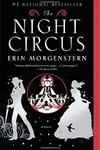 The Night CircusErin Morgenstern · 2011Community rating: 3.91 out of 5
A wandering circus that opens only at night is the hidden arena for a duel between two young illusionists, Celia and Marco, bound to a contest by their instructors since childhood — and doomed by falling in love.
- forbidden love
- rivals
- slow burn
- dual timeline
- 29
 The 7 1/2 Deaths of Evelyn HardcastleStuart Turton · 2018Community rating: 3.92 out of 5
Evelyn Hardcastle will be murdered at eleven o'clock tonight. Aiden Bishop has eight days to name her killer — and he will live each of them in the body of a different guest at Blackheath, a decaying country house nobody is allowed to leave until the puzzle is solved.
- time loop
- mystery box
- unreliable narrator
- locked room
- 30
 All the Light We Cannot SeeAnthony Doerr · 2014Community rating: 4.1 out of 5
A blind French girl and a German orphan with a gift for radios are drawn toward each other across the years of the Second World War, until the Allied bombardment of Saint-Malo brings them together. Anthony Doerr's Pulitzer Prize-winning novel about science, wonder, and the small decencies that survive a war.
- dual timeline
- multiple povs
- coming of age
- survival