Most read Drama books
Most read Drama books
These are the Drama books most read by Seekquel members, ranked by real reading activity across 293 titles, not scraped popularity.
Based on Seekquel member reading activity. Updated weekly.
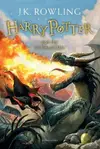
- Harry Potter and the Goblet of FireJ. K. Rowling · 2000Harry Potter #4Community rating: 4.49 out of 5
The fourth Harry Potter novel marks the series' decisive shift into darker, more complex territory. The Triwizard Tournament — a prestigious competition between three European wizarding schools, last held a century ago and abandoned due to its high casualty rate — has been unexpectedly revived. Hogwarts, Durmstrang, and Beauxbatons will each put forward a champion, selected by the impartial Goblet of Fire. Then a fourth name emerges from the Goblet: Harry Potter's, despite his being too young to enter and having submitted no application. Bound by magical obligation to compete, Harry faces three increasingly dangerous tasks while the real threat — Lord Voldemort's desperate attempt to restore himself to full power — assembles in the background. The tournament brings new students, new rivals, the Yule Ball, and the first glimpse of the wider Wizarding World beyond Britain. It also ends with a death that marks the point of no return for the series, transforming what began as a children's adventure story into something altogether more consequential. The first Harry Potter book published simultaneously in the UK and US, and at the time of publication the fastest-selling book in history, Goblet of Fire is also the longest and most structurally ambitious entry to that point — the book in which Rowling reveals the full scope of what she was building.
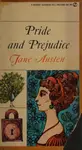
- Pride and PrejudiceJane Austen · 1813The Penguin English LibraryCommunity rating: 4.33 out of 5
Elizabeth Bennet, a spirited young woman, navigates the rigid social expectations of Regency England. When she meets the wealthy and proud Mr. Darcy, their initial disdain for each other sets the stage for a complex dance of wit, misunderstanding, and unexpected attraction. This story explores themes of class, reputation, and the search for true love amidst societal pressures.
- enemies to lovers
- grumpy sunshine
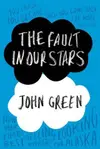
- The Fault in Our StarsJohn Green · 2012Community rating: 4.06 out of 5
Hazel Grace Lancaster is sixteen and has lived with terminal thyroid cancer for years, kept alive by an experimental drug and tethered to a portable oxygen tank. Wry, guarded, and impatient with the platitudes that surround the dying, she attends a support group mostly to appease her mother. There she meets Augustus Waters, a confident seventeen-year-old in remission from osteosarcoma who lost part of a leg to the disease and who is preoccupied with the fear of leaving no mark on the world. Their friendship turns into a tentative, clear-eyed romance built on shared humor, a love of books, and an unwillingness to pretend that illness is noble. Hazel's favorite novel, An Imperial Affliction, ends mid-sentence, and Augustus arranges a trip to Amsterdam so the two can ask its reclusive author what happens to the characters after the final page. John Green writes about young people facing mortality without sentimentality or easy uplift. The Fault in Our Stars is a story about first love, the search for meaning, and the difference between being remembered and being loved while you are here. Sharp and funny as often as it is devastating, it became one of the defining young-adult novels of its decade.
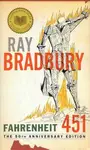
- Fahrenheit 451Ray Bradbury · 1953Fahrenheit 451Community rating: 3.92 out of 5
In a future America, firemen do not put out fires—they start them. Books are illegal, and Guy Montag's job is to burn any that are found, along with the houses that hide them. He does his work without question until a series of encounters cracks the surface of his contented life: a curious teenage neighbor who asks whether he is really happy, a woman who chooses to die with her books rather than live without them, and a wife who has quietly given up on everything but the voices coming from the walls. Unsettled, Montag begins to steal the books he is supposed to destroy, hoping they hold whatever it is his world has lost. His awakening puts him on a collision course with his superior and with a society engineered to keep everyone entertained, medicated, and incapable of sustained thought. Ray Bradbury's classic dystopian novel is a fierce, lyrical warning about censorship, mass media, and the quiet ways a culture can decide that thinking is too much trouble. Decades after publication it remains one of the most widely read and debated novels about the value of books and the cost of their loss.
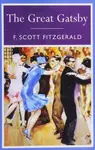
- The Great GatsbyF. Scott Fitzgerald · 1925Scribner Library #1Community rating: 3.81 out of 51.5 avg spice1.5
Set on Long Island in the summer of 1922, The Great Gatsby is narrated by Nick Carraway, a young Midwesterner newly arrived in New York and renting a modest cottage next door to a vast mansion. His neighbor is Jay Gatsby, a self-made millionaire famous for the lavish parties he throws every weekend, though almost no one knows where his fortune came from or what he truly wants. Through Nick, we learn that Gatsby's glittering displays are all in service of a single obsession: Daisy Buchanan, the woman he loved before the war and who is now married to the wealthy, brutish Tom Buchanan. As Nick is drawn into the tangled lives of the East Egg and West Egg elite, the distance between old money and new, between illusion and reality, becomes impossible to bridge. F. Scott Fitzgerald's 1925 novel is a compact, lyrical portrait of the Jazz Age and a piercing critique of the American Dream. Its symbols — the green light across the bay, the fading eyes of Doctor T. J. Eckleburg, the valley of ashes — have become part of the language, and its story of longing, class, and self-invention remains one of the most enduring in American literature.
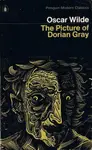
- The Picture of Dorian GrayOscar Wilde · 1890Community rating: 4.35 out of 5
When the painter Basil Hallward completes a portrait of the beautiful young Dorian Gray, Dorian makes an idle, despairing wish: that the picture might age in his place, and that he could stay forever as young and lovely as the day it was painted. His wish is granted. As Dorian, encouraged by the cynical, epigram-spouting Lord Henry Wotton, gives himself over to a life of pleasure, cruelty, and corruption, his face remains untouched — while the portrait, hidden away, grows monstrous with every sin. Oscar Wilde's only novel is a dark fable of aestheticism, vanity, and moral consequence, as sharp in its wit as it is unsettling in its horror. Around Dorian's unchanging beauty, Wilde builds a Faustian parable about the cost of a life lived purely for sensation, and a portrait of Victorian society's obsession with surface and youth. First published in 1890 and expanded the following year, the book scandalised its first readers and remains one of the most enduring works of Gothic and philosophical fiction in English.
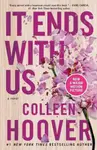
- It Ends With UsColleen Hoover · 2016It Ends with Us #1Community rating: 3.95 out of 5
Lily Bloom moves to Boston to open a flower shop and meets Ryle Kincaid — a successful neurosurgeon opposed to relationships — and Atlas Corrigan, the boy who was her first love and whose return complicates everything. What begins as a love story becomes something more difficult: an unflinching examination of the cycle of domestic violence, how it begins, why it continues, and what breaking it actually requires. Hoover has said the novel was inspired by her own parents' relationship. Originally published in 2016, the book went viral on BookTok in 2022–2023, spending over two years on the New York Times bestseller list and selling more than 20 million copies worldwide. It was adapted into a major film released in August 2024, starring Blake Lively and Justin Baldoni. Continued in the sequel It Starts with Us.
- second chance
- love triangle
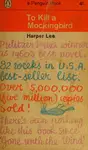
- To Kill a MockingbirdHarper Lee · 1960To Kill a Mockingbird #1Community rating: 4.14 out of 5
Seen through the eyes of six-year-old Scout Finch, this story explores life in a small Southern town during the Great Depression. Her father, the lawyer Atticus Finch, decides to defend a Black man falsely accused of a crime, a choice that exposes the town's deep-seated prejudices. The events that follow will challenge Scout's understanding of her community and the true meaning of courage.
- coming of age
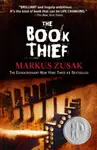
- The Book ThiefMarkus Zusak · 2005Community rating: 4.36 out of 5
Narrated by Death itself, The Book Thief follows Liesel Meminger, a young girl sent to live with foster parents in a small German town after the death of her brother and the disappearance of her Communist mother. In her new home on Himmel Street, Liesel's foster father, Hans, teaches her to read using a book she stole at her brother's graveside, and reading soon becomes both an escape and a quiet act of defiance in a country consumed by Nazi rule. As the war tightens its grip, the Hubermanns take an even greater risk: hiding Max Vandenburg, a young Jewish man, in their basement. Liesel's friendship with Max, and with the boy next door, Rudy Steiner, gives the novel its warmth even as Death — who narrates with weary, unsentimental compassion — reminds readers throughout how precarious and temporary these small kindnesses are. Markus Zusak's novel is at once a coming-of-age story, a meditation on the power of words to console and to destroy, and an unusual, deeply humane account of ordinary Germans living under a regime built on cruelty.
- coming of age
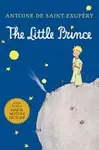
- The Little PrinceAntoine de Saint-Exupéry · 1943Community rating: 4.2 out of 5
A pilot stranded in the Sahara Desert meets a boy from a distant asteroid who asks him to draw a sheep. As the little prince recounts his travels among a handful of strange grown-ups, Antoine de Saint-Exupéry's 1943 fable considers what adults forget about love and what truly matters.
- coming of age
- fish out of water
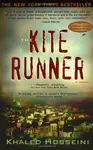
- The Kite RunnerKhaled Hosseini · 2003Community rating: 4.31 out of 5
Khaled Hosseini's The Kite Runner (2003) is a sweeping, emotionally charged debut that follows one man's lifelong reckoning with a childhood betrayal. In 1970s Kabul, Amir is the privileged son of a wealthy merchant; Hassan is the loyal son of the family's servant. The two boys are inseparable, bound by kite-fighting tournaments and stolen afternoons — until a single act of cowardice, and the cruelty that provokes it, shatters their friendship and haunts Amir for decades. As the Soviet invasion and later the rise of the Taliban tear Afghanistan apart, Amir escapes to America, but the past refuses to stay buried. Spanning continents and generations, the novel traces guilt, class, fathers and sons, and the long and painful road toward atonement. A powerful, often harrowing story of friendship and redemption that introduced millions of readers to Afghanistan's recent history.
- betrayal
- redemption arc
- coming of age
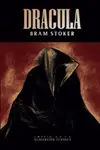
- DraculaBram Stoker · 1897Arcturus ClassicsCommunity rating: 3.93 out of 5
A young solicitor travels to Transylvania on ordinary business and discovers his client is no ordinary nobleman. When the count relocates to England, a small circle of friends led by the physician Van Helsing must piece together the truth from letters, diaries, and telegrams before it is too late. Bram Stoker's 1897 epistolary novel that defined the modern vampire.
- epistolary
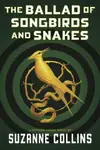
- The Ballad of Songbirds and SnakesSuzanne Collins · 2020The Hunger Games #0Community rating: 3.75 out of 5
Decades before he rules Panem, young Coriolanus Snow mentors a District 12 tribute in the early, crueler Hunger Games — and the choices he makes trace the making of a tyrant.
- villain protagonist
- morally grey
- coming of age
- Little WomenLouisa May Alcott · 1868Little Women #1Community rating: 4.05 out of 5
In Civil War-era New England, the four March sisters — practical Meg, headstrong Jo, gentle Beth, and artistic Amy — grow up in genteel poverty while their father serves as a chaplain at the front and their mother, Marmee, holds the household together. Louisa May Alcott follows the sisters through a year of amateur theatricals, neighborly friendship with the wealthy boy next door, Laurie, small sacrifices, and larger heartbreaks, as each girl wrestles with her own besetting fault and finds her own way toward maturity. Rather than a single dramatic plot, the novel is built from the accumulated texture of domestic life: Meg's longing for a life she cannot quite afford, Jo's fierce ambition to write and her discomfort with the constraints placed on women, Beth's quiet retreat from a world that frightens her, and Amy's determination to rise in society through art and manners. Loosely based on Alcott's own family, the book treats its characters' flaws and growth with warmth rather than moralizing. Little Women became an immediate sensation on publication and has remained one of the most enduring American novels about sisterhood, ambition, and the passage from girlhood to womanhood.
- coming of age
- family saga
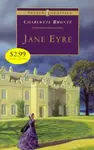
- Jane EyreCharlotte Brontë · 1847Wordsworth deluxe classicsCommunity rating: 4.36 out of 5
Orphaned and alone, Jane Eyre endures a harsh childhood before becoming a governess at Thornfield Hall. There, she finds herself drawn to the enigmatic master, Mr. Rochester, despite the dark secrets that shroud his past. As Jane navigates her growing feelings and the mysteries of the estate, she must confront societal expectations and her own fierce independence to forge a life on her own terms.
- coming of age
- forbidden love
- slow burn
- betrayal
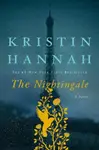
- The NightingaleKristin Hannah · 2015Community rating: 4.43 out of 53.0 avg spice3.0
In the French countryside on the eve of World War II, two estranged sisters face the coming occupation in very different ways. Vianne Mauriac, married with a young daughter, watches her husband leave to fight and then must share her home with a billeted German officer, making one small, agonizing compromise after another to keep her child alive. Her younger sister Isabelle, reckless and headstrong, refuses to bend: she joins the Resistance and takes on one of its most dangerous tasks, guiding downed Allied airmen over the Pyrenees to safety. Told largely through the sisters' alternating experiences, and framed by an unnamed elderly woman looking back from the present day, the novel follows the escalating cruelties of the occupation, the impossible choices forced on ordinary people, and the particular, often unrecorded courage of women in wartime. Kristin Hannah's The Nightingale is a work of historical fiction about love, survival, and resistance under Nazi rule. It became one of the most widely read novels of its decade, praised for its emotional force and its portrait of two very different kinds of bravery.
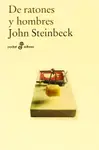
- Of Mice and MenJohn Steinbeck · 1937Labor Trilogy #2Community rating: 3.85 out of 5
George Milton and Lennie Small are itinerant ranch workers during the Great Depression, drifting from job to job across California with a shared dream: to save enough to buy a small plot of land where they can live off "the fatta the lan'" and, crucially, where Lennie can tend rabbits. George is sharp and protective; Lennie is a gentle giant of enormous strength and the mind of a child, prone to accidentally crushing whatever he loves too hard. Arriving at a new ranch, they find a fragile foothold among a cast of the dispossessed — the aging swamper Candy, the isolated Black stable hand Crooks, and the lonely, unnamed wife of the boss's son, whose need for attention becomes dangerous. For a moment their dream of land seems within reach, buoyed by Candy's offer to pitch in his savings. But Lennie's inability to control his own strength sets in motion a tragedy that forces George into an impossible final act of loyalty. John Steinbeck's 1937 novella is a spare, devastating parable about friendship, dreams deferred, and the loneliness of migrant labor in Depression-era America. Frequently taught and frequently banned, it remains one of the most widely read short novels in American literature.
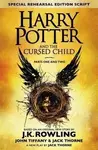
- Harry Potter and the Cursed Child: Parts One and TwoJ. K. Rowling, John Tiffany, Jack Thorne · 2016Harry Potter #8Community rating: 3.51 out of 5
The official eighth Harry Potter story, in the form of Jack Thorne's two-part stage play. Nineteen years on, an overworked Harry struggles to connect with his son Albus, who—together with his best friend Scorpius Malfoy—meddles with time to fix an old wrong and unleashes consequences that force two generations to face their past.
- coming of age
- The Bell JarSylvia Plath · 1963Community rating: 3.86 out of 5
A talented, ambitious young woman in 1950s New England spirals into a mental breakdown while struggling with the expectations of her generation. Told through Esther Greenwood's darkly comic and lyrical internal monologue, The Bell Jar is a semi-autobiographical portrait of depression, ambition, and the suffocating role women were forced to play before they could choose their own paths.
- coming of age
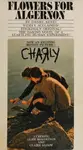
- Flowers for AlgernonDaniel Keyes · 1966Community rating: 4.55 out of 5
Charlie Gordon is thirty-two, works as a janitor at a bakery, and desperately wants to be smart. When scientists at Beekman offer him an experimental operation that has already transformed a laboratory mouse named Algernon into a maze-solving genius, Charlie volunteers, and the story unfolds through the progress reports he keeps before, during, and after the surgery. As his intelligence climbs past that of his teachers, his co-workers, and finally the doctors who created him, Charlie gains not only knowledge but painful insight: into the cruelty of people he once thought were his friends, into his lonely childhood, and into the limits of the science that remade him. When Algernon's own brilliance begins to falter, Charlie races to understand what it means for his own future. Daniel Keyes's classic — winner of both the Hugo and Nebula Awards — uses its ingenious first-person structure, whose spelling and syntax rise and fall with Charlie's mind, to ask what intelligence is really worth, and what we owe to one another regardless of it. Moving and humane, it remains one of science fiction's most beloved and widely taught novels.
- epistolary
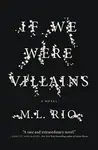
- If We Were VillainsM. L. Rio · 2017If We Were Villains #1Community rating: 4.25 out of 5
Ten years after his release from prison for a murder he may or may not have committed, Oliver Marks agrees to finally tell a retired detective what really happened during his final year at Dellecher Classical Conservatory. There, a tight-knit group of seven Shakespearean acting students lived and breathed the plays they performed, casting themselves in the same types of roles — hero, villain, temptress — until the lines between the stage and their own lives began to blur. When a shift in casting upends the group's fragile hierarchy, old resentments and desires that had simmered for years boil over into something none of them can take back. As the group's charismatic, self-destructive dynamics spiral toward tragedy, one of them ends up dead — and the story Oliver has spent a decade not telling finally comes out, unreliable narrator and all. M. L. Rio's atmospheric dark-academia debut is steeped in Shakespeare, using long passages of the plays themselves to narrate a story of obsession, jealousy, and the danger of actors who can no longer tell where their characters end and they begin.
- dark academia
- unreliable narrator
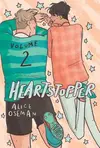
- HeartstopperAlice Oseman · 2019Heartstopper #2Community rating: 4.4 out of 5
Two teenage boys at a British grammar school — one a rugby player, the other a quiet artist — find their friendship deepening into something more as they navigate school, identity, and the complexities of growing up.
- coming of age
- slow burn
- found family
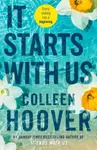
- It Starts with UsColleen Hoover · 2022It Ends with Us #2Community rating: 4.01 out of 5
Lily Bloom is rebuilding her life after leaving Ryle, cautiously beginning something real with Atlas Corrigan — her first love, who has been present at the edges of her life since she returned to Boston. But navigating a new relationship while co-parenting with an ex who is not ready to accept that the marriage is over requires more than love; it requires the kind of clear-eyed courage that It Ends with Us spent an entire novel establishing Lily had. The direct sequel to It Ends with Us, It Starts with Us focuses on what happens after the ending — the legal complexity, the co-parenting negotiations, the small ordinary moments of starting over — and completes the duology. Published in October 2022, it debuted at number one on the New York Times bestseller list.
- second chance
- multiple povs
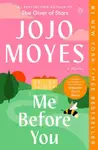
- Me Before YouJojo Moyes · 2012Me Before You #1Community rating: 4.33 out of 5
Louisa Clark loses her café job and reluctantly becomes carer to Will Traynor, a wealthy former City financier left quadriplegic by a motorcycle accident. Six months, one narrow English town, and a decision Will has already made about how his life should end.
- grumpy sunshine
- workplace romance
- slow burn
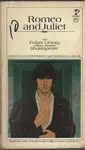
- Romeo and JulietWilliam Shakespeare · 1597StagedCommunity rating: 3.94 out of 5
In the streets of Verona, two great households — the Montagues and the Capulets — are locked in an ancient, bitter feud that erupts into violence at the slightest provocation. Into this poisoned world come Romeo, a lovesick Montague, and Juliet, the Capulets' cherished young daughter, who meet at a masked ball and fall instantly, helplessly in love. Married in secret by a well-meaning friar who hopes their union might heal the rift between the families, the young lovers find their happiness colliding with the violence around them. A single fatal brawl sends events spiraling beyond anyone's control, and a desperate plan to keep them together sets in motion one of literature's most famous tragedies. William Shakespeare's tragedy of "star-crossed lovers" remains the definitive story of young love thwarted by hatred, chance, and haste — a play whose language, characters, and heartbreak have shaped how the Western world imagines romance for more than four centuries.
- forbidden love
- betrayal
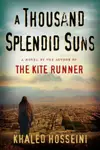
- A Thousand Splendid SunsKhaled Hosseini · 2007Community rating: 4.28 out of 5
Spanning more than four decades of Afghan history, A Thousand Splendid Suns tells the story of two women whose lives are bound together by war, marriage, and an unexpected loyalty. Mariam, the illegitimate daughter of a wealthy Herat businessman, is married off at fifteen to Rasheed, a much older shoemaker in Kabul. Years later, a generation younger and raised in a more liberal household, Laila is thrown into the same home by tragedy and becomes Rasheed's second wife. Forced to share a household and a violent husband, the two women move from wary hostility to a fierce, sustaining bond. Against the backdrop of the Soviet occupation, the civil war between rival factions, and the rise of the Taliban, Khaled Hosseini follows Mariam and Laila through decades of hardship, small joys, and impossible choices. From the author of The Kite Runner, this is an intimate portrait of resilience and sacrifice set against a country in upheaval — a story of mothers and daughters, of what women endure, and of the love that survives even the darkest circumstances.
- found family
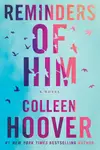
- Reminders of HimColleen Hoover · 2022Community rating: 4.1 out of 5
After five years in prison for a tragic accident that killed her boyfriend, Kenna Rowan returns to the small town where he grew up, desperate to reconnect with the daughter she had to leave behind. The child is being raised by her late boyfriend's family, the Landrys, who want nothing to do with the woman they hold responsible for his death. The only person willing to give Kenna any chance is Ledger Ward — a local bar owner, her daughter's godfather, and her boyfriend's closest friend. As Kenna and Ledger grow closer against every instinct and every loyalty, they must decide whether healing is possible when grief and guilt stand between them and the people they love most. A number-one New York Times bestseller (January 2022), adapted into a Universal Pictures film released in March 2026.
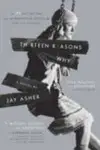
- Thirteen Reasons WhyJay Asher · 2007Community rating: 3.6 out of 5
Clay Jensen receives a box of cassette tapes recorded by Hannah Baker, a classmate who recently died by suicide. On them, Hannah names thirteen people and reasons behind her despair — and Clay is one of them. Jay Asher's landmark YA novel about bullying, isolation, and the consequences of how we treat each other.
- dual timeline
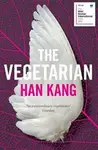
- The VegetarianHan Kang · 2007Community rating: 3.7 out of 5
After a disturbing dream, Yonghye abruptly empties her refrigerator of all meat, embarking on a radical journey to become entirely vegetal. This profound transformation, driven by a desire to merge with the quiet existence of plants, challenges societal norms and her family's expectations. As her body and mind undergo an unsettling metamorphosis, she descends into a unique form of madness, seeking an absolute state of being.
- multiple povs
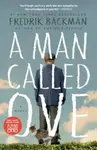
- A Man Called OveFredrick Backman, Fredrik Backman · 2012Community rating: 4.44 out of 5
Ove is a man of strict routine, a retired craftsman who has spent years quietly grieving his wife's death by becoming increasingly bitter and isolated. When a boisterous new neighbor and her family move in next door, his carefully controlled world begins to unravel in unexpected ways. Told through a darkly comic, first-person narrative that alternates between the present and the past, the novel reveals the warmth and love beneath Ove's gruff exterior, and the impact of the people around him on his outlook on life.
- grumpy sunshine
- redemption arc
- multiple povs