
No cover available


J.R.R. Tolkien

81
Books4.7
Avg Rating167
Ratings5
FollowersJohn Ronald Reuel Tolkien was born in Bloemfontein, South Africa in 1892 and raised in England after his mother brought him home at age three. Orphaned before he was thirteen — his mother died a devout Catholic convert — Tolkien went on to study Old and Middle English, Germanic languages, Welsh, and…


Yes. Tolkien described Middle-earth as having been made "rather to provide a world for the languages than the reverse." He had been constructing Quenya and other Elvish tongues since his teens — the stories grew from the need to give those languages a history and a people. He called the practice of language-invention glossopoeia, and considered it a lifelong artistic discipline separate from his fiction.
He did. From 1919 to 1920, Tolkien worked on the OED's staff under editor Henry Bradley, specializing in the etymology of words beginning with W — walnut, walrus, wampum, and others. He later said he "learned more in those two years than in any other equal period of my life," crediting the experience with sharpening the linguistic instincts that shaped his fiction.
Tolkien fought in the Battle of the Somme in 1916 and watched nearly all of his closest friends be killed. He contracted a debilitating illness and was evacuated. The shadow of mass death — the loss of a generation of young men, the cost exacted by war even in victory — runs through his mythology in ways he rarely discussed directly but which biographers have traced extensively across The Lord of the Rings and The Silmarillion.
He was Professor of Anglo-Saxon at Oxford from 1925, later holding the Merton Chair of English Language and Literature until his retirement. His academic reputation rests partly on a celebrated 1936 lecture, "Beowulf: The Monsters and the Critics," which transformed how scholars read the Old English poem — arguing it should be treated as a work of literature rather than merely a historical or linguistic document.
He created more than twenty distinct languages and language fragments for Middle-earth. The most fully developed are Quenya (modelled partly on Finnish) and Sindarin (influenced by Welsh). Both have working grammars and vocabularies sufficient to hold a conversation, and communities of enthusiasts continue to study and use them today.
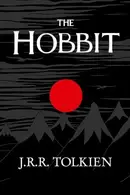
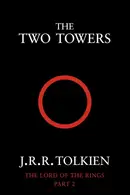
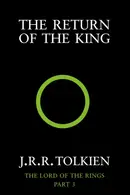
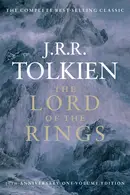
The Hobbit was published in September 1937 by George Allen & Unwin. The Lord of the Rings followed in three volumes: The Fellowship of the Ring and The Two Towers in July and November 1954, and The Return of the King in October 1955.
Tolkien was a devout Roman Catholic. His mother had converted before her death, a decision that cost her family support — a sacrifice Tolkien credited as formative. The theology of Middle-earth is monotheistic at its root (Eru Ilúvatar as a single creator), though Tolkien kept overt religious symbolism implicit rather than allegorical. He was instrumental in C.S. Lewis's conversion to Christianity, though Lewis became Protestant rather than Catholic, which disappointed Tolkien.