Hermann Hesse
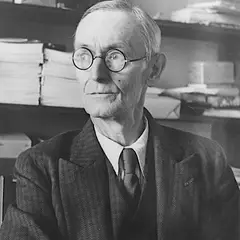
Hermann Hesse
2 July 1877 – 9 August 1962 · From Germany, citizen of Switzerland- Books
- 30
- Followers
- 0
About
Hermann Karl Hesse -pseudonym: Emil Sinclair- ( 2. Juli 1877 in Calw; † 9. August 1962 in Montagnola, Schweiz), war ein deutsch-schweizerischer Schriftsteller, Dichter und Maler. Bekanntheit erlangte er mit Prosawerken wie Siddhartha, Demian, Der Steppenwolf sowie auch Narziß und Goldmund und mit seinen Gedichten (z. B. Stufen). 1946 wurde ihm der Nobelpreis für Literatur und 1954 der Orden Pour le Mérite für Wissenschaften und Künste verliehen.
----------
Hermann Karl Hesse (2 July 1877 – 9 August 1962) was a German-Swiss poet, novelist, and painter. His best-known works include Demian, Steppenwolf, Siddhartha, and The Glass Bead Game,* each of which explores an individual's search for authenticity, self-knowledge and spirituality. In 1946, he received the Nobel Prize in Literature.
Top genres
Literary Fiction Classics Fiction Philosophy & Religion Poetry
Also known as
Featured works
Start here3.5
Siddhartha
Hermann Hesse

4.1
Steppenwolf
Hermann Hesse
4.3
Demian
Hermann Hesse

3.0
Le jeu des perles de verre essai de biographie du Magister Ludi Joseph Valet accompagné de ses écrits posthumes
Hermann Hesse
No cover available
4.0
narkissos kai chrysostomos / νάρκισσος και χρυσόστομος
Hermann Hesse
Series


Authors in the same genres


Frequently asked questions
Hermann Hesse is widely recognized for his novels that explore themes of self-discovery, spirituality, and the individual's search for meaning, often drawing on Eastern philosophies and Jungian psychology. His works frequently feature protagonists on a journey of introspection and transformation.
For readers new to Hermann Hesse, Siddhartha is often recommended as an accessible entry point due to its clear narrative and exploration of spiritual awakening. Alternatively, Demian offers a compelling psychological journey that introduces many of his recurring themes.
Hermann Hesse was awarded the Nobel Prize in Literature in 1946, recognizing his inspiring authorship which, in its development towards maturity, exemplifies classical humanitarian ideals and high qualities of style.
Several of Hermann Hesse's novels have been adapted into films, including Siddhartha and Steppenwolf. These adaptations aim to bring his philosophical narratives to the screen.