
Liu CixinScience Fiction · Fiction·b. 1963
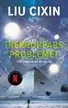
The Three-Body Problem
China, 1967. During the chaos of the Cultural Revolution, astrophysicist Ye Wenjie witnesses an act of violence that will define the rest of her life, then is recruited into Red Coast, a secret military installation searching the stars for a way to contact extraterrestrial intelligence.
Decades later, nanotechnology researcher Wang Miao is pulled into a police investigation after a wave of scientists take their own lives, seemingly without cause. Wang's search for answers leads him into "Three Body," an immersive virtual-reality game that reenacts the history of an alien world thrown into chaos by the unpredictable motion of its three suns — a world whose civilization has learned to survive collapse after collapse, and whose people are now looking toward Earth.
As Wang follows the threads connecting the game, the deaths, and a choice Ye Wenjie made decades earlier, humanity's ideas about first contact — and about its own worth as a civilization — are put to the test. What began as one scientist's private act of desperation becomes the opening move in a conflict that will play out over centuries.