N. K. JemisinFiction · Fantasy·b. 1972
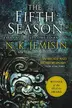
The Fifth Season
In a supercontinent called the Stillness, seismically unstable and periodically wracked by civilization-ending catastrophes called Fifth Seasons, a woman named Essun returns home to find her son murdered and her daughter kidnapped by the man who killed him. She sets out after them just as a new Season begins — this one triggered by a rift that has torn the continent in half and blotted out the sun, likely for generations.
The novel interweaves three narrative threads, following women at different ages who are all orogenes: people born with the dangerous, feared ability to control seismic energy, and who are systematically controlled, exploited, or killed by the society that depends on them to survive. As the threads converge, Jemisin builds a devastating portrait of institutionalized oppression dressed up as necessity, and of what it costs the people forced to prop up a civilization that despises them.
The Fifth Season won the 2016 Hugo Award for Best Novel, making Jemisin the first Black author to win in that category, and opened The Broken Earth trilogy — whose three volumes went on to take the Best Novel Hugo in three consecutive years.