Agatha ChristieMystery · Fiction·1890–1976
Murder in the manor
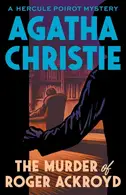
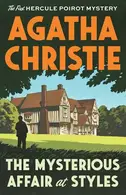
This omnibus gathers three of Agatha Christie's early detective novels around a single organizing idea: the murder that unfolds within, or in the shadow of, a grand English country house.
Each novel drops a sudden death into a closed, well-mannered world of estates, weekend guests, family secrets, and rural neighbours, then works the puzzle outward through observation, alibi, and misdirection rather than action.
The settings range from a stately ancestral seat that hosts diplomats and aristocrats, to a remote moorland hamlet where a séance precedes a killing, to a society intrigue that turns on a stolen formula.
Across all three, Christie leans on the conventions that define Golden Age detection: a limited circle of suspects, buried motives, layered red herrings, and a resolution that reorders everything the reader assumed. The investigators are amateur and official alike, and the tone moves between light social comedy and methodical crime-solving.
The volume is a themed repackaging of existing novels rather than new material, assembling stories that share the manor-house atmosphere for which Christie became known.
It suits readers drawn to the orderly, deductive style of interwar British mystery, where the pleasure lies in watching a tidy surface conceal a hidden crime and in the steady accumulation of clues toward a single, surprising answer.
It is a themed omnibus collecting several of Agatha Christie's detective novels that share a country-house or closed-community setting. It is a repackaging of previously published works rather than new writing.
They are linked by the manor-house theme: each centres on a murder set in or around a large English estate or an isolated rural world. The collection presents this closed-circle setting as a defining form of Christie's mysteries.
No. It is a repackaged compilation of existing novels assembled around the country-house theme, not original or unpublished work.
The country house gives a closed circle of suspects, limited entrances and exits, and a self-contained social world. It became a defining setting of Golden Age detective fiction, and Christie is one of its best-known practitioners.
The novels in this themed set are drawn from Christie's standalone and non-series detective fiction, which do not rely on Poirot or Marple. The detection is carried by amateur sleuths and police investigators instead.
Readers who enjoy classic interwar British mystery: deductive puzzles, a limited pool of suspects, and a tidy social surface that hides a crime. It is a convenient way to read several of Christie's country-house mysteries together.