Pierce BrownScience Fiction · Dystopian·b. 1988
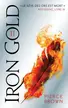
Iron Gold
Synopsis
Ten years after Darrow's hard-won victory over the Society, the Republic he helped build is fraying under endless war and political compromise.
As Darrow wages a relentless campaign against the last Gold strongholds, cracks are widening at home: a Senate wary of his methods, Reds still living in poverty despite the revolution fought in their name, and old enemies regrouping in the shadows.
Told across four perspectives — Darrow, a disillusioned freed Red, a grief-stricken Gray outcast, and a disenfranchised Gold heir — Iron Gold asks what a revolution costs once the fighting is supposed to be over.
How it reads
- Writing4.0
- Impact4.0
- Characters5.0
- Plot3.0
- Atmosphere4.0
Prose complexity 7/10
Content warnings (2)
ViolenceTrauma
Readers say (2)Fast · Dense · Complex · Tense · Dark · Survival · Multiple POVs
Readers flagged (2)
ViolenceTrauma
- Rating: 4 / 5 Stars What makes the second arc of the Red Rising series so captivating is how Pierce Brown deviates from the mythical, high fantasy style of the initial trilogy to address the harsh, chaotic aspects of conflict and shifts in power.Ten years after the Rising, our heroes are jaded and weary from battle, demonstrating that winning a revolution as an idealistic teenager is entirely distinct from governing in its aftermath. Iron Gold feels sufficiently distinct to reset the premise while retaining all the elements that made the series addictive initially. the rapid action and incisive dialogue are still present. Brown expands the plot beyond Darrow’s singular perspective, introducing three new POV characters Lyria, a displaced Gamma Red, Ephraim, a cynical Grey theif, and Lysander the exiled Gold heir. It allows Brown to build tension organically without resorting to narrative tricks or withholding information while writing from a protagonist's perspective. Although the new voices feel jarring initially, with time, Brown's character development remains exceptional, and they quickly establish their significance. Ultimately, Iron Gold simply feels more grown up. It compels its characters to bear the load of a decade's worth of decisions, grapple with the responsibilities of parenthood, and navigate the complexities of solar diplomacy. This provided the precise boost the series required, establishing a more somber and significantly more mature subsequent phase.
- Relentless punches to the gut, but somehow still one of my all-time favorites. The addition of other POVs really helps to give a new perspective on the world that Pierce Brown has created. While some of them are slow to start, by the end and even on my third readthrough I still find myself inhaling pages like air. <br><br>Well. All but one POV. F*&k Lysander. Forever and ever, amen.
- <div>Best Red Rising book so far. Finally the detailed world building we deserve. The new perspectives are great & the story is really picking up. Parallels to the Roman poems are interesting as well.<br><br>Skip the audiobook & just read this one. Narrator for Lys & Lyria are not up to par. Also recording quality is subpar, much like book 1.</div>