Timothy Ferris is a science writer and the best-selling author books, including Coming of Age in the Milky Way (1988), for which he was awarded the American Institute of Physics Prize and was nominated for the Pulitzer Prize. He also wrote The Whole Shebang: A State-of-the-Universe(s) Report (1997), a popular science book on the study of the universe. - Wikipedia
Coming of Age in the Milky Way
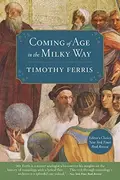
Coming of Age in the Milky Way
Synopsis
An eloquent and accessible journey through our evolving notions of the cosmos from "the best science writer of his generation" ( Washington Post). From the second-century celestial models of Ptolemy to modern-day research institutes and quantum theory, our perception of the universe—and out place in it—has changed drastically. This classic book offers a breathtaking tour of astronomy and the brilliant, eccentric personalities who have shaped it through the ages. From the first time mankind had an inkling of the vast space that surrounds us, those who study the universe have had to struggle against political and religious preconceptions. They have included some of the most charismatic, courageous, and idiosyncratic thinkers of all time. In Coming of Age in the Milky Way, Timothy Ferris uses his unique blend of rigorous research and captivating narrative skill to draw us into the lives and minds of these extraordinary figures, creating a landmark work of scientific history.
Vibe
Genres
Subjects
Edition

Coming of Age in the Milky WayPaperback, 2003
512 pages
HarperCollinsLanguage: EnglishISBN: 9780060535957Reprint2 editions available
You May Also Like




More books exploring coming of age



More Biography from 2003



More intellectual Science books



More Science books



Frequently asked questions
Did this book receive any major recognition upon its release?
The work was honored with the 1988 American Institute of Physics Science Writing Award and was a finalist for the Pulitzer Prize in 1989.
How is the book structured to guide the reader through its history?
The narrative is organized into three distinct thematic sections titled Space, Time, and Creation, which trace the evolution of human understanding from ancient celestial observations to modern quantum theory.