Stefan Zweig (geboren am 28. November 1881 in Wien, Österreich-Ungarn; gestorben am 23. Februar 1942 in Petrópolis, Brasilien) war ein österreichischer Schriftsteller, Übersetzer und Pazifist. Zweig gehörte zu den beliebtesten deutschsprachigen Schriftstellern seiner Zeit. Mit seinen vielgelesenen psychologischen Novellen wie Brennendes Geheimnis (1911), Angst, Brief einer Unbekannten, Der Amokläufer und literarisierten Biographien, darunter Magellan. Der Mann und seine Tat sowie *Triumph...
Clarissa
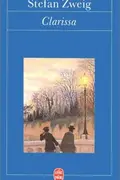
Clarissa
Synopsis
Found among Stefan Zweig's papers after his death and left incomplete, Clarissa follows a young Austrian woman of unusual intelligence and reserve, shaped by a demanding military father and an emotionally starved childhood. At twenty, left largely to her own devices, she moves to Vienna to work alongside a neurologist.
In 1914, just before the outbreak of the First World War, Clarissa meets and falls in love with a young Frenchman. Their brief happiness is cut short when the war separates them, and Clarissa — now serving as a nurse in the Austrian army — discovers she is pregnant with a child who, by the logic of the war, "belongs to the enemy." She keeps the child and continues her wartime service, later meeting another man willing to accept her and the boy, though he is himself drawn into wartime smuggling.
Zweig left the manuscript without a conclusion when he fled Austria; it was assembled and published only decades after his death. Its fragmentary, elliptical prose is part of the book's character rather than an editorial gap — a portrait of a life, and a continent, interrupted mid-sentence by history.
Vibe
Genres
Characters
ClarissaProtagonist
Edition

ClarissaPaperback, Janu
253 pages
Corps 16ISBN: 97828405709122 editions available