Most Read Self-Help Books
Most Read Self-Help Books
These are the Self-Help books most read by Seekquel members, ranked by real reading activity across 58 titles, not scraped popularity.
Based on Seekquel member reading activity. Updated weekly.
- 1
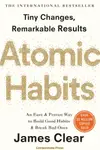 Atomic HabitsJames Clear · 2018Community rating: 4.05 out of 5
This book explores how small, incremental changes can lead to remarkable results in personal and professional life. It offers practical strategies for building good habits, breaking bad ones, and mastering the tiny behaviors that shape who you are. Discover how to make big improvements by focusing on atomic habits.
- 2
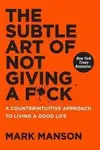 The Subtle Art of Not Giving a F*ckMark Manson · 2016Mark Manson Collection #1Community rating: 3.74 out of 5
Mark Manson's The Subtle Art of Not Giving a F*ck is a counterintuitive self-help book that pushes back against the relentless positivity of the genre. Manson's argument is simple but bracing: caring about everything leaves you exhausted and anxious, so the real skill is choosing the few things that genuinely deserve your attention and letting the rest go. Drawing on Stoic ideas, blunt personal anecdotes, and the occasional pointed profanity, Manson makes the case that struggle is unavoidable and even necessary — that a good life comes not from escaping problems but from picking better problems to have. He examines how values shape our sense of success, why entitlement and the pursuit of constant happiness backfire, and how accepting responsibility (even for things that aren't our fault) restores a sense of control. Irreverent, funny, and deliberately unglamorous, the book reframes self-improvement around honesty, limitation, and the acceptance of death rather than affirmations and hustle. It became a global bestseller and a defining title of the modern "anti-self-help" wave.
- 3
 QuietSusan Cain · 2012Quiet #1Community rating: 4.17 out of 5
Susan Cain's "Quiet" delves into the power of introverts in a world that often undervalues their contributions. Through research and real-life stories, Cain argues that introversion is a strength, not a weakness. The book challenges societal norms and encourages a deeper understanding of different personality types.
- 4
 Tuesdays with MorrieMitch Albom · 1997Community rating: 4.17 out of 5
When Mitch Albom stumbles across a television interview with his old college sociology professor, Morrie Schwartz, he realizes how far he has drifted from the person he once meant to become. Sixteen years after promising to keep in touch, Albom—now a driven, workaholic sports journalist—reconnects with Morrie, who is in the final months of his life after a diagnosis of amyotrophic lateral sclerosis (ALS). What begins as a single visit becomes a standing appointment: every Tuesday, Albom flies across the country to sit with his dying mentor for one last course, this one on the meaning of life. Over fourteen Tuesdays, Morrie shares hard-won wisdom on the subjects that matter most—love, work, family, aging, forgiveness, regret, and how to make peace with death—while his body steadily fails him. Published in 1997, Tuesdays with Morrie is a slim, deeply personal memoir that became one of the best-selling books of its kind. Its power lies less in plot than in the plain, unsentimental honesty of Morrie's lessons and the quiet transformation they work on the student who came to say goodbye.
- 5
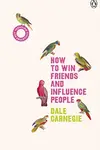 How to Win Friends and Influence PeopleDale Carnegie · 1936Community rating: 3.98 out of 5
Dale Carnegie's 1936 guide to getting along with people, built from decades of public-speaking and human-relations courses he had taught since around 1912. It argues that most social and business success comes down to a short list of habits: never criticize or complain, give honest appreciation, remember a person's name, and let someone reach your conclusion on their own. It has sold more than 30 million copies since publication, one of the best-selling nonfiction books ever printed.
- 6
 The Body Keeps the ScoreBessel van der Kolk · 2014Community rating: 3.93 out of 5
Trauma is not just an event that took place sometime in the past; it is also the imprint left by that experience on mind, brain and body. Drawing on more than three decades of work with combat veterans, abused children, and survivors of assault and disaster, Dr. Bessel van der Kolk shows how trauma literally reshapes both body and brain, compromising sufferers' capacities for pleasure, engagement, self-control and trust. Blending clinical case studies with cutting-edge neuroscience, van der Kolk explains why traumatized people are haunted by intolerable sensations and emotions long after the danger has passed, and why talk therapy alone is often not enough. He then explores a range of treatments — from EMDR and neurofeedback to yoga, theatre, and mindfulness — that can help the brain to "rewire" itself and reactivate the innate capacity for healing. The Body Keeps the Score is a landmark work on the science of trauma and recovery, arguing with clarity and compassion that by understanding how trauma lives in the body, we can find genuine paths back to wholeness.
- 7
 Rich Dad Poor DadRobert T. Kiyosaki, Sharon L. Lechter · 2002Rich Dad #1Community rating: 3.75 out of 5
Learn the financial secrets that have made 'Rich Dad Poor Dad' a bestseller for over two decades. This guide challenges common money advice, stressing the importance of financial literacy and acquiring assets. It's essential reading for anyone aiming to build wealth and achieve financial independence.
- mentor figure
- 8
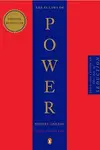 The 48 Laws of PowerRobert Greene · 1999Community rating: 3.88 out of 5
Explore the timeless strategies of power and influence with Robert Greene's essential guide. This book draws on historical examples and philosophical insights to teach you how to navigate social dynamics and achieve your goals. Understand the hidden rules of human interaction and master the art of power.
- 9
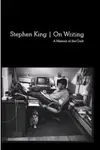 On WritingStephen King · 2000Community rating: 4.17 out of 5
Part memoir, part practical handbook, On Writing is Stephen King's account of how one of the world's most successful authors became a writer — and what he learned about the craft along the way. King opens with a candid, often funny recollection of his childhood, his early struggles, the stacks of rejection slips, and the years of poverty and addiction that preceded his success. The second half turns to the work itself: King's no-nonsense advice on grammar, vocabulary, the "toolbox" every writer needs, the danger of adverbs, the importance of reading widely, and his conviction that plot should be discovered rather than imposed. Threaded throughout is the 1999 accident that nearly killed him and the role writing played in his recovery. Honest, direct, and free of mystique, On Writing has become one of the most widely recommended books on the writing life — as much a portrait of an artist as a manual for aspiring ones.
- 10
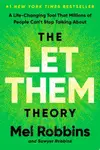 The Let Them TheoryMel Robbins, Sawyer Robbins · 2024Community rating: 4.07 out of 5
Mel Robbins builds her book around a two-word phrase her daughter Sawyer used to talk her down while she was micromanaging her son's prom night: "Let them." The first half of the practice is about releasing the urge to manage what other people think, say or do. The second half, "Let me," redirects that energy toward what you can actually control: your own choices and reactions. Co-written with Sawyer Robbins, the book applies the mantra across friendship, family, comparison and anger, in the practical, repeatable style of Robbins's earlier books The 5 Second Rule and The High 5 Habit.
- 11
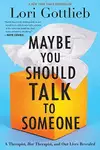 Maybe You Should Talk to SomeoneLori Gottlieb · 2019Community rating: 4.07 out of 5
Lori Gottlieb is a practicing psychotherapist whose days are spent helping other people untangle their lives. Then her own long-term relationship collapses without warning, and she finds herself doing something she has spent her career recommending to others: sitting on the other side of the room, in a state of crisis, seeing a therapist of her own. The book braids Gottlieb's sessions with her wry, unsparing therapist, Wendell, together with the stories of four of her own patients. There is John, an abrasive Hollywood producer convinced everyone around him is an idiot; Julie, a young newlywed forced to reckon with a devastating diagnosis; Rita, approaching seventy and haunted by regret; and Charlotte, a twenty-something caught in self-defeating patterns. As their lives unfold, the line between healer and patient blurs, and Gottlieb turns the same searching attention on herself. Funny, humane, and quietly profound, Maybe You Should Talk to Someone is a memoir about the strange intimacy of therapy and a wide-ranging meditation on change, mortality, and meaning. It demystifies what actually happens in the consulting room and makes a persuasive case that self-examination, however uncomfortable, is where real change begins.
- 12
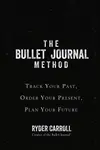 Bullet Journal MethodRyder Carroll · 2018Community rating: 3.73 out of 5
For years, Ryder Carroll tried countless organizing systems, online and off, but none of them fit the way his mind worked. Out of sheer necessity, he developed a method called the Bullet Journal that helped him become consistently focused and effective. When he started sharing his system with friends who faced similar challenges, it went viral. Just a few years later, to his astonishment, Bullet Journaling is a global movement. The Bullet Journal Method is about much more than organizing your notes and to-do lists. It's about what Carroll calls "intentional living": weeding out distractions and focusing your time and energy in pursuit of what's truly meaningful, in both your work and your personal life. It's about spending more time with what you care about, by working on fewer things. Carroll wrote this book for frustrated list-makers, overwhelmed multitaskers, and creatives who need some structure. Whether you've used a Bullet Journal for years or have never seen one before, The Bullet Journal Method will help you go from passenger to pilot of your own life.
- 13
 A Child Called "It"David J. Pelzer · 1995The Childhood Abuse Trilogy #1Community rating: 4.27 out of 5
Dave Pelzer's account of the childhood he survived in Daly City, California — singled out by his alcoholic mother, stripped of his name, and starved and beaten while his father looked away. The first volume of his memoir trilogy.
- survival
- 14
 Who Moved My Cheese?Spencer Johnson · 1998Who Moved My Cheese? #1Community rating: 3.79 out of 5
A business fable about two mice and two "littlepeople" who live in a maze and depend on finding cheese at Station C. When the cheese disappears, the four react differently to change: some go looking for more, others cling to what is gone. Spencer Johnson's 1998 parable has sold more than 30 million copies in 37 languages and remains a staple of corporate training and self-help reading.
- 15
 Boy, the Mole, the Fox and the HorseCharlie Mackesy · 2019Community rating: 4.47 out of 5
This is a charming collection of drawings and simple, profound words about a boy's journey. He encounters a mole, a fox, and a horse, and together they share gentle conversations about life, hope, and friendship. It's a lovely reminder of the power of kindness.
- found family
- 16
 12 Rules for Life: An Antidote to ChaosJordan B. Peterson · 2018Rules for Life #1Community rating: 3.88 out of 5
Clinical psychologist Jordan B. Peterson distils decades of practice, mythology, and philosophy into twelve rules for a meaningful life. Ranging from posture and honesty to responsibility and the pursuit of what matters, each rule becomes a wide-ranging essay on confronting chaos with order. A demanding, discursive work of practical psychology rather than easy self-help.
- 17
 The Courage to Be DislikedIchirō Kishimi, Fumitake Koga · 2013The Courage To Series #1Community rating: 3.47 out of 5
Structured as five nights of debate between a philosopher and a skeptical young man, this international bestseller introduces the psychology of Alfred Adler. Its provocative claims — that the past need not determine us, that all problems are interpersonal, and that real freedom requires the courage to be disliked — build toward a vision of living courageously in the present. Accessible, argumentative practical philosophy by Ichiro Kishimi and Fumitake Koga.
- 18
 Reasons To Stay AliveMatt Haig · 2015Community rating: 3.97 out of 5
At twenty-four, novelist Matt Haig's world caved in and he came close to ending his life. This bestselling memoir is his frank, hopeful account of living through severe depression and anxiety and slowly finding his way back — part personal story, part reflection on mental illness, and part reassurance, addressed to anyone in the dark, that things can and do get better.
- 19
 You Are a Badass at Making MoneyJen Sincero · 2013Community rating: 3.37 out of 5
This guide offers a direct and humorous approach to personal transformation. It helps readers identify and eliminate self-sabotaging beliefs and behaviors. Discover how to achieve the money, relationships, career, and happiness you truly desire by embracing your inner strength.
- 20
 Deep Work: Rules for Focused Success in a Distracted WorldCal Newport · 2016Community rating: 3.84 out of 5
Deep work — the ability to focus without distraction on a cognitively demanding task — is becoming both increasingly rare and increasingly valuable, argues computer scientist Cal Newport. As the economy rewards those who can learn hard things quickly and produce at an elite level, the capacity for sustained concentration has become a kind of superpower. Yet most knowledge workers have lost it, fragmenting their days across email, meetings, and social media. The book unfolds in two parts. The first makes the case that deep work is valuable, rare, and meaningful, drawing on neuroscience, psychology, and the working habits of figures from Carl Jung to Bill Gates. The second lays out a practical training program built on four rules: work deeply, embrace boredom, quit social media, and drain the shallows from your schedule. Part manifesto and part how-to, Deep Work offers concrete disciplines for reclaiming concentration in a distracted world, alongside a broader argument that a focused life is not only more productive but more fulfilling.
- 21
 Never Split the DifferenceChris Voss, Tahl Raz · 2016Community rating: 4.22 out of 5
Chris Voss spent twenty-four years in the FBI and rose to become its lead international kidnapping negotiator. Writing with journalist Tahl Raz, he distils nine principles from hostage standoffs into a method for ordinary negotiations — a salary, a house, a rent renewal, an argument at home. His core claim is that people are not rational actors, and that splitting the difference is usually the worst outcome on the table.
- 22
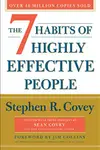 The 7 Habits of Highly Effective PeopleSean Covey, Stephen R. Covey · 1989Community rating: 3.52 out of 5
Discover the timeless principles that have guided millions toward greater effectiveness. This influential guide offers practical habits for personal and professional success, updated for today's world. Learn how to take control of your life and achieve your goals with clear, actionable strategies.
- 23
 Daring GreatlyBrené Brown · 2012Community rating: 3.97 out of 5
A research-based argument that embracing vulnerability, rather than armoring against it, is the path to courage, connection, and wholehearted living.
- 24
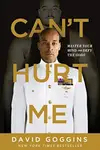 Can't Hurt MeDavid Goggins · 2018Community rating: 4.03 out of 5
Part memoir, part manual for mental toughness, David Goggins's bestseller charts his journey from an abusive, impoverished childhood to becoming a Navy SEAL, ultramarathoner, and Guinness World Record holder. Interleaving his life story with "challenges" and hard-won principles — the 40% Rule, the Accountability Mirror, the Cookie Jar — it argues that most of us tap only a fraction of our capability, and shows the punishing work of doing more.
- 25
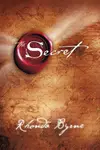 The SecretRhonda Byrne · 2006The Secret Library #1Community rating: 3.86 out of 5
Rhonda Byrne's international bestseller argues that thought is the most powerful force shaping a person's life. Adapted from her 2006 documentary of the same name, the book lays out the "law of attraction" — the idea that thoughts and feelings act as a magnet, drawing back matching experiences from the world. Byrne shows readers how to apply the principle to money, health, and relationships through gratitude, visualization, and deliberately choosing positive thoughts.
- 26
 White FragilityRobin J. DiAngelo · 2018Community rating: 3.97 out of 5
In "White Fragility," Robin DiAngelo examines the often-unconscious defensiveness white people experience when discussing race. This book explores how societal norms in North America can insulate white individuals from racial stress, impacting their ability to engage in productive conversations about racism. It offers insights to help readers understand and navigate these reactions.
- 27
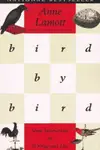 Bird by BirdAnne Lamott · 1994Community rating: 4.22 out of 5
Anne Lamott shares her unique perspective on the art and demanding work of writing. Drawing from personal anecdotes, including a memorable family story about tackling an overwhelming task "bird by bird," she offers guidance to aspiring and seasoned writers alike. This book serves as a compassionate and humorous companion for anyone navigating the creative process.
- 28
 Das Café am Rande der Welt eine Erzählung über den Sinn des LebensJohn P. Strelecky · 2007Community rating: 4.09 out of 5
Humorvoll und anrührend Ein kleines Café mitten im Nirgendwo wird zum Wendepunkt im Leben von John, einem Werbemanager, der stets in Eile ist. Eigentlich will er nur kurz Rast machen, doch dann entdeckt er auf der Speisekarte neben dem Menü des Tages drei Fragen: »Warum bist du hier? Hast du Angst vor dem Tod? Führst du ein erfülltes Leben?« Wie seltsam - doch einmal neugierig geworden, will John mithilfe des Kochs, der Bedienung und eines Gastes dieses Geheimnis ergründen. Die Fragen nach dem Sinn des Lebens führen ihn gedanklich weit weg von seiner Vorstandsetage an die Meeresküste von Hawaii. Dabei verändert sich seine Einstellung zum Leben und zu seinen Beziehungen, und er erfährt, wie viel man von einer weisen grünen Meeresschildkröte lernen kann. So gerät diese Reise letztlich zu einer Reise zum eigenen Selbst. Ein ebenso lebendig geschriebenes, humorvolles wie anrührendes Buch.
- mentor figure
- 29
 Nonviolent CommunicationMarshall B. Rosenberg · 1999Community rating: 4.09 out of 5
Learn to communicate with empathy and honesty using Nonviolent Communication. This guide provides practical strategies to express your needs and feelings without causing conflict. Build stronger relationships with yourself and others by understanding how to navigate disagreements compassionately.
- mentor figure
- 30
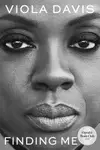 Finding MeViola Davis · 2022Community rating: 4.22 out of 5
Viola Davis recounts her challenging upbringing in poverty and abuse in Rhode Island, detailing her path to becoming a world-renowned actress. This memoir is a testament to finding one's voice and embracing self-acceptance. It's an inspiring read for anyone seeking the courage to be their authentic self.
- coming of age