Most read Politics books
Most read Politics books
These are the Politics books most read by Seekquel members, ranked by real reading activity across 39 titles, not scraped popularity.
Based on Seekquel member reading activity. Updated weekly.
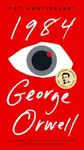
- 1984George Orwell, Michael Dean · 1949Community rating: 4.26 out of 5
A simplified retelling of George Orwell's dystopian classic, adapted by Michael Dean for the Penguin Readers / Pearson English graded-reader series at Level 4 for learners of English. Winston Smith lives in Oceania, a state where the Party controls every fact, every image, and every thought, and where the face of Big Brother watches from every wall. Winston's job is to rewrite old newspapers so the past always agrees with the present, but in secret he hates the Party and longs for the truth. When he falls in love with Julia, the two try to hold on to something real in a world built on lies, and their quiet rebellion pulls them toward a confrontation with the Party's terrifying power. The graded text keeps the shape and force of Orwell's story while using controlled vocabulary and shorter sentences, making one of the twentieth century's most important novels accessible to intermediate readers.
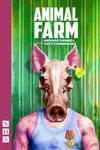
- Animal FarmGeorge Orwell · 1945Signet ClassicsCommunity rating: 4.12 out of 5
When the mistreated animals of Manor Farm rise up and drive out their drunken human owner, they establish a new order founded on a single, hopeful principle: all animals are equal. Led by the pigs, the most clever of the animals, the farm is renamed and the beasts set about running their world for their own benefit. But power reshapes those who hold it. As the ambitious boar Napoleon consolidates control, the founding ideals are quietly rewritten, dissent is punished, and the promises of the revolution curdle into a tyranny that looks unsettlingly like the one it replaced. The other animals, loyal and hardworking, struggle to remember how things were meant to be. George Orwell's short, savage fable uses a barnyard uprising to trace how revolutions are betrayed, how language is bent to serve power, and how easily the many can be ruled by the few. First published in 1945, it remains one of the most enduring political allegories ever written.
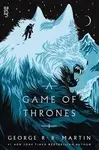
- A Game of ThronesGeorge R. R. Martin · 1996A Song of Ice and Fire #1Community rating: 4.4 out of 5
In the Seven Kingdoms of Westeros, noble houses vie for power through marriage, betrayal, and war while an ancient threat stirs beyond the Wall. Jon Snow joins the Night's Watch to defend the realm; Daenerys Targaryen gathers allies in Essos to reclaim her throne; and Tyrion Lannister navigates a deadly court after his father's death — all as old enemies converge toward a conflict that will reshape their world.
- multiple povs
- betrayal
- morally grey
- court intrigue
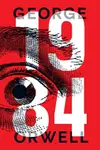
- Nineteen Eighty-FourGeorge Orwell · 1949Signet ClassicsCommunity rating: 4.29 out of 5
Winston Smith works at the Ministry of Truth, rewriting old newspapers so the Party's version of history is never wrong. Big Brother watches from every poster, the telescreen watches from every wall, and even an unspoken doubt is a capital crime. Worn down by surveillance and manufactured scarcity, Winston starts a secret diary, falls into a forbidden affair with a young colleague named Julia, and lets himself believe the past was real and the truth survives somewhere beyond the Party's reach. Orwell's 1949 novel gave English "Big Brother", "doublethink", "thoughtcrime" and "Newspeak", and remains the definitive warning about how power holds itself in place by owning memory, language and love.
- forbidden love
- betrayal
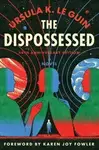
- The Dispossessed: An Ambiguous UtopiaUrsula K. Le Guin · 1974The Hainish Cycle #5Community rating: 3.76 out of 5
A brilliant physicist from the anarchist society of Anarres travels to the neighboring world of Urras, a place of stark contrast and societal complexity. He carries with him a revolutionary concept that could change everything, but his journey is fraught with danger and the potential for profound personal loss. This act of defiance is his only hope for understanding and progress.
- fish out of water
- quest
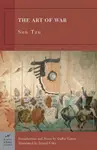
- The Art of WarSun Tzu · 500 BCECommunity rating: 3.9 out of 5
Discover the ancient wisdom of Sun Tzu's "The Art of War." This foundational text offers enduring strategies for conflict and leadership, focusing on meticulous planning and understanding your adversary. It remains a vital read for anyone seeking to master strategy, whether in military affairs or modern business.
- mentor figure
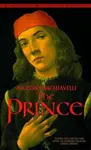
- The PrinceNiccolò Machiavelli · 1513Community rating: 3.55 out of 5
Written in 1513 and circulated in manuscript during Machiavelli's lifetime, The Prince is the most famous — and most notorious — work of political philosophy in the Western canon. Composed after the author's fall from office in Florence, it is a compact, unsentimental manual on how rulers seize power, hold it, and keep their states intact. Breaking sharply with the classical tradition that treated politics as a branch of ethics, Machiavelli argues that a ruler must be prepared to act against conventional morality when necessity demands it. He weighs whether it is better to be feared or loved, why appearing virtuous can matter more than being virtuous, how fortune must be mastered rather than trusted, and why a prince's first concern must be the strength of his own arms. Drawing on the recent history of Italy's city-states and figures such as Cesare Borgia, he illustrates his maxims with cold, concrete examples. Published in 1532, five years after his death, The Prince has been read ever since as everything from a cynical handbook for tyrants to a clear-eyed diagnosis of how power actually works.
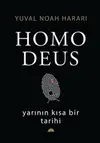
- Homo Deus: A History of TomorrowYuval Noah Harari · 2015Homo #2Community rating: 4.15 out of 5
Having charted humanity's rise in Sapiens, Yuval Noah Harari turns from the past to the future. For most of history, humans struggled against famine, plague, and war; now, he argues, we have largely brought these ancient scourges under control and are setting ourselves new goals—immortality, bliss, and a god-like power to engineer life itself. Homo Deus asks what happens to a species that has run out of things to conquer except its own nature. Drawing on history, biology, and the study of intelligence, Harari examines how liberalism, humanism, and free will may give way to new creeds built on data and algorithms, and how biotechnology and artificial intelligence could split humanity or render most of it economically and politically irrelevant. Provocative and wide-ranging, this bestselling work of big-picture nonfiction is less a prediction than a set of urgent questions about where our newfound powers are taking us—and who will be left behind.
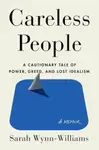
- Careless PeopleSarah Wynn-Williams · 2025Community rating: 3.94 out of 5
This searing memoir exposes the personal and political fallout when unfettered power and a rotten company culture take hold. Sarah Wynn-Williams shares her experiences within Facebook, from its early rise to Mark Zuckerberg’s reaction to its role in Trump’s election, alongside the challenges of working motherhood in a high-pressure environment. It offers an eye-opening look at the global elite and how the leaders of Facebook became less responsible as they gained more power. Told in a sharp, candid voice, this book reveals why and how things have gone so horribly wrong in the past decade.
- morally grey
- betrayal
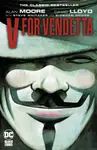
- V for VendettaAlan Moore, David Lloyd · 1990V for VendettaCommunity rating: 4.29 out of 5
In a future England ruled by a fascist regime, a mysterious anarchist known only as V fights for freedom. Using theatrical flair and acts of defiance, he ignites a rebellion, drawing a young woman into his dangerous crusade. She must confront the brutal reality of her world and decide if V's extreme methods are the only path to liberation.
- anti hero
- revenge
- morally grey
- secret identity
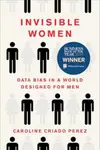
- Invisible WomenCaroline Criado Perez · 2019Community rating: 4.02 out of 5
Caroline Criado Perez exposes the "gender data gap" — the pervasive bias that follows from treating men as the default human. Marshalling studies from medicine, technology, urban planning, workplaces, and disaster relief, Invisible Women shows how a world measured around male bodies and lives quietly costs women in time, money, health, and safety, and makes the case for finally counting the other half of the population.
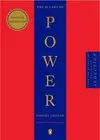
- The 48 Laws of PowerRobert Greene · 1999Community rating: 3.84 out of 5
Explore the timeless strategies of power and influence with Robert Greene's essential guide. This book draws on historical examples and philosophical insights to teach you how to navigate social dynamics and achieve your goals. Understand the hidden rules of human interaction and master the art of power.
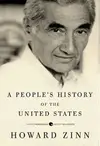
- A People's History of the United StatesHoward Zinn · 1980Community rating: 4.02 out of 5
Discover American history as it's rarely told. Howard Zinn shifts the focus from presidents and generals to the everyday people who shaped the nation: workers, immigrants, and activists. This essential read offers a powerful counter-narrative, highlighting the struggles and triumphs of those often overlooked in traditional accounts.
- multiple povs
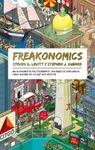
- FreakonomicsStephen J. Dubner, Steven D. Levitt · 2005Freakonomics #1Community rating: 3.93 out of 5
Economist Steven D. Levitt and journalist Stephen J. Dubner turn economic tools loose on everyday puzzles—cheating sumo wrestlers, the finances of a crack gang, what really matters in parenting, and why crime fell in the 1990s. A playful, data-driven, myth-busting look at the hidden incentives that shape human behavior.
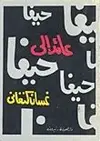
- عائد إلى حيفاGhassan Kanafani · 1969Community rating: 3.94 out of 5
First published in 1969, Ghassan Kanafani's short novel opens in 1968, when the border between Israel and the occupied West Bank is briefly opened. Said and his wife Safiyya drive from Ramallah back to Haifa, the city they fled during the violence of April 1948 — and to the house they were forced to abandon in the chaos, along with their infant son Khaldun. The couple find their old home occupied by Miriam, a Jewish woman who survived Europe and was resettled there, and who raised the child they left behind. That child is now Dov, a young man in the uniform of the Israeli army. The novel unfolds largely as the charged conversation among these four people, threaded with flashbacks to the day of the family's flight two decades earlier. Remarkably even-handed toward everyone caught in its story, Returning to Haifa is one of the defining works of modern Palestinian literature. Through a single wrenching reunion, Kanafani examines homeland, memory, and belonging, and reframes what it means to claim — and to fight for — a place and a people. He was assassinated a few years after its publication.
- dual timeline
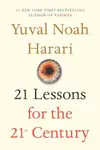
- 21 Lessons for the 21st CenturyYuval Noah Harari · 2018Community rating: 3.47 out of 5
Yuval Noah Harari's "21 Lessons for the 21st Century" is your essential guide to understanding today's world. It cuts through the noise to examine the most significant global challenges we face, from political shifts and misinformation to environmental concerns. Harari offers clear insights to help you make sense of the issues shaping our collective future.
- CandideVoltaire · 1759The 100 Greatest Books Ever Written (Easton Press)Community rating: 3.62 out of 5
Expelled from a sheltered castle life, the guileless Candide is flung across a violent world — war, earthquake, Inquisition, shipwreck, and Eldorado's gold — clinging all the while to his tutor's claim that this is "the best of all possible worlds." Voltaire's savage, hilarious satire of blind optimism and human folly, ending on its famous counsel to cultivate one's garden.
- Guns, Germs, and SteelJared M. Diamond · 1997Civilizations Rise and Fall #1Community rating: 4.01 out of 5
Jared Diamond argues that the broad sweep of history was shaped by geography and biology — not race — tracing how access to domesticable crops and animals gave some societies guns, germs, and steel. A Pulitzer-winning synthesis of world history.
- CasteIsabel Wilkerson · 2020Community rating: 4.14 out of 5
Isabel Wilkerson's "Caste" explores the often-unseen social hierarchy that has profoundly shaped American society. It argues that a rigid system of human ranking, extending beyond race and class, dictates lives and national outcomes. Wilkerson draws parallels between the caste systems of America, India, and Nazi Germany to illuminate the deep-seated structures that perpetuate inequality.
- NexusYuval Noah Harari · 2024Community rating: 3.91 out of 5
Yuval Noah Harari, author of Sapiens, returns with Nexus, a historical exploration of information networks and their impact on human civilization. From ancient times to the age of AI, Harari examines the connection between information, truth, and power. The book addresses humanity's self-destructive patterns and the critical decisions we face in our technologically advanced world.
- Atlas ShruggedAyn Rand · 1957Community rating: 3.59 out of 5
In a nation on the brink of collapse, a powerful railroad executive fights to keep her business, and the world, from falling apart. As brilliant minds vanish one by one, she must race against time to uncover the mystery behind their disappearance and the identity of the elusive John Galt, who may hold the key to humanity's future.
- quest
- betrayal
- The New Jim CrowMichelle Alexander · 2010Community rating: 3.61 out of 5
Michelle Alexander's groundbreaking book reveals how the United States has constructed a new racial caste system through its policies on drugs and mass incarceration. It argues that the justice system, despite claims of colorblindness, actively perpetuates racial inequality by disproportionately targeting Black men. This work is a crucial examination of systemic discrimination and its impact on society.
- morally grey
- The FountainheadAyn Rand · 1943Community rating: 3.81 out of 5
Howard Roark is an architect with a vision, but the world isn't ready for his radical designs. He stands firm against a society that demands conformity, facing personal and professional challenges that test his integrity. This novel explores the cost of individualism and the fight to stay true to oneself.
- rivals
- QualityLandMarc-Uwe Kling · 2020QualityLand #1Community rating: 4.03 out of 5
In a future where an AI called the "everything" manages every detail of life, Peter P. lives a seemingly perfect existence. His world shatters when his genetically engineered dog is deemed a "non-product" and ordered for destruction. Peter must then fight against the hyper-efficient, algorithm-driven society of QualityLand to save his pet, uncovering the system's disturbing truths.
- fish out of water
- reluctant hero
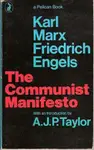
- Manifest der Kommunistischen ParteiFriedrich Engels, Karl Marx · 1848Community rating: 3.46 out of 5
This seminal work by Marx and Engels outlines the historical development of class struggle and advocates for a communist revolution. It details the aims of the Communist League and envisions a future society free from capitalist exploitation. Essential reading for understanding radical political and economic theories.
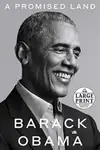
- A Promised LandBarack Obama · 2020Community rating: 4.15 out of 5
The first volume of Barack Obama's presidential memoirs, tracing his path from a searching young man to the forty-fourth President — his political awakening, the historic 2008 campaign, and the turbulent early years in the White House, from the financial crisis and the Affordable Care Act to the bin Laden raid. A reflective, candid account of power from the inside.
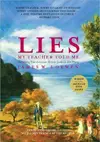
- Lies My Teacher Told MeJames W. Loewen · 1995Community rating: 4.03 out of 5
A sociologist's landmark critique of American high school history textbooks, exposing the myths, omissions, and Eurocentric bias that shape how students learn their own country's past. First published in 1995 and revised in 2007, it remains one of the most widely read challenges to how U.S. history is taught.
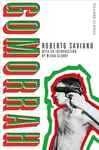
- GomorrahRoberto Saviano · 2006Community rating: 3.47 out of 5
Gomorrah is a bold and important work of investigative writing that holds global significance, one heroic young man's impassioned story of a place under the rule of a murderous organization. \ \ A groundbreaking major bestseller in Italy, Gomorrah is Roberto Saviano's gripping nonfiction account of the decline of Naples under the rule of the Camorra, an organized crime network with a large international reach and stakes in construction, high fashion, illicit drugs, and toxic-waste disposal. Known by insiders as "the System," the Camorra affects cities and villages along the Neapolitan coast, and is the deciding factor in why Campania, for instance, has the highest murder rate in all of Europe and why cancer levels there have skyrocketed in recent years.\ \ Saviano tells of huge cargoes of Chinese goods that are shipped to Naples and then quickly distributed unchecked across Europe. He investigates the Camorra's control of thousands of Chinese factories contracted to manufacture fashion goods, legally and illegally, for distribution around the world, and relates the chilling details of how the abusive handling of toxic waste is causing devastating pollution not only for Naples but also China and Somalia. In pursuit of his subject, Saviano worked as an assistant at a Chinese textile manufacturer, a waiter at a Camorra wedding, and on a construction site. A native of the region, he recalls seeing his first murder at the age of fourteen, and how his own father, a doctor, suffered a brutal beating for trying to aid an eighteen-year-old victim who had been left for dead in the street.
- The JungleUpton Sinclair · 1906Community rating: 4.03 out of 5
Step into the brutal world of early 20th-century Chicago's meatpacking industry through the eyes of an immigrant family. This novel unflinchingly details their fight for survival amidst horrific working conditions and rampant corruption. It's a powerful look at the struggle for basic human rights that spurred real-world change.
- survival
- betrayal
- EonAlison Goodman · 2014Eon #1Community rating: 3.9 out of 5
Eon trains for years to become a Dragoneye, apprentice to a dragon of good fortune. But Eon is Eona, a girl in disguise, and women who use Dragon Magic are put to death. When the secret nears exposure, a deadly fight for the throne begins.
- secret identity