Books from Poland
Books from Poland
Based on Seekquel member reading activity. Updated weekly.
- 1
 The Last WishAndrzej Sapkowski · 1993The Witcher #1Community rating: 4.22 out of 5
Geralt of Rivia is a witcher — a monster hunter mutated and trained to kill the beasts that plague a war-torn world. In these interlinked short stories that open Sapkowski's saga, Geralt learns again and again that the true monsters rarely wear a monstrous face, and meets the sorceress Yennefer, who will change the course of his life.
- morally grey
- anti hero
- 2
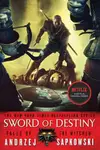 Sword of DestinyAndrzej Sapkowski · 1992The Witcher #2Community rating: 4.18 out of 5
The second collection of Witcher short stories carries Geralt of Rivia through six tales of monsters, morality, and consequence — hunting a dragon in unlikely company, wrestling with his bond to the sorceress Yennefer, and crossing paths with the child of surprise, Ciri, whose fate is bound to his. Darker and more emotional than The Last Wish, it sets the saga's central destiny in motion.
- morally grey
- anti hero
- reluctant hero
- found family
- 3
 Drive Your Plow Over the Bones of the DeadOlga Tokarczuk · 2009Community rating: 3.5 out of 5
In a remote Polish village, Janina, a reclusive astrologer who prefers animals to people, finds herself embroiled in a series of mysterious deaths. When her neighbors start turning up dead in bizarre circumstances, Janina is convinced she knows the killer's identity. However, her eccentric reputation means no one takes her suspicions seriously. This literary murder mystery explores the blurred lines between sanity and madness, and who truly deserves a voice.
- unreliable narrator
- morally grey
- revenge
- 4
 SolarisStanisław Lem · 2002Community rating: 3.5 out of 5
Psychologist Kris Kelvin arrives at the mysterious planet Solaris, only to find the planet's ocean manifesting physical embodiments of his deepest, most painful memories. As he and the other scientists confront these corporeal ghosts, they question the limits of human understanding. This classic science fiction novel explores consciousness and the human heart.
- 5
 EmpuzjonOlga Tokarczuk · 2022The Empusium #1Community rating: 4 out of 5
In 1913, a young student named Mieczysław Wojnicz arrives at a tuberculosis sanatorium in the Silesian mountains, a place known for its unique healing waters and a community of eccentric male intellectuals. As he navigates the strange routines and philosophical debates of the sanatorium, a series of mysterious deaths among the local women begins to unfold. Mieczysław finds himself drawn into the unsettling secrets of the institution and the surrounding landscape, where ancient myths and modern anxieties intertwine.
- dark academia
- mystery box
- 6
 ImperiumRyszard Kapuściński · 1992Community rating: 3 out of 5
"Between 1989 and 1991, Kapuscinski made a series of extended journeys through the disintegrating Soviet empire, and his account of these forms the heart of the book. Bypassing official institutions and itineraries, he traversed the Soviet territory alone, from the border of Poland to the site of the most infamous gulags in far-eastern Siberia (where "nature pals it up with the executioner"), from above the Arctic Circle to the edge of Afghanistan, visiting dozens of cities and towns and outposts, traveling more than 40,000 miles, venturing into the individual lives of men, women, and children in order to understand the collapsing but still various larger life of the empire." "Bringing the book to a close is a collection of notes which, Kapuscinski writes, "arose in the margins of my journeys" - reflections on the state of the ex-USSR and on his experience of having watched its fate unfold "on the screen of a television set ... as well as on the screen of the country's ordinary, daily reality, which surrounded me during my travels." It is this "schizophrenic perception in two different dimensions" that enabled Kapuscinski to discover and illuminate the most telling features of a society in dire turmoil." "Imperium is a remarkable work from one of the most original and sharply perceptive interpreters of our world - a galvanizing narrative deeply informed by Kapuscinski's limitless curiosity and his passion for truth, and suffused with his vivid sense of the overwhelming importance of history as it is lived, and of our constantly shifting places within it."--BOOK JACKET.
- 7
 The shadow of the sunRyszard Kapuściński · 1998Community rating: 2 out of 5
Only with the greatest of simplifications, for the sake of convenience, can we say Africa. In reality, except as a geographical term, Africa doesn't exist'. Ryszard Kapuscinski has been writing about the people of Africa throughout his career. In astudy that avoids the official routes, palaces and big politics, he sets out to create an account of post-colonial Africa seen at once as a whole and as a location that wholly defies generalised explanations. It is both a sustained meditation on themosaic of peoples and practises we call 'Africa', and an impassioned attempt to come to terms with humanity itself as it struggles to escape from foreign domination, from the intoxications of freedom, from war and from politics as theft.
- 8
 Liquid ModernityZygmunt Bauman · 2000Liquid Series #1Community rating: 3.5 out of 5
This book explores the transition from a 'solid' to a 'liquid' modernity, where traditional certainties have dissolved into continuous change. It re-examines core human concepts such as freedom, time, space, work, and community within a world shaped by capitalism and ongoing societal shifts. The author encourages readers to reconsider existing frameworks for understanding both individual experiences and shared history.
- 9
 Liquid Love: On the Frailty of Human BondsZygmunt Bauman, Sergio Minucci · 2003Liquid Series #2Community rating: 3 out of 5
Zygmunt Bauman argues that in "liquid modern" society, human relationships have taken on the same fragility and disposability as consumer goods. Where earlier generations sought lasting, "solid" bonds, contemporary life prizes connections that are easy to enter and, more importantly, easy to exit — friendships, romances and even family ties held loosely so they can be dissolved without cost the moment they become inconvenient. Bauman traces this shift through dating, virtual community, and the modern fear of commitment, showing how a culture built around individual freedom and consumer choice leaves people simultaneously craving intimacy and terrified of the ties it requires.
- 10

- 11
 With Fire and SwordHenryk Sienkiewicz, Jeremiah Curtin · 1898
Goodwill in the seventeenth century Polish Commonwealth has been stretched thin due to the nobility’s perceived and real oppression of the less well-off members. When the situation reaches its inevitable breaking point, it sparks the taking up of arms by the Cossacks against the Polish nobility and a spiral of violence that engulfs the entire state. This background provides the canvas for vividly painted narratives of heroism and heartbreak of both the knights and the hetmans swept up in the struggle. Henryk Sienkiewicz had spent most of his adult life as a journalist and editor, but turned his attention back to historical fiction in an attempt to lift the spirits and imbue a sense of nationalism to the partitioned Poland of the nineteenth century. With Fire and Sword is the first of a trilogy of novels dealing with the events of the Khmelnytsky Uprising, and weaves fictional characters and events in among historical fact. While there is some contention about the fairness of the portrayal of Polish and Ukrainian belligerents, the novel certainly isn’t one-sided: all factions indulge in brutal violence in an attempt to sway the tide of war, and their grievances are clearly depicted. The initial serialization and later publication of the novel proved hugely popular, and in Poland the Trilogy has remained so ever since. In 1999, the novel was the subject of Poland’s then most expensive film, following the previously filmed later books. This edition is based on the 1898 translation by Jeremiah Curtin, who also translated Sienkiewicz’s later (and perhaps more internationally recognized) Quo Vadis.
- betrayal
- forbidden love
- revenge
- 12
 Quo Vadis?Henryk Sienkiewicz · 1897
In the heart of ancient Rome, a powerful nobleman named Vinicius becomes fixated on Lygia, a Christian woman held captive in the emperor's court. As Nero's brutal reign intensifies and his persecution of Christians escalates, Vinicius finds himself drawn to Lygia's faith, forcing him to question his own life and loyalties. This epic tale follows his struggle between earthly power and spiritual devotion.
- forbidden love
- redemption arc
- morally grey
- 13
 ChłopiWładysław Reymont · 2018The Peasants (Chłopi) #1
This epic novel paints a vivid picture of peasant life in a Polish village at the turn of the 20th century. It follows the Boryna family and their community through the changing seasons, depicting their struggles with land, tradition, love, and social hierarchy. The story explores universal themes of human desire, conflict, and the enduring connection to the land.
- family saga
- betrayal
- 14
 Map Collected and Last PoemsWisława Szymborska · 2015
“NobelLaureate Szymborska’s gorgeous posthumous collection . . . includes more than 250 poems . . . This is a brilliant and important collection.”—Booklist, starred review One of Europe’s greatest recent poets is also its wisest, wittiest, and most accessible. Nobel Prize–winner Wislawa Szymborska draws us in with her unexpected, unassuming humor. Her elegant, precise poems pose questions we never thought to ask. “If you want the world in a nutshell,” a Polish critic remarks, “try Szymborska.” But the world held in these lapidary poems is larger than the one we thought we knew. Carefully edited by her longtime, award-winning translator, Clare Cavanagh, the poems in Map trace Szymborska’s work until her death in 2012. Of the approximately 250 poems included here, nearly forty are newly translated; thirteen represent the entirety of the poet’s last Polish collection, Enough, never before published in English. Map is the first English publication of Szymborska’s work since the acclaimed Here, and it offers her devoted readers a welcome return to her “ironic elegance” (The New Yorker).
- 15
 Ziemia obiecanaWładysław Reymont · 1998
In the booming industrial city of Łódź, three friends—a Pole, a German, and a Jew—strive to make their fortunes amidst the cutthroat world of textile manufacturing. As they navigate ambition, greed, and social unrest, their paths diverge, testing their loyalties and moral boundaries. This classic novel paints a vivid picture of a society grappling with rapid change and the human cost of progress.
- family saga
- betrayal
- morally grey
- 16
 View with a Grain of Sand: Selected PoemsWisława Szymborska · 1995
 - 17
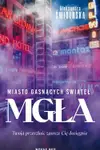 MgłaAleksandra Świderska · 2021Miasto gasnących świateł #1
Każdy je ma. Skrywają się głęboko w naszej pamięci, przysypane popiołem czasu, zepchnięte w nicość, spętane i uśpione. Demony przeszłości nigdy nas nie opuszczają. Co się stanie, gdy je obudzimy i wyjdą na powierzchnię? Czy pozwolimy im zawładnąć naszym życiem? Adam Aleksandrowicz, detektyw wrocławskiej policji, walczy ze swoimi demonami od lat. Teraz udało im się przedrzeć do realnego świata, a kolejne osoby giną mordowane według tego samego bestialskiego schematu. Czy duet Aleksandrowicz-Soyta rozwiąże kolejną zagadkę? Czy zdążą namierzyć psychopatę, zanim zaatakuje ponownie? Jaką rolę w tej układance pełni Konrad, właściciel nocnych klubów dla gejów? Niejednoznaczne postaci, zagęszczająca się fabuła i tajemnica, której poznanie może kosztować życie. Witajcie w świecie, gdzie dobro i zło nieustannie się przeplatają, a echa przeszłości zagłuszają teraźniejszość.