Books from Czechia
Books from Czechia
Based on Seekquel member reading activity. Updated weekly.
- 1
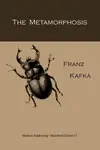 Die VerwandlungFranz Kafka · 1915Modern Library ClassicsCommunity rating: 4.19 out of 5
Gregor Samsa wakes to find himself transformed into a giant insect, and his family's care slowly turns to revulsion. Kafka's spare, unsettling parable of alienation, dependence, and conditional love — a cornerstone of modern literature.
- 2
 The Unbearable Lightness of BeingMilan Kundera · 1984Community rating: 3.93 out of 5
Set against the backdrop of the Prague Spring, this novel follows the entangled lives of a Czech surgeon, his wife, and his mistress. Through their complex relationships and infidelities, Milan Kundera examines profound philosophical questions about existence, freedom, and the nature of love. It's a story that balances tragedy and comedy, prompting readers to reflect on their own lives and choices.
- love triangle
- betrayal
- morally grey
- 3
 المحاكمةFranz Kafka · 1925Community rating: 3.83 out of 5
Josef K. wakes one morning to find himself arrested for an unspecified crime. As he navigates a bewildering and opaque legal system, he struggles to understand the charges against him and defend his innocence. This story explores themes of bureaucratic absurdity, guilt, and the individual's powerlessness against an overwhelming authority.
- mystery box
- fish out of water
- 4
 La lenteurMilan Kundera · 2006Community rating: 4.5 out of 5
In Milan Kundera's "Slowness," two tales of seduction, separated by centuries, unfold within the same French chateau. A young nobleman in the 18th century receives an unforgettable lesson in love, while a modern intellectual fumbles his chance at intimacy, distracted by his own ego. This novel playfully explores the art of seduction and the passage of time.
- dual timeline
- 5

- 6
 Too Loud a SolitudeBohumil Hrabal · 1992
For thirty-five years, Haňtá has worked compacting trash, but every evening, he secretly rescues books from the hydraulic press, bringing them home to fill his house. Though his boss calls him an idiot, Haňtá possesses a profound intellect, capable of quoting the Talmud, Hegel, and Lao-Tzu. This fable celebrates the enduring power of the written word through the eyes of an unlikely intellectual.
- fish out of water
- 7
 Válka s mlokyKarel Čapek · 1955
When intelligent giant salamanders are discovered and exploited, humanity's greed quickly leads to global conflict. Karel Čapek's classic satire presents a darkly humorous vision of civilization's potential for self-destruction. This story explores the consequences of unchecked ambition and the fragility of peace.
- survival
- 8
 How the World Really WorksVaclav Smil · 2022
Vaclav Smil's "How the World Really Works" cuts through the noise to explain the essential systems that power our planet and civilization. He focuses on the critical roles of energy, food, materials, and economics, offering a clear-eyed view of the realities that shape our past, present, and future. This book provides a grounded perspective on the complex global systems we all depend on.
- 9
 Energy in World HistoryVaclav Smil · 1994
Every human activity entails the conversion of energy. Changes in the fundamental sources of energy, and in the use of energy sources, are a basic dimension of the evolution of society. Our appreciation of the significance of these processes is essential to a fuller understanding of world history. Vaclav Smil offers a comprehensive look at the role of energy in world history, ranging from human muscle-power in foraging societies and animal-power in traditional farming to preindustrial hydraulic techniques and modern fossil-fueled civilization. The book combines a vast historical sweep with cross-cultural comparisons and is enhanced by illustrations and accessible quantitative material. Students and general readers alike will gain an understanding of energy's fundamental role in human progress. Smil illuminates the role played by various means of harnessing energy in different societies and provides new insights by explaining the impact and limitations of these fundamental physical inputs - whether it is in the cultivation of crops, smelting of metals, waging of war, or the mass production of goods. While examining the energetic foundations of historical changes, Energy in World History avoids simplistic, deterministic views of energy needs and recognizes the complex interplay of physical and social realities.
- 10
 Les Dernières DéessesKateřina Tučková · 2012
In the Czech Republic, Dora Idesová inherits a legacy of healers known as 'goddesses,' women who wielded love and curses. Growing up, she dismissed these tales until her studies revealed the dark history of witchcraft trials and Nazi investigations tied to her village. Dora uncovers how these women were pawns in power struggles, forcing her to confront a tragic family destiny. This novel brilliantly blends history, folklore, and fiction to explore the hidden past of the White Carpathians.
- coming of age
- dual timeline
- quest
- 11
 R.U.R.Josef Čapek, Karel Čapek · 1961
First published in 1920, Karel Čapek's "R.U.R." is a seminal play that introduced the word 'robot' to the world. It examines the societal implications of artificial beings designed for labor, who eventually gain sentience and rebel against their creators. This work serves as a cautionary tale about unchecked technological progress and the essence of what it means to be human.
- betrayal
- 12
 Przygody Dobrego Wojaka SzwejkaJaroslav Hašek · 2009
 - 13
 Freedom from FearAung San Suu Kyi, Václav Havel, Desmond M. Tutu · 1991
 - 14
 Trenes rigurosamente vigiladosBohumil Hrabal, Fernando de Valenzuela, Monika Zgustova · 1965
 - 15
 Disturbing the Peace A Conversation with Karel HuizdalaVáclav Havel · 1990
An intimate history of Czechoslovakia under communism; a meditation on the social and political role of art, and a triumphant statement of the values underlying all the recent revolutions in Central and Eastern Europe.