Stuart J. Russell
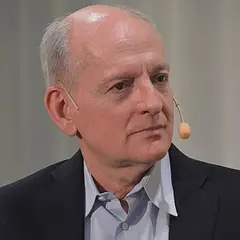
Stuart J. Russell
b. 1962- Books
- 4
- Followers
- 0
About
Stuart J. Russell is a British computer scientist and Professor of Computer Science at the University of California, Berkeley, where he holds the Smith-Zadeh Chair in Engineering. He earned a first-class degree in physics from Oxford in 1982 and a PhD in computer science from Stanford in 1986, then joined the Berkeley faculty.
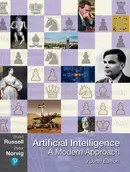
With Peter Norvig, he wrote "Artificial Intelligence: A Modern Approach," the standard textbook of the field, used in more than 1,500 universities across 135 countries. In 2016 he founded Berkeley's Center for Human-Compatible Artificial Intelligence, which he directs, to research how AI systems can be built to remain reliably beneficial to people.
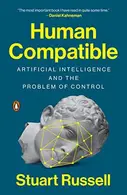
His 2019 book "Human Compatible" makes that case for a general audience, arguing that AI should be designed around uncertainty about human preferences rather than fixed objectives.
Russell has also been a leading voice against lethal autonomous weapons: his work with the Future of Life Institute on the 2017 short film "Slaughterbots" was screened at the United Nations and helped push the issue onto the international agenda.
In 2021 he delivered the BBC's Reith Lectures, "Living with Artificial Intelligence," and was appointed OBE for services to AI research; he was elected a Fellow of the Royal Society in 2025.
Top genres
Also known as
Links
Featured works

Authors in the same genres


Frequently asked questions
Stuart J. Russell is widely recognized for his foundational work in artificial intelligence, particularly his co-authorship of "Artificial Intelligence: A Modern Approach," which is a standard textbook in the field. He is also known for his research on the long-term future of AI and its societal implications.
"Human Compatible" explores the critical challenge of designing AI systems that are provably beneficial to humanity. It addresses the control problem in AI, arguing for a new direction in AI research focused on aligning AI goals with human values.
Stuart J. Russell is a recipient of the IJCAI Computers and Thought Award and was inducted into the California Hall of Fame. He is also a Fellow of the American Association for Artificial Intelligence (AAAI) and the Association for Computing Machinery (ACM).
Stuart J. Russell is famously known for his long-standing collaboration with Peter Norvig, with whom he co-authored the seminal textbook "Artificial Intelligence: A Modern Approach."
He founded the center at UC Berkeley in 2016 to research how AI systems can be built to remain reliably beneficial to people. Its work centers on value alignment — training systems to act on uncertain, observed human preferences rather than fixed, hand-coded objectives.
Working with the Future of Life Institute, he helped produce the 2017 short film warning about autonomous weapons. It was screened at a United Nations Convention on Certain Conventional Weapons meeting in Geneva and drew millions of views online, helping bring the lethal-autonomous-weapons debate into public view.
Yes — he delivered the BBC's 2021 Reith Lectures, "Living with Artificial Intelligence," a four-part series titled "The Biggest Event in Human History," "AI in Warfare," "AI in the Economy," and "AI: A Future for Humans."
He was appointed OBE in 2021 for services to AI research, and was elected a Fellow of the Royal Society in 2025.
The textbook he co-wrote with Peter Norvig is used in more than 1,500 universities across 135 countries, making it the standard reference text for teaching the field.
He earned a first-class physics degree from Oxford in 1982, then went to Stanford for a PhD in computer science, completing his dissertation on analogical and inductive reasoning under Michael Genesereth in 1986.