E
Eric H. Wefald
Eric H. Wefald is the author of Do the Right Thing. He writes fiction that focuses on ethical choices and human behavior.
Do the right thing
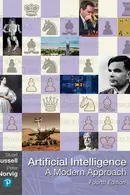
Written with Eric Wefald and published in 1991, Do the Right Thing: Studies in Limited Rationality challenges a basic assumption behind most AI research of its time: that rational behavior means finding the objectively best decision, regardless of how long that takes to compute. Russell and Wefald argue instead that a genuinely intelligent system operating in the real world has to reason about its own reasoning, deciding not just what to do but how much further thought a decision is worth, given that computation itself takes time. This idea, bounded optimality, treats an agent's behavior over its whole run as the thing to optimize, rather than judging each decision in isolation. The book develops the theory of this kind of rational metareasoning and tests it in concrete settings, including game-tree search and real-time problem solving. Written a decade before Russell's textbook with Peter Norvig became standard reading, it remains a foundational text on bounded rationality in AI, an idea that has only grown more relevant as computational cost has become a central constraint on real systems.
It's the idea that a rational agent should be judged by how well it uses its limited time and computing power, not by whether it finds the mathematically perfect answer to every decision. This 1991 book is one of the foundational texts making that argument, and the concept it introduces — rational metareasoning, or reasoning about how much to reason — has become a standard reference point in AI research on resource-limited decision-making.
No — this book predates AIMA by four years and stands on its own as a focused academic monograph on one specific problem, bounded rationality, rather than a survey of the field.