Friedrich Nietzsche
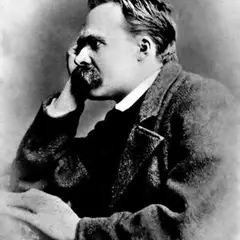
Friedrich Nietzsche
15 October 1844 – 25 August 1900- Books
- 28
- Followers
- 1
About
Friedrich Wilhelm Nietzsche (1844–1900) was a German philosopher and writer who began as a classical philologist and became a professor at the University of Basel at 24. Poor health forced him to resign in 1879, after which he wrote as an independent author while moving between Switzerland, Italy and southern France.
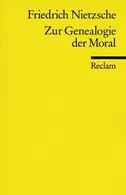
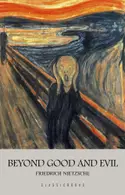
His work includes The Birth of Tragedy, Thus Spoke Zarathustra, Beyond Good and Evil and On the Genealogy of Morals, and deals with the critique of Christian morality, perspectivism, the death of God, the Übermensch and eternal return.
He suffered a mental collapse in Turin in 1889 and spent his last years in the care of his mother and then his sister, dying in Weimar in 1900.
Top genres
Also known as
Links
Featured works



Authors in the same genres


Frequently asked questions
Friedrich Nietzsche is widely recognized for his critiques of traditional morality, religion, and philosophy, particularly his concepts of the "will to power," the "Übermensch," and eternal recurrence. His work significantly influenced 20th-century philosophy, literature, and political thought.
For readers new to Nietzsche, "Thus Spoke Zarathustra" is often recommended as a foundational text, though its poetic and aphoristic style can be challenging. Alternatively, "Beyond Good and Evil" or "On the Genealogy of Morality" offer more direct philosophical arguments and are excellent entry points.
Nietzsche's writing is characterized by its aphoristic style, poetic language, and use of metaphor, often employing a polemical and provocative tone. He frequently uses rhetorical questions and dramatic pronouncements to engage the reader and challenge conventional thinking.