Most Read Science & Nature Books
Most Read Science & Nature Books
These are the Science & Nature books most read by Seekquel members, ranked by real reading activity across 22 titles, not scraped popularity.
Based on Seekquel member reading activity. Updated weekly.
- 1
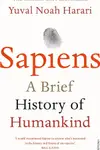 Sapiens: A Brief History of HumankindYuval Noah Harari · 2011Homo #1Community rating: 4.14 out of 5
Harari's account of how Homo sapiens rose from an unremarkable ape to the dominant species on Earth, tracing the cognitive, agricultural, and scientific revolutions that shaped human societies.
- 2
 Into Thin AirJon Krakauer · 1997Community rating: 4.25 out of 5
In 1996, journalist Jon Krakauer joined a climbing expedition on Mount Everest, a journey that tragically became the deadliest in the mountain's history. Krakauer details the extreme conditions and harrowing events that unfolded on the treacherous slopes. This account explores the immense physical dangers and the powerful human drive that leads people to face such extreme risks.
- survival
- quest
- 3
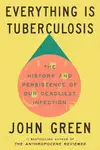 Everything Is TuberculosisJohn Green · 2025Community rating: 3.98 out of 5
John Green, known for his advocacy in global healthcare, shares a deeply human story about the fight against tuberculosis. Through the personal journey of a young patient named Henry in Sierra Leone, Green explores the history of the disease, its connection to poverty and injustice, and the ongoing efforts to combat it. This book highlights the critical need for increased access to treatment and awareness of healthcare inequities.
- 4
 The Body Keeps the ScoreBessel van der Kolk · 2014Community rating: 3.93 out of 5
Trauma is not just an event that took place sometime in the past; it is also the imprint left by that experience on mind, brain and body. Drawing on more than three decades of work with combat veterans, abused children, and survivors of assault and disaster, Dr. Bessel van der Kolk shows how trauma literally reshapes both body and brain, compromising sufferers' capacities for pleasure, engagement, self-control and trust. Blending clinical case studies with cutting-edge neuroscience, van der Kolk explains why traumatized people are haunted by intolerable sensations and emotions long after the danger has passed, and why talk therapy alone is often not enough. He then explores a range of treatments — from EMDR and neurofeedback to yoga, theatre, and mindfulness — that can help the brain to "rewire" itself and reactivate the innate capacity for healing. The Body Keeps the Score is a landmark work on the science of trauma and recovery, arguing with clarity and compassion that by understanding how trauma lives in the body, we can find genuine paths back to wholeness.
- 5
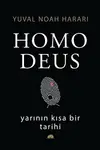 Homo Deus: A History of TomorrowYuval Noah Harari · 2015Homo #2Community rating: 4.14 out of 5
Having charted humanity's rise in Sapiens, Yuval Noah Harari turns from the past to the future. For most of history, humans struggled against famine, plague, and war; now, he argues, we have largely brought these ancient scourges under control and are setting ourselves new goals—immortality, bliss, and a god-like power to engineer life itself. Homo Deus asks what happens to a species that has run out of things to conquer except its own nature. Drawing on history, biology, and the study of intelligence, Harari examines how liberalism, humanism, and free will may give way to new creeds built on data and algorithms, and how biotechnology and artificial intelligence could split humanity or render most of it economically and politically irrelevant. Provocative and wide-ranging, this bestselling work of big-picture nonfiction is less a prediction than a set of urgent questions about where our newfound powers are taking us—and who will be left behind.
- 6
 The Immortal Life of Henrietta LacksRebecca Skloot · 2010Community rating: 4.06 out of 5
This book tells the incredible true story of Henrietta Lacks, a poor black woman whose cells were taken without her knowledge in 1951. These cells, known as HeLa, became one of the most important tools in medicine, vital for developing the polio vaccine and countless other breakthroughs. Yet, Henrietta's family remained unaware of her contribution and its impact for decades, living in poverty while her cells were bought and sold worldwide.
- morally grey
- sacrifice
- 7
 What If?Randall Munroe · 2014What If? (Randall Munroe) #1Community rating: 3.88 out of 5
What if you tried to hit a baseball at near light speed? Or what if humanity faced a robot apocalypse? Randall Munroe, the creator of xkcd, uses science and humor to answer these wild questions. He explores bizarre 'what ifs' with hilarious, often explosive, results.
- 8
 A Brief History of TimeStephen Hawking · 1988Community rating: 4.16 out of 5
Stephen Hawking's landmark work of popular science explains the universe in plain language: where it came from, how it works, and where it may be going. From the Big Bang and the nature of space and time to black holes, the uncertainty principle, and the search for a single theory of everything, Hawking makes the deepest questions of modern physics accessible to readers with no scientific background.
- 9
 A Short History of Nearly EverythingBill Bryson · 2003Community rating: 4.37 out of 5
Bill Bryson sets out to answer the biggest questions there are: how the universe began, how the Earth was formed, how we came to know its age, what everything is made of, and how life — and eventually we — arose from it all. Rather than simply reciting facts, he tracks down the answers and the often eccentric, quarrelsome, and brilliant scientists who found them. Ranging from the Big Bang to quantum physics, from the depths of geologic time to the fragility of life on a small blue planet, Bryson translates dense and forbidding science into vivid, funny, endlessly curious storytelling. Along the way he conveys just how improbable, precarious, and astonishing our existence really is. A hugely popular work of science writing, it turns the history of nearly everything into an accessible and genuinely delightful adventure.
- 10
 Guns, Germs, and SteelJared M. Diamond · 1998Civilizations Rise and Fall #1Community rating: 4.18 out of 5
Jared Diamond argues that the broad sweep of history was shaped by geography and biology — not race — tracing how access to domesticable crops and animals gave some societies guns, germs, and steel. A Pulitzer-winning synthesis of world history.
- 11
 The Radium GirlsKate Moore · 2016Community rating: 4.3 out of 5
During and after World War I, hundreds of young women were hired to paint luminous watch dials with radium paint, told repeatedly that it was harmless. They were taught to point their brushes with their lips, swallowing a trace of radium hundreds of times a day. Years later, as they began dying of a disease no one recognized, a small group of them, led by Grace Fryer, took on the companies that had known the risk and denied it.
- betrayal
- sacrifice
- 12
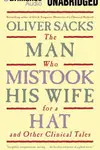 The Man Who Mistook His Wife for a HatOliver Sacks · 1985Community rating: 4.09 out of 5
Oliver Sacks, a practicing neurologist, gathers 24 case histories of patients living with unusual damage to the brain: a music teacher who can no longer recognize faces or ordinary objects by sight, a former sailor stuck in 1945 by amnesia, twin savants who trade six-digit primes like conversation. Sacks writes each case as a story, not a chart, and asks what these conditions show about memory, perception and identity in anyone.
- 13
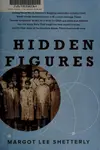 Hidden FiguresMargot Lee Shetterly · 2016Community rating: 3.97 out of 5
This book tells the incredible true story of the African American women who were the brains behind America's launch into space. Despite facing segregation and discrimination, these brilliant mathematicians, known as "human computers," performed the complex calculations essential for NASA's early missions. Their vital contributions helped make the Space Race a success, proving that talent and determination can overcome any barrier.
- found family
- 14
 Braiding SweetgrassRobin Wall Kimmerer · 2020Community rating: 3.97 out of 5
Robin Wall Kimmerer, a botanist and member of the Citizen Potawatomi Nation, offers a unique perspective on the natural world. She skillfully combines scientific knowledge with Indigenous wisdom to show the profound connection between people and the living earth. Learn how paying attention to the messages from plants and animals can guide us toward a more harmonious and giving existence.
- 15
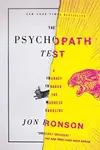 The Psychopath TestJon Ronson · 2011Community rating: 3.97 out of 5
Jon Ronson, a journalist, investigates the world of psychopaths and the professionals who diagnose them. His journey takes him from boardrooms to prisons, as he learns to identify these individuals and questions the very nature of sanity. Ronson uncovers a potential hoax, blurring the lines between normal and abnormal.
- 16
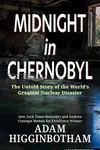 Midnight in ChernobylAdam Higginbotham · 2019Community rating: 4.09 out of 5
This book provides a definitive account of the Chernobyl disaster, moving beyond myths to reveal the human stories behind the catastrophe. Journalist Adam Higginbotham spent over a decade interviewing survivors and sifting through declassified documents to reconstruct the events of April 26, 1986. It's a harrowing look at how secrecy and misinformation compounded one of the 20th century's worst technological failures.
- survival
- betrayal
- 17
 Astrophysics for People in a HurryMaría del Carmen Román de la Peña, Neil deGrasse Tyson, Sandra Martha Dolinsky · 2017Community rating: 3.72 out of 5
Curious about the cosmos but short on time? Neil deGrasse Tyson makes understanding black holes, dark matter, and the Big Bang simple in this quick guide. It's the perfect way to get up to speed on the universe's biggest questions.
- 18
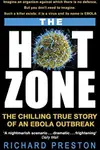 The Hot ZoneRichard Preston · 1995Community rating: 4.22 out of 5
Richard Preston explores the terrifying world of deadly viruses, including Ebola, tracing their origins and impact. This non-fiction account examines the science of these pathogens and the stories of those affected. It offers a chilling look at the potential for global pandemics.
- survival
- quest
- 19
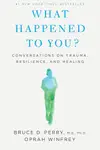 What Happened to You?Bruce D. Perry, Oprah Winfrey · 2021Community rating: 4.09 out of 5
Psychiatrist Bruce D. Perry and Oprah Winfrey reframe how we think about adversity and behaviour: not "What's wrong with you?" but "What happened to you?" Through candid conversations, they explain how early trauma and stress physically shape the developing brain and echo into adult life — and chart a hopeful, science-grounded path toward resilience and healing. A bestselling, widely used framework for trauma-informed understanding.
- 20
 MusicophiliaOliver Sacks · 2007Community rating: 3.97 out of 5
Oliver Sacks, a renowned neurologist, invites you into the fascinating world of music and the human brain. Through the stories of individuals with unique relationships to music, he explores its power to affect memory, emotion, and even physical capabilities. Discover how music can profoundly shape and heal our lives.
- 21
 A Mind for NumbersBarbara A. Oakley · 2014Community rating: 3.96 out of 5
Feeling lost in math or science? This book offers practical advice to help you learn difficult subjects more effectively. Author Barbara Oakley shares her personal journey from struggling student to successful engineer, revealing techniques that anyone can use to improve their understanding of technical topics and approach problems with new confidence.
- 22
 Free WillSam Harris · 2012Community rating: 3.95 out of 5
Sam Harris, a neuroscientist, challenges the common understanding of free will in his 2012 book. He presents a case for free will being an illusion, yet argues this doesn't diminish the value of morality or personal freedom. Harris suggests that accepting this perspective can lead to a significant shift in how we view life's core questions.