Books from Palestine
Books from Palestine
Based on Seekquel member reading activity. Updated weekly.
- 1
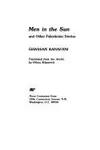 al- Rajul taḥta al-shamsGhassan Kanafani, Hasan Yahya · 1980Community rating: 4.25 out of 5
First published in 1962, Ghassan Kanafani's landmark short novel follows three Palestinian refugees of different generations who pay to be smuggled across the desert into Kuwait, hidden inside the empty water tank of a lorry. As the truck crawls through border checkpoints under a brutal sun, the tank becomes both a vessel of hope and a trap. A spare, devastating cornerstone of modern Palestinian literature about exile, powerlessness, and lives spent chasing an escape.
- 2
 أرض البرتقال الحزينGhassan Kanafani · 1980Community rating: 4.25 out of 5
Ghassan Kanafani's early short-story collection, first published in 1962, drawn from the Palestinian experience of dispossession after 1948. In its title story, a family flees their home during the war, remembered by a child narrator who only later understands what was lost. Across the collection, the abandoned orange groves become a symbol of exile, memory, and the ache of return — a foundational work of modern Palestinian literature.
- 3
 قناع بلون السماءBasem Khandaqji · 2023Community rating: 4 out of 5
Winner of the 2024 International Prize for Arabic Fiction. Nur, a young Palestinian archaeology graduate from a refugee camp near Ramallah, finds a blue Israeli ID card and starts to wear it like a mask, adopting an alter ego named "Ur" to move through a world normally closed to him and join a dig near Megiddo. A layered meditation on identity as performance and the blurred line between self and enemy.
- secret identity
- 4
 Against the Loveless WorldSusan Abulhawa · 2020Community rating: 5 out of 5
From a solitary Israeli cell she calls 'the Cube,' Nahr recounts her life: born to Palestinian refugees in Kuwait, pushed by hardship into hidden escort work, then scattered by war to Jordan and finally to Palestine — where she falls in love and is drawn into resistance. Susan Abulhawa's fierce, award-winning novel of exile, survival, and defiance.
- dual timeline
- 5
 رأيت رام اللهMourid Barghouti · 1997Community rating: 5 out of 5
Mourid Barghouti's award-winning memoir traces his 1996 return to Ramallah after thirty years of forced exile following the 1967 war. Crossing back over the Allenby Bridge, he confronts a homeland transformed by occupation and reckons with family, memory, and the meaning of home. Winner of the 1997 Naguib Mahfouz Medal for Literature.
- quest
- 6
 The blue between sky and waterSusan Abulhawa · 2015Community rating: 4 out of 5
Forced from their village in 1948, only Nazmiyeh and her brother survive the road to Gaza, where she builds a family against the odds. Decades later, her brother's American-born granddaughter, Nur, is drawn back across the world to the family she never knew. Susan Abulhawa's luminous novel braids three generations of Palestinian women with folklore and a touch of the mystical.
- family saga
- 7U
 Un détail mineurAdania Shibli · 2017Community rating: 3 out of 5
De l'autrice palestinienne Adania Shibli, un roman en deux temps. En 1949, dans le désert du Néguev, des soldats israéliens commettent un crime contre une jeune Bédouine. Des décennies plus tard, une femme de Ramallah, troublée par un détail qui la relie à cette histoire, tente d'enquêter à travers checkpoints et archives. Un récit bref et incisif sur la mémoire, l'effacement et la violence de l'Histoire.
- dual timeline
- 8
 Salt HousesHala Alyan · 2017Community rating: 4 out of 5
A multi-generational saga of a Palestinian family uprooted by war, displacement, and loss across decades — from their ancestral home in Jaffa through Jordan, Kuwait, Lebanon, and beyond. Told through shifting perspectives over fifty years, it traces how each generation carries the scars of what came before while trying to build something new.
- 9
 الثقافة والمقاومةDavid Barsamian, Edward W. Said, إدوارد سعيد, علاء الدين أبو زينة · 2003Community rating: 5 out of 5
In this series of interviews, Edward Said discusses the intersection of cultural identity and political struggle. He offers a critical look at the Palestinian-Israeli conflict and the role of the intellectual in challenging state power. These conversations provide a clear entry point into his ideas on justice and resistance.
- 10
 ورد أقلMahmoud Darwish, محمود درويش · 1986Community rating: 5 out of 5
In this 1986 collection, Mahmoud Darwish uses brief, rhythmic poems to explore the weight of exile and the persistence of memory. The verses strip away excess to focus on the daily reality of displacement and the quiet hope found in the Palestinian landscape. It is a lean, sharp work that captures the tension between personal identity and national struggle.
- 11
 OrientalismEdward W. Said · 1978
Edward W. Said's "Orientalism" examines the Western world's historical and cultural representations of "The East," encompassing societies and peoples of Asia, North Africa, and the Middle East. Said argues that Western scholarship on the Eastern world is deeply intertwined with the imperialist powers that produced it, making much Orientalist work inherently political. The book explores how these romanticized views have been internalized by ruling elites in the Middle East and influenced fields like literary theory and post-colonial studies.
- 12
 We are All Equally Far from LoveAdania Shibli, Paul Starkey · 2004Community rating: 3 out of 5
A young woman is tasked by her boss to write a letter, a seemingly simple request that soon spirals into a deeper exploration of communication, distance, and the elusive nature of connection. Through her efforts, the narrative delves into the complexities of human relationships and the unspoken gaps between people.
- epistolary
- 13
 لا تعتذر عما فعلتMahmoud Darwish, محمود درويش · 2004
Mahmoud Darwish reflects on identity, memory, and the passage of time in this late collection of poetry. He uses the image of a childhood home and his mother's gaze to explore the weight of the past and the inevitability of change. The verses offer a quiet meditation on personal history and the scars left by displacement.
- 14
 Arsonists' CityHala Alyan · 2021
The Balikci family, once prominent in Beirut, has scattered across the globe. When their patriarch, Mazna, insists on selling the ancestral home, the family must reunite in Lebanon, forcing them to confront long-buried secrets and the complex legacy of their past. As they navigate their fractured relationships and the echoes of a civil war, each family member grapples with their identity and belonging.
- family saga
- dual timeline
- 15
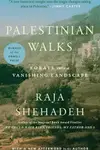 Palestinian Walks Forays into a Vanishing LandscapeRaja Shehadeh · 2008
“A rare historical insight into the tragic changes taking place in Palestine.” —Jimmy Carter From one of Palestine’s leading writers, a lyrical, elegiac account of one man’s wanderings through the landscape he loves—once pristine, now forever changed by settlements and walls—updated with a new afterword by the author. “I often come to walk in these hills,” I said to the man who was doing all the talking and seemed to be the commander. “In fact I was once here with my wife, it was 1999, and some of your soldiers shot at us.” “It was over on that side,” the soldier pointed out. “I was there,” he said, smiling. When Raja Shehadeh first started hill walking in Palestine, in the late 1970s, he was not aware that he was traveling through a vanishing landscape. In recent years, his hikes have become less than bucolic and sometimes downright dangerous. That is because his home is Ramallah, on the Palestinian West Bank, and the landscape he traverses is now the site of a tense standoff between his fellow Palestinians and settlers newly arrived from Israel. In this original and evocative book, we accompany Raja on six walks taken between 1978 and 2006. The earlier forays are peaceful affairs, allowing our guide to meditate at length on the character of his native land, a terrain of olive trees on terraced hillsides, luxuriant valleys carved by sacred springs, carpets of wild iris and hyacinth and ancient monasteries built more than a thousand years ago. Shehadeh's love for this magical place saturates his renderings of its history and topography. But latterly, as seemingly endless concrete is poured to build settlements and their surrounding walls, he finds the old trails are now impassable and the countryside he once traversed freely has become contested ground. He is harassed by Israeli border patrols, watches in terror as a young hiking companion picks up an unexploded missile and even, on one occasion when accompanied by his wife, comes under prolonged gunfire. Amid the many and varied tragedies of the Middle East, the loss of a simple pleasure such as the ability to roam the countryside at will may seem a minor matter. But in Palestinian Walks, Raja Shehadeh's elegy for his lost footpaths becomes a heartbreaking metaphor for the deprivations of an entire people estranged from their land.
- 16
 What Does Israel Fear From Palestine?Raja Shehadeh · 2024
A poignant, incisive meditation on Israel’s longstanding rejection of peace, and what the war on Gaza means for Palestinian and Israeli futures. When apartheid in South Africa ended in 1994, dismantled by internal activism and global pressure, why did Israel continue to pursue its own apartheid policies against Palestinians? In keeping with a history of antagonism, the Israeli state accelerated the establishment of settlements in the Occupied Territories as extreme right-wing voices gained prominence in government, with comparatively little international backlash. Condensing this complex history into a lucid essay, Raja Shehadeh examines the many lost opportunities to promote a lasting peace and equality between Israelis and Palestinians. Since the creation of Israel in 1948, known to Palestinians as the Nakba, or catastrophe, each side’s perception of events has strongly diverged. What can this discrepancy tell us about Israel’s undermining of a two-state solution? And will the current genocide in Gaza finally mark a shift in the world’s response? With graceful, haunting prose, Shehadeh offers insights into a defining conflict that could yet be resolved.