Tom Wolfe
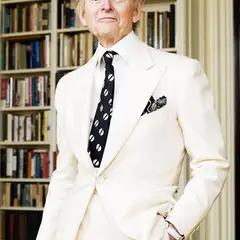
Tom Wolfe
1931 – 2018- Books
- 19
- Followers
- 0
About
Tom Wolfe was born and raised in Richmond, Virginia. He was educated at Washington and Lee (B.A., 1951) and Yale (Ph.D., American Studies, 1957) universities. In December 1956, he took a job as a reporter on the Springfield (Massachusetts) Union. This was the beginning of a ten-year newspaper career, most of it spent as a general assignment reporter. For six months in 1960 he served as The Washington Post's Latin American correspondent and won the Washington Newspaper Guild's foreign news prize for his coverage of Cuba.
In 1962 he became a reporter for the New York Herald-Tribune and, in addition, one of the two staff writers (Jimmy Breslin was the other) of New York magazine, which began as the Herald-Tribune's Sunday supplement.
While still a daily reporter for the Herald-Tribune, he completed his first book, a collection of articles about the flamboyant Sixties written for New York and Esquire and published in 1965 by Farrar, Straus, and Giroux as The Kandy-Kolored Tangerine-Flake Streamline Baby.
The book became a bestseller and established Wolfe as a leading figure in the literary experiments in nonfiction that became known as New Journalism.
In 1968 he published two bestsellers on the same day: The Pump House Gang, made up of more articles about life in the sixties, and The Electric Kool-Aid Acid Test, a nonfiction story of the hippie era. In 1970 he published Radical Chic & Mau-Mauing the Flak Catchers, a highly controversial book about racial friction in the United States.
The first section was a detailed account of a party Leonard Bernstein gave for the Black Panthers in his Park Avenue duplex, and the second portrayed the inner workings of the government's poverty program.
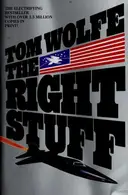
In 1979 Wolfe completed a book he had been at work on for more than six years, an account of the rocket airplane experiments of the post World War II era and the early space program focusing upon the psychology of the rocket pilots and the astronauts and the competition between them. The Right Stuff became a bestseller and won the American Book Award for nonfiction, the National Institute of Arts and Letters Harold Vursell Award for prose style, and the Columbia Journalism Award.
"The right stuff," "radical chic," and "the Me Decade" (sometimes altered to "the Me Generation") all became popular phrases, but Wolfe seems proudest of "good ol' boy," which he introduced to the written language in a 1964 article in Esquire about Junior Johnson, the North Carolina stock car racing driver, which was called "The Last American Hero."
Top genres
Also known as
Featured works


Authors in the same genres


Frequently asked questions
Tom Wolfe is widely recognized as a pioneer of New Journalism, a style that blended literary techniques with journalistic reporting. He is particularly celebrated for his incisive social commentary and his distinctive, often satirical, writing voice.
Several of Tom Wolfe's novels have been adapted for the screen. "The Bonfire of the Vanities" was made into a film, and "The Right Stuff" also received a notable film adaptation.
For readers new to Tom Wolfe, "The Electric Kool-Aid Acid Test" offers an excellent introduction to his New Journalism style and his ability to capture cultural movements. Alternatively, "The Bonfire of the Vanities" provides a strong entry point into his satirical fiction.