Skip to content

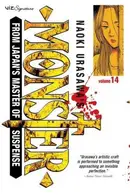
Naoki Urasawa's Monster, Volume 3: 511 Kinderheim

511 Kinderheim
Pages
204
Published
1996
Language
English

Synopsis

Tenma's on the run! A wanted man, he's the prime suspect for the serial killings he's trying to stop. But he still manages to edge closer to the truth about Johan's mysterious past, and everything seems to point to a now defunct institution of East Berlin - an infamous "experimental" orphanage called 511 Kinderheim!

Vibe

About the author

N
Naoki Urasawa

Naoki Urasawa (born January 2, 1960, in Fuchū, Tokyo) is a Japanese manga artist. A graduate of Meisei University with a degree in economics, he debuted professionally in 1983 and has since created several internationally acclaimed series, including the psychological thriller Monster, the science-fiction mystery 20th Century Boys, the Astro Boy reimagining Pluto: Urasawa x Tezuka, and Billy Bat. His work is known for dense, multi-layered narratives and mastery of suspense. He has won the Shogaku...

Characters

Kenzo TenmaProtagonist

A brilliant surgeon and former Dr. of the Year who becomes a wanted man after saving Johan's life instead of another patient, now hunting the truth behind his decision.

All characters in Naoki Urasawa's Monster, Volume 3: 511 Kinderheim

Frequently asked questions

  • Is this series connected to any other works by Naoki Urasawa?

    While the story is a self-contained narrative, it shares a distinct thematic and structural DNA with the author's other major serial works, such as 20th Century Boys and Pluto. Readers familiar with his bibliography will recognize a consistent approach to weaving complex, multi-generational conspiracies across diverse international settings.

  • Are there any adaptations of this story I should know about?

    The manga was adapted into a 74-episode anime series produced by Studio Madhouse, which is widely regarded for its high level of faithfulness to the original source material. Several attempts to produce a live-action adaptation in Hollywood have been initiated over the years, but none have successfully moved into production.

  • How much of the story is based on real history?

    The narrative is a work of fiction, but it is meticulously grounded in the historical reality of post-Cold War Europe, specifically drawing on the social and political climate of Germany and the Czech Republic during the 1990s. The author incorporated extensive research into the era's architecture, cultural tensions, and the lingering effects of historical regimes to provide an authentic backdrop for the events.