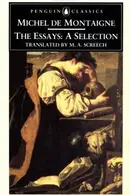
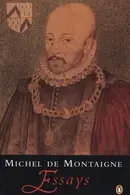
Montaigne's Essays were written and revised over roughly two decades in the late sixteenth century, as the author withdrew to his family estate near Bordeaux and began setting down his thoughts on subjects ranging from cannibalism and friendship to idleness, cruelty, and the fear of death. He called the form "essais" — attempts or trials — and largely invented it: rather than arguing a fixed thesis, each essay circles a topic, doubles back, contradicts itself, and treats the author's own uncertain, changing self as the most reliable evidence available.
Montaigne wrote against the background of France's Wars of Religion, and much of the collection's skepticism — its suspicion of dogma, its tolerance for other cultures and beliefs, its insistence on judging things by direct experience rather than inherited authority — responds directly to that violence. His famous question, "Que sçay-je?" ("What do I know?"), is less a philosophical position than a working method: doubt as the starting point for honest thought.
The Essays have no single narrative arc and are traditionally read in pieces rather than start to finish; this edition presents a curated Turkish selection of the full French text, which itself runs to over a hundred individual pieces across three books.