Thomas PikettyNon-Fiction · Politics & Society·b. 1971
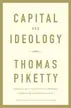
Capital and Ideology
Thomas Piketty takes up a question about economics that most people treat as settled: why some societies tolerate extreme inequality. His answer is that the economy is no natural fact. Markets, profits and capital are historical constructs, and they depend on choices people and groups have made.
The book is non-fiction, a work of economic and political history that reaches across roughly the last thousand years. Piketty examines the ideas that have kept inequality in place, and the clashes between social groups that produced slavery, serfdom, colonialism, communism and hypercapitalism. Those systems shaped the lives of billions.
His central claim runs against a common view. Human progress, he argues, has come mainly from the struggle for equality and education, and less from defending property rights or pursuing stability.
He ties the surge in inequality since the 1980s to several causes: a reaction against communism, ignorance, intellectual specialization, and a drift toward the politics of identity. He also finds the usual split of right and left too shallow to deal with the problem.
The final section turns to proposals. Piketty outlines a fairer economic system and argues for a new participatory socialism, built on equality, social property, education, and shared knowledge and power. It follows his earlier book on inequality, Capital in the Twenty-First Century, and suits readers who want a long historical argument with a policy case at the end.