
U
Ursula K. Le Guin
The Hainish Cycle
Ursula K. Le Guin's Hainish Cycle explores diverse societies across the galaxy. These stories examine cultural differences, political structures, and the search for understanding among various human and alien populations. Readers will find rich world-building and deep explorations of human nature.

Rocannon's World
The Hainish Cycle #1
Planet of Exile
The Hainish Cycle #2
City of Illusions
The Hainish Cycle #3
The Left Hand of Darkness
The Hainish Cycle #4
The Word for World is Forest
The Hainish Cycle #6
The Dispossessed: An Ambiguous Utopia
The Hainish Cycle #6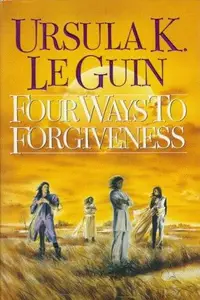
Four Ways to Forgiveness
The Hainish Cycle #7
The Telling
The Hainish Cycle #8The books in The Hainish Cycle can largely be read as standalone works, as they are set in a shared universe but do not follow a strict chronological narrative. Readers often start with "The Left Hand of Darkness" or "The Dispossessed" as they are foundational to the series' themes and world-building.
The Hainish Cycle is a collection of works set within a shared universe, but it is distinct from Le Guin's Earthsea series. While the Hainish stories explore common themes of anthropology, sociology, and politics, they do not directly cross over with the fantasy world of Earthsea.
While individual novels within The Hainish Cycle, such as "The Left Hand of Darkness," have been optioned for adaptation, there has not been a comprehensive film or television series adaptation of the entire Hainish Cycle.
The Hainish Cycle is notable for its deep exploration of anthropology, sociology, and political science through a science fiction lens, often focusing on cultural relativism and the complexities of communication. It frequently uses alien societies to reflect on human nature and societal structures without relying on traditional space opera tropes.