4.5/5 (7.86/10)
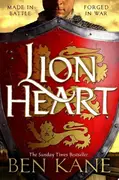
This is a very solid and realistic book. After the disappointment of Orm the Red, I'm glad to see that this one doesn't disappoint. The setting, the characters (both historical and fictional), the story, and the interactions are all very good and realistic. It's not as epic as you might expect from a fantasy book, but that's because it's not fantasy; it's historical fiction. If you take the time to read the author's notes at the end, right after finishing the story, you'll realize that the author has done field research on the actions, relationships, and personalities of the historical figures used in the story. And although there are things that the author acknowledges are undocumented or not well-known, and therefore he has speculated about how those parts might have been, it makes sense and is logical within the context of the events unfolding, so it feels fluid and doesn't clash at all with what is documented.
I thought it was a story told from a single point of view, featuring our fictional character Ferdia/Rufus, the son of a noble Irish family from North Leinster, given to the English as a hostage to prevent a revolution led by his father. But I was wrong. Later in the story, the author adds a second point of view, that of a historical figure for whom there is historical documentation: William Marshal, a knight in the service of Henry II of England and Anjou's eldest son, Henry (yes, father and son share the same name).
These two points of view allow us to see a clear contrast between several aspects. The first concerns the characters themselves. Ferdia, called Rufus because he has red hair (a common surname used in Ancient Rome) despite being a nobleman because his father is noble, is very young when he is taken hostage: he is only 19 years old. He is, or rather was before the story begins, idealistic and innocent regarding the harshness of the world. He had no battle experience beyond the basics; he had never been to war, had never killed another man, and had never suffered any hardship. This caused him to be more driven by his emotions at first. On the other hand, Marshal was already a seasoned knight. Having experienced war and worked hard to earn his just reward for serving the crown prince for so many years—a prince who, from what I now know, was rather unstable and easily manipulated by people with less than benevolent intentions than Marshal—the knight was more rational and introspective. He knew how to assess risks, how to control himself, and was able to analyze the consequences of actions, both his own and those of others.
Another point that highlights the contrast between these two perspectives is the factions they serve. Ferdia ends up in the service of Duke Richard, the second son of King Henry II of England and Anjou. The young man, despite considering the English his enemies for what they have done to his beloved Ireland and family, cannot help but feel admiration and love (in the purest, not romantic, sense of the word) for Richard and his new friends. Richard is a natural leader. Handsome, charismatic, brave, strong, intimidating, respectful, intelligent… The ideal version of a king. That's because we see him from Rufus's point of view, who admires him and desires his recognition. Adorable. Marshal shows what happens on the other side, on the side of King Henry II and his other children. How they react to Richard's actions and how they affect his family, for better and for worse. From his perspective, we see a more human, less idealized Richard. Now it is Richard who behaves before Marshal like a child who admires a legend (as Rufus does with Richard himself). Richard admires Marshal. Everyone admires Marshal. Even the King himself. Even me. In my opinion—and this is just my own speculation—Richard behaves the way he does because he wants to be like Marshal.
And this brings me to my last point. While the book is very good, it needs to be read with some background knowledge. To fully understand and enjoy it, you need to know some history. You need to know about the conflicts that existed at that time between the Irish, the English, and the French. You need to know who the Saracens were and about the religious conflict between Christians and Muslims, and how the latter wanted to conquer the Jewel of Christendom, Constantinople, and the Holy Land, Jerusalem. While the book does explain some of this, it's minimal, which is why, if you already know it beforehand, you enjoy it much more. For example, I knew about certain conflicts and wars, but not about certain alliances.
The book is highly political, but not about contemporary politics; it focuses on the political climate of the time, specifically the conflicts between France and England. The author clearly shows how these alliances were formed, how long it actually took to create them, to prepare for a battle… It could be considered quite informative from a historical perspective. And that's why I enjoyed it so much.