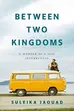


Suleika Jaouad understands something most of us spend lifetimes avoiding: the space between survival and living is a kingdom unto itself, a terrain that requires navigation, cartography, mourning. Between Two Kingdoms is not a cancer memoir pretending to be inspirational. It's a survival memoir admitting that survival is just the beginning.
The diagnosis arrives at 22. Acute myeloid leukemia. Thirty-five percent survival rate. The number hangs there—survival as coin flip, life as statistical improbability. Then 1,500 days of hospital beds, chemotherapy rounds that burn from inside out, a clinical trial, a bone marrow transplant. Jaouad documents all of it—not with the literary distance of someone looking back, but with the immediacy of living it, recording it for The New York Times column that would earn Emmy recognition.
But the book's architecture matters. The cancer narrative comprises maybe half the actual journey. The other half—the part people don't discuss because it doesn't fit recovery narratives—is what happens after doctors declare you cured. Jaouad walks out of the hospital and encounters a problem for which no protocol exists: she has no idea how to live. Her boyfriend has died during treatment. Her body has been ravaged. Her sense of self has been replaced by "cancer patient"—a role so consuming that removing it leaves vacancy.
The two kingdoms metaphor (borrowed from Susan Sontag) articulates this perfectly. There's the kingdom of the well—the world where people plan futures, pursue ambitions, assume continuity. Then there's the kingdom of the sick—ruled by medication schedules, appointments, the immediate requirement to survive another day. Jaouad occupies both simultaneously, belonging fully to neither, liminal and disoriented.
So she embarks on a 100-day, 15,000-mile road trip. Alone, mostly. Across America, collecting stories from other survivors, trying to reconstruct some version of self that isn't defined by illness. This isn't redemption arc. It's reconnaissance mission—slow, uncertain, sometimes backtracking.
What destroys you while reading this: Jaouad's honesty about abandonment. University friends who disappeared. The boyfriend's death during treatment. The estrangement from family members who couldn't handle her surviving them. She writes about the specific pain of people treating her as though she should be grateful to be alive, as though gratitude negates grief, as though survival should preclude complicated feelings.
The prose cuts clean. No sentimentality, no gratitude narratives, no false arc toward meaning-making. Instead: the texture of physical weakness after months of chemo, the strangeness of existing in a body that's familiar yet foreign, the particular loneliness of knowing you might die again (which would prove prophetic—her cancer returned in 2021, then again in 2024).
What also moves: the portraits of other survivors. The woman running ultra-marathons while carrying evidence of her illness in her body. The man whose cancer returned three times. The person learning to exist with permanent damage, permanent uncertainty. Jaouad collects these stories not as inspiration but as mirror—permission to exist in complexity, to acknowledge that survival and thriving aren't synonymous.
The road trip narrative could have felt cheap—wounded person travels America finding redemption. Instead, Jaouad presents herself as lost, directionless, occasionally irritable, trying to construct something resembling life from fragments. The construction doesn't arrive complete. The book ends without resolution—just the beginning of beginning again, which is more honest than any neat conclusion.[1][2][3][4]
Particularly powerful: her examination of identity. Who is Suleika without cancer? After spending four years defined by illness, that absence creates void. She's not "cancer survivor" but she's also not the person she was before—both kingdoms have altered her irrevocably. The work becomes integration rather than recovery—not returning to before but building something new from the debris.
The writing itself—spare, precise, capable of rendering microscopic emotional terrain—carries the weight of someone who learned early that language might be the only thing she could control when her body betrayed her. Each sentence earns its place.
Five stars because Between Two Kingdoms reframes survival not as triumph but as transformation, not as ending point but as beginning. It's a book for anyone who's lost something fundamental—not just health, but identity, future, the person they thought they'd become. Jaouad writes for people stuck between kingdoms, unable to return to before, unsure how to proceed forward. She offers not answers but accompaniment—the knowledge that others are lost in this space too, and that lost-ness is not failure but genuine terrain requiring navigation.
This is what surviving looks like: not overcome, not inspiring, not wrapped in gratitude, but raw and real and still becoming.

