Victor Klemperer

Victor Klemperer
9 October 1881 – 11 February 1960- Books
- 10
- Followers
- 0
About
Victor Klemperer (9 October 1881 – 11 February 1960) was a German philologist and diarist. His journals, published posthumously in Germany in 1995, detailed his life under the German Empire, the Weimar Republic, the fascist Third Reich, and the German Democratic Republic.
Three volumes of his diaries have been published in English translations: I Shall Bear Witness, To the Bitter End, and The Lesser Evil. The first two, which cover the period of the Third Reich, have become standard sources and have been extensively quoted. His book LTI – Lingua Tertii Imperii: Notizbuch eines Philologen, published in English as The Language of the Third Reich, examined how Nazi propaganda co-opted and corrupted German words and expressions.
Top genres
Non-Fiction Biography & Memoir History Judaism Politics & Society
Also known as
Featured works
Start here
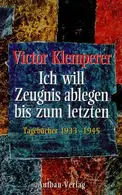
Ich will Zeugnis ablegen bis zum letzten
Victor Klemperer
The Diaries of Victor Klemperer
Munich 1919
Victor Klemperer
Langenscheidts Sprachfuhrer
Victor Klemperer

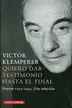
Quiero dar testimonio hasta el final- 2022
Victor Klemperer
The Diaries of Victor Klemperer
Cultura / El vell i el nou humanisme
Marc Jiménez Buzzi
Series

Authors in the same genres
S
E

L
T
M


J
Frequently asked questions
Victor Klemperer is primarily known for his diaries, which meticulously document his experiences as a Jewish academic living in Germany during the Nazi regime and the early years of the German Democratic Republic. These journals offer a unique and invaluable firsthand account of daily life and the insidious changes in language and society under totalitarian rule.
Yes, significant portions of Victor Klemperer's diaries have been translated into English. The volumes covering the Nazi period, titled "I Shall Bear Witness" and "To the Bitter End," are particularly well-regarded and widely available.
LTI – Lingua Tertii Imperii is Victor Klemperer's analytical work on the language of the Third Reich. It examines how the Nazi regime manipulated and corrupted the German language to control thought and propagate its ideology, drawing heavily on his observations from his diary entries.