Richard Dawkins

Richard Dawkins
Author • Narrator • Editorb. 26 March 1941- Books
- 21
- Followers
- 0
About
Clinton Richard Dawkins, FRS, FRSL is a British ethologist, evolutionary biologist and popular science author. He was formerly Professor for Public Understanding of Science at Oxford and was a fellow of New College, Oxford.
Dawkins came to prominence with his 1976 book The Selfish Gene, which popularised the gene-centred view of evolution and introduced the term meme. In 1982, he made a widely cited contribution to evolutionary biology with the concept, presented in his book The Extended Phenotype, that the phenotypic effects of a gene are not necessarily limited to an organism's body, but can stretch far into the environment, including the bodies of other organisms.
Dawkins is well known for his candid criticism of creationism and intelligent design. In his 1986 book The Blind Watchmaker, he argued against the watchmaker analogy, an argument for the existence of a supernatural creator based upon the complexity of living organisms. Instead, he described evolutionary processes as analogous to a blind watchmaker. He has since written several popular science books, and makes regular television and radio appearances, predominantly discussing these topics.
Top genres
Non-Fiction Science Philosophy Religion Nature
Also known as
Featured works


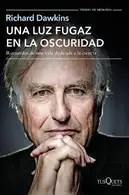

Series
Authors in the same genres


V
B
J

T
Frequently asked questions
Richard Dawkins is widely recognized for his work in popularizing the gene-centered view of evolution, particularly through his influential book The Selfish Gene. He is also a prominent advocate for atheism and scientific rationalism.
For readers new to his work, The Selfish Gene is an excellent starting point as it introduces many of the core concepts and ideas that he explores in his later writings. Another accessible entry is The God Delusion, which outlines his arguments regarding religion.
Richard Dawkins has received numerous accolades, including the Royal Society of Literature Award, the International Cosmos Prize, and the Kistler Prize, recognizing his contributions to science and literature.