Raymond A. Moody
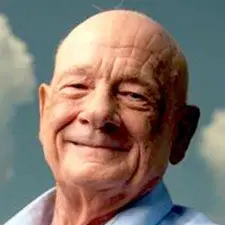
Raymond A. Moody
b. 30 June 1944- Books
- 4
- Followers
- 0
About
Raymond A. Moody Jr. is an American philosopher, psychiatrist, physician, and author, most widely known for his books about afterlife and near-death experiences (NDE), a term that he coined in 1975 in his best-selling book Life After Life. His research explores personal accounts of subjective phenomena encountered in near-death experiences, particularly those of people who have apparently died but been resuscitated. He has widely published his views on what he terms near-death-experience psychology.
He earned a BA (1966), an M.A. (1967), and a PhD (1969) in philosophy from the University of Virginia. He also earned a PhD in psychology from the University of West Georgia, then known as West Georgia College, where he later became a professor in the topic. In 1976, he earned an M.D. from the Medical College of Georgia.
Inspired by the Greek psychomanteums where the ancient Greeks would go to consult the apparitions of the dead (which Moody had read about in classic Greek texts that he encountered while a student at the University of Virginia), Moody built a psychomanteum in Alabama, which he calls the Dr. John Dee Theater of the Mind. Moody has also researched past life regression via hypnosis.
In 2023, Moody coauthored Proof of Life After Life: 7 Reasons to Believe There Is an Afterlife with Paul Perry. Drawing on nearly fifty years of research, the book presents case studies, expert interviews, and theoretical insights to argue that consciousness survives bodily death. It expands beyond near-death experiences to explore shared-death experiences, paranormal signs, and broader questions about the soul and afterlife.
Top genres
Non-Fiction Philosophy & Religion Spirituality
Also known as
Featured works
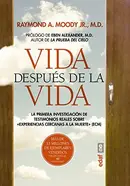
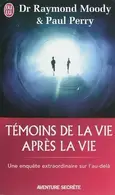

Series
Authors in the same genres


G

J

W

M
D
Frequently asked questions
Raymond A. Moody is widely recognized for his pioneering work on near-death experiences (NDEs) and for coining the term itself. His research and writings have significantly influenced the public understanding and scientific study of these phenomena.
A good starting point for new readers is "Life After Life," as it is his seminal work that introduced the concept of near-death experiences to a broad audience and laid the foundation for his subsequent research.