Fred Hoyle
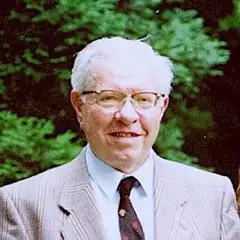
Fred Hoyle
24 June 1915 – 20 August 2001- Books
- 21
- Followers
- 0
About
Sir Fred Hoyle was an English astronomer who formulated the theory of stellar nucleosynthesis and was one of the authors of the influential B2FH paper. He also held controversial stances on other scientific matters—in particular his rejection of the "Big Bang" theory (a term coined by him on BBC Radio) in favor of the "steady-state model", and his promotion of panspermia as the origin of life on Earth. He spent most of his working life at St John's College, Cambridge and served as the founding director of the Institute of Theoretical Astronomy at Cambridge.
Hoyle also wrote science fiction novels, short stories and radio plays, co-created television serials, and co-authored twelve books with his son, Geoffrey Hoyle.
Top genres
Science Fiction Hard Sci-Fi Fiction Space Opera Juvenile
Featured works
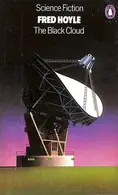


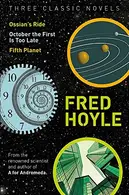
Series
Authors in the same genres


Frequently asked questions
Fred Hoyle is widely recognized for his significant contributions to astrophysics, particularly his work on stellar nucleosynthesis, which explains how elements are formed in stars. He is also known for coining the term "Big Bang" while advocating for the steady-state theory of the universe.
The novel "A for Andromeda," co-written with John Elliot, was adapted into a popular BBC television series in 1961, and a sequel, "Andromeda Breakthrough," followed in 1962. Both adaptations were significant science fiction productions for their time.
Fred Hoyle's science fiction often features a strong emphasis on scientific accuracy and plausible scenarios, reflecting his background as an astronomer. His narratives frequently explore themes of cosmic phenomena, alien intelligence, and humanity's place in the universe, presented with a grounded, intellectual approach.